
A 62-year-old with unexplained dyspnea, snoring with daytime sleepiness, and a small unilateral pleural effusion has basic spirometry that is inconclusive, and the team asks for advanced diagnostic guidance. Which diagnostic recommendation best matches exhaled gas, hemodynamic, sleep, and pleural evaluation needs for this patient?
Select an answer to reveal the explanation.
Short Explanation
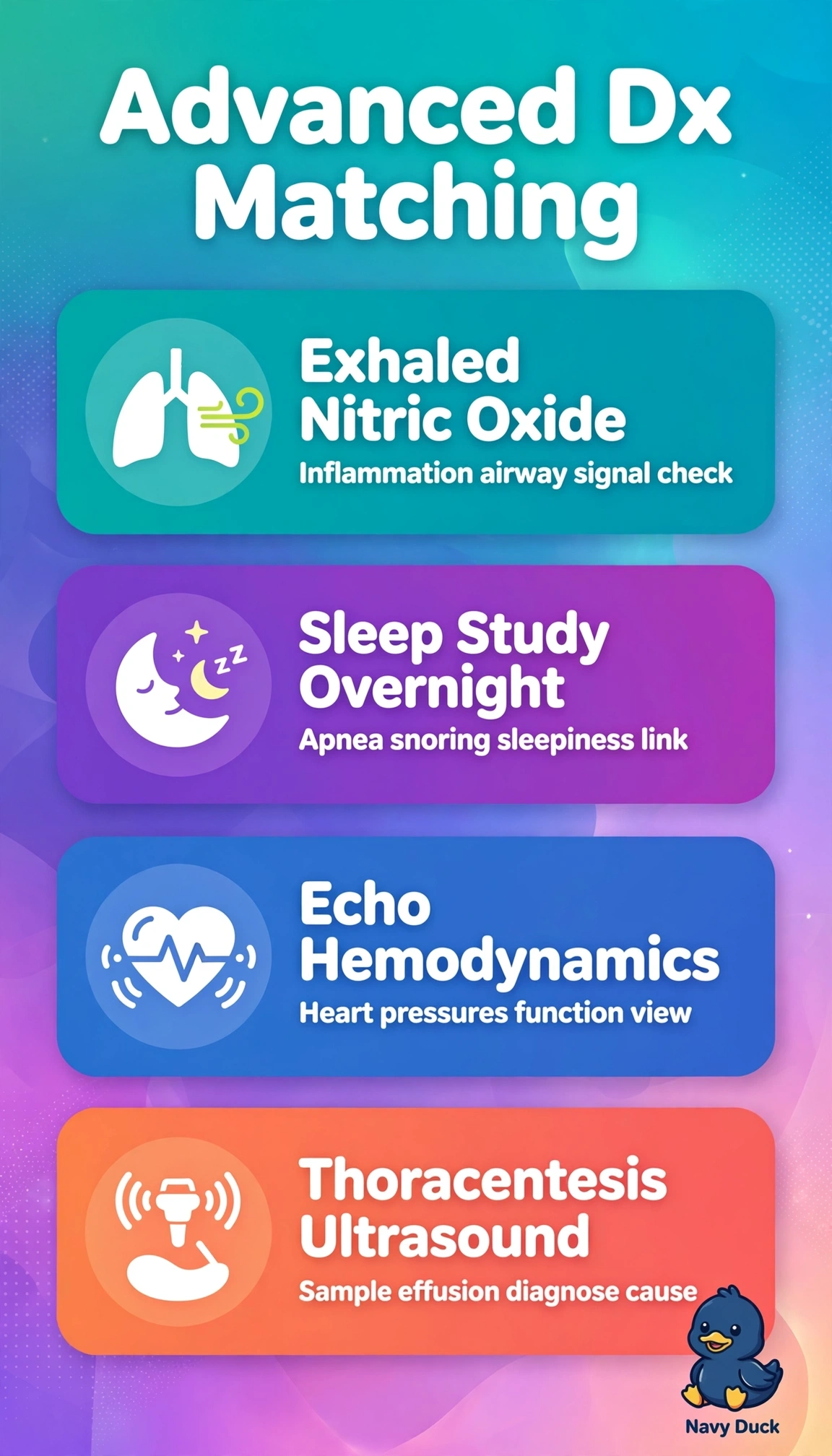
You've got four puzzle pieces here, so you'll want a tool that fits each one like matching keys to locks. Your best move pairs exhaled nitric oxide, sleep study, echo, and ultrasound-guided tap to cover airway, sleep, heart, and pleural clues at once.
Full Explanation
The correct recommendation covers four distinct mechanisms: fractional exhaled nitric oxide assesses lower-airway eosinophilic inflammation to clarify asthma when basic spirometry is inconclusive and dyspnea is unexplained, formal overnight polysomnography measures airflow, effort, saturation, sleep stages and arousals to diagnose and grade obstructive sleep apnea suggested by snoring with daytime sleepiness, echocardiography gives noninvasive hemodynamic data on systolic and diastolic function, valves and estimated pulmonary pressures that explain dyspnea and effusion formation, and ultrasound-guided thoracentesis yields fluid for protein, LDH, cell count, culture and cytology to classify an unexplained unilateral effusion by Light criteria where imaging alone is insufficient. Nasal nitric oxide measurement fails because it evaluates upper-airway nitric oxide for primary ciliary dyskinesia screening rather than lower-airway inflammation for asthma management. Overnight oximetry alone fails because desaturation trends without electroencephalographic staging and respiratory-event scoring cannot establish apnea type or severity or guide therapy. Pleural ultrasound with observation alone fails because visualization without sampling provides no chemistry or cytology and risks missing exudative infection or malignancy in a new unilateral effusion. An exam caveat is to prioritize physiologic purpose over similar wording, since nasal versus exhaled, oximetry versus polysomnography, and imaging versus sampling are classic confusers. A practical check is to review medications, bleeding risk, cardiac status, and procedural consent while coordinating pulmonary, cardiology and sleep referrals.