
A 60-year-old intubated patient with pneumonia on volume control ventilation, PEEP 10 cm H2O and FiO2 0.60, must move from the ICU to CT scan across the hospital with elevators and a 20-minute transport. The patient is sedated but hemodynamically stable. Which transport preparation best ensures safe movement of this ventilated patient within the hospital?
Select an answer to reveal the explanation.
Short Explanation
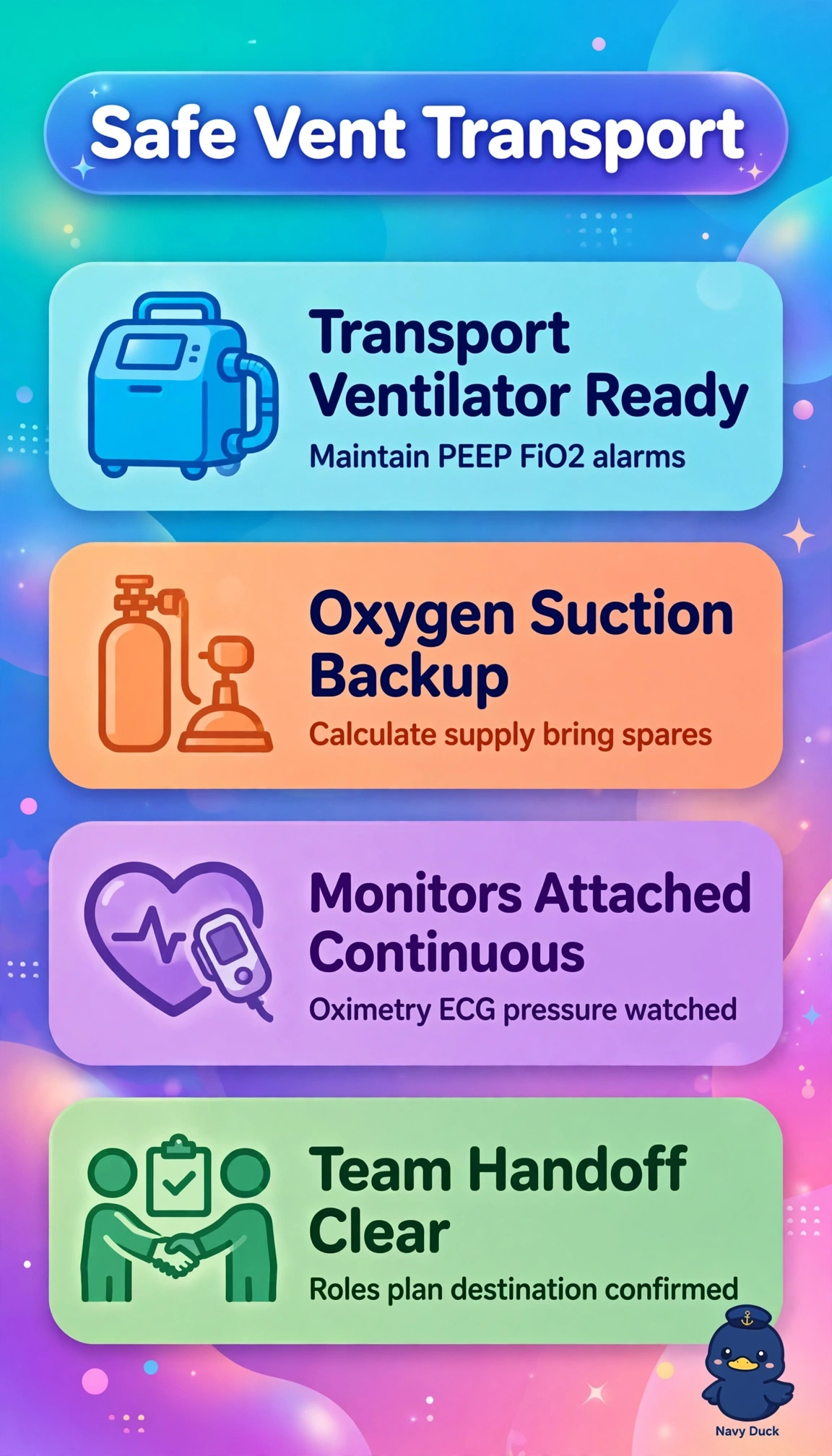
Movement should never mean losing support, so bring the ICU with you. A full transport setup preserves PEEP and oxygen when hallways get bumpy.
Full Explanation
Safe intrahospital movement must replicate ICU-level support because this sedated pneumonia patient on volume control with PEEP 10 cm H2O and FiO2 0.60 requires sustained recruitment and oxygenation during a prolonged 20-minute elevator transit, so a transport ventilator preserving those settings combined with backup oxygen, suction for secretions, continuous monitors with active alarms, and trained team communication maintains gas exchange and enables immediate rescue from disconnection, desaturation or hypotension. Maintaining PEEP, FiO2, monitors and team but carrying no backup oxygen or suction ready fails the redundancy concept because cylinder depletion, circuit leak or mucus plugging in purulent pneumonia can cause abrupt hypoxia or obstruction without rescue capability. Relying on hand ventilation with PEEP valve and oxygen despite monitors, suction and escorts fails the consistency and endurance concept because manual bagging cannot reliably deliver stable tidal volumes, PEEP and FiO2 for twenty minutes and introduces fatigue, variability and hyperventilation or hypoventilation risk. Preserving ventilation, oxygen reserve and suction while omitting continuous monitoring fails the surveillance concept because tube displacement, hypoventilation, desaturation or hemodynamic change inside elevators and corridors would go unrecognized without real-time oximetry, capnography, hemodynamics and alarms. An exam caveat is that stable vitals before departure do not waive PEEP, FiO2 or monitoring, and techniques acceptable for brief bedside moves do not extrapolate to prolonged high-requirement transport. A practical check is to verify battery charge, calculate oxygen needs plus reserve, test suction and PEEP valve function, confirm alarm limits, and brief roles, handoff, destination readiness and rescue plans before leaving the ICU.