
A 62-year-old ventilated for pneumonia is now afebrile, hemodynamically stable, on minimal pressure support, with RSBI 58, strong cough, adequate mentation, and a passed 60-minute spontaneous breathing trial on CPAP. Which liberation step best advances mechanical ventilation discontinuation after this successful trial?
Select an answer to reveal the explanation.
Short Explanation
You've proven the patient can breathe solo, so don't stall at the finish line. Timely extubation honors readiness and avoids extra ventilator days and complications.
Full Explanation
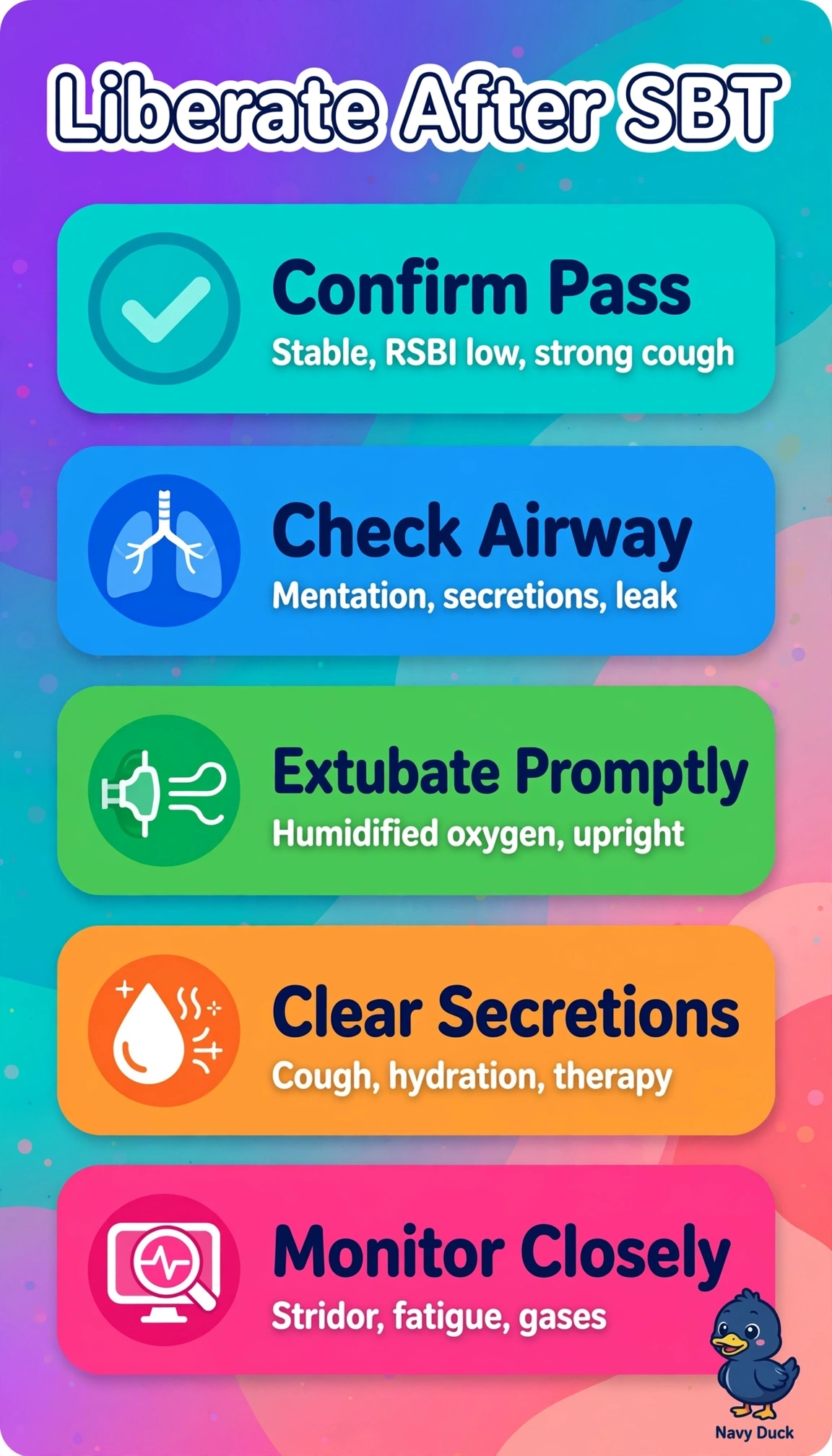
Successful spontaneous breathing trial with low RSBI, stability, cough, and mentation signals readiness, so protocolized liberation directs prompt extubation to appropriate oxygen with prophylactic airway clearance, head elevation, and monitoring for stridor, retention, and fatigue to minimize ventilator-associated events. Returning to full assist-control overnight pursues rest but fails by concept because unnecessary full support after demonstrated capability prolongs intubation, weakness, and infection risk without added benefit. Continuing the identical trial for 12 hours pursues certainty but fails by concept because extended testing without new indications delays liberation and increases work, delirium, and resource use. Deflating the cuff and capping the tube pursues patency testing but fails by concept because capped endotracheal tubes impose excessive resistance and are not standard liberation pathways compared with cuff-leak assessment and extubation. Exam caveat: distinguish passing the trial from readiness to protect airway, and practically verify leak, secretion burden, swallow, and post-extubation noninvasive support plans before removing the tube.