
A 64-year-old with acute dyspnea and COPD has labs showing WBC 14,200 with neutrophilia, potassium 2.9 mEq/L, INR 2.8 on warfarin, and troponin mildly elevated with tachycardia and accessory muscle use. Which laboratory interpretation best informs respiratory relevance and immediate priorities?
Select an answer to reveal the explanation.
Short Explanation
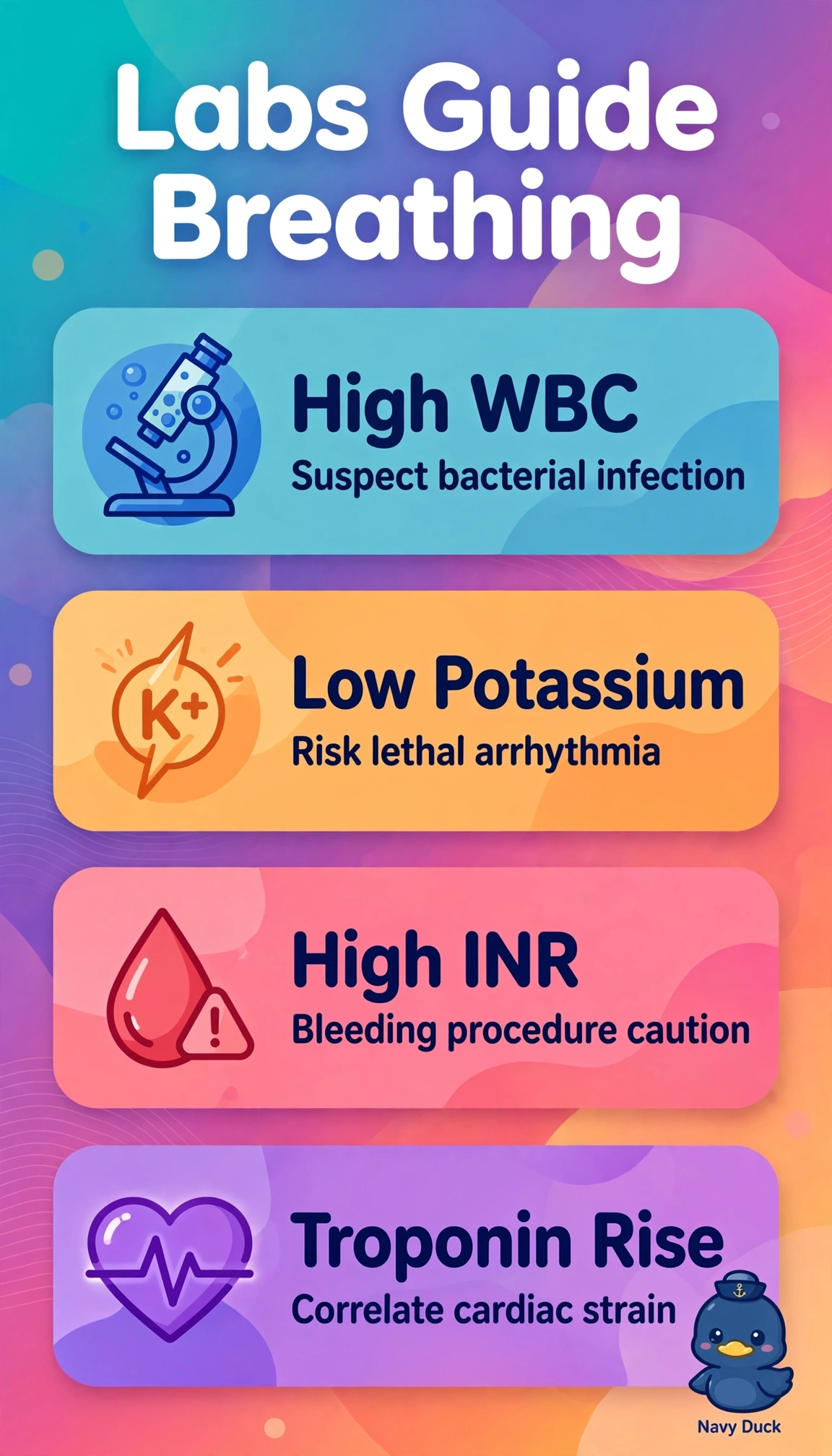
You are connecting dots across systems before they spark. Infection plus low potassium strains your cardiopulmonary interaction in real time. Fix breathing while guarding heart and bleeding risk.
Full Explanation
In acute COPD exacerbation with dyspnea, tachycardia and accessory muscle use, WBC 14,200 with neutrophilia signals acute bacterial infection increasing ventilatory demand, potassium 2.9 creates arrhythmia risk worsened by hypoxia, acidosis and beta-agonists, INR 2.8 on warfarin is supratherapeutic with bleeding risk for arterial sampling, hemoptysis and procedures, and mildly elevated troponin with tachycardia indicates demand-related cardiac strain, so integrated recognition of all four prioritizes oxygenation, ventilation, monitoring and safe workup. The telemetry-focused electrolyte, anticoagulation and troponin approach provides cardiac care but fails by omitting infection, delaying cultures, antibiotics and exacerbation management despite neutrophilic leukocytosis and increased work of breathing. The infection, electrolyte and troponin approach covers sepsis with demand ischemia but fails by omitting supratherapeutic anticoagulation, missing bleeding precautions and warfarin indication, hold and reversal review. The infection, anticoagulation and troponin approach addresses sepsis and bleeding but fails by omitting hypokalemia arrhythmia risk, missing urgent repletion, magnesium check, ECG monitoring and anticipated losses. Exam caveat: do not misinterpret mild troponin as primary acute coronary syndrome or let cardiac workup delay exacerbation, infection and ventilatory care. Practical check: verify ECG, SpO2, work of breathing, repeat potassium and magnesium, assess bleeding and warfarin indication, trend troponin clinically, and stabilize rhythm and oxygenation before arterial or invasive steps.