
In a crowded emergency department during a mass-casualty surge, a term newborn is limp, apneic and cyanotic after delivery with no response to drying and stimulation. Staff and warmers are limited. Which high-risk response for neonatal resuscitation and disaster triage should the therapist prioritize first?
Select an answer to reveal the explanation.
Short Explanation
You've got seconds where warm air beats waiting around. Jumping to breaths first gives that baby the lifeline stimulation alone can't provide.
Full Explanation
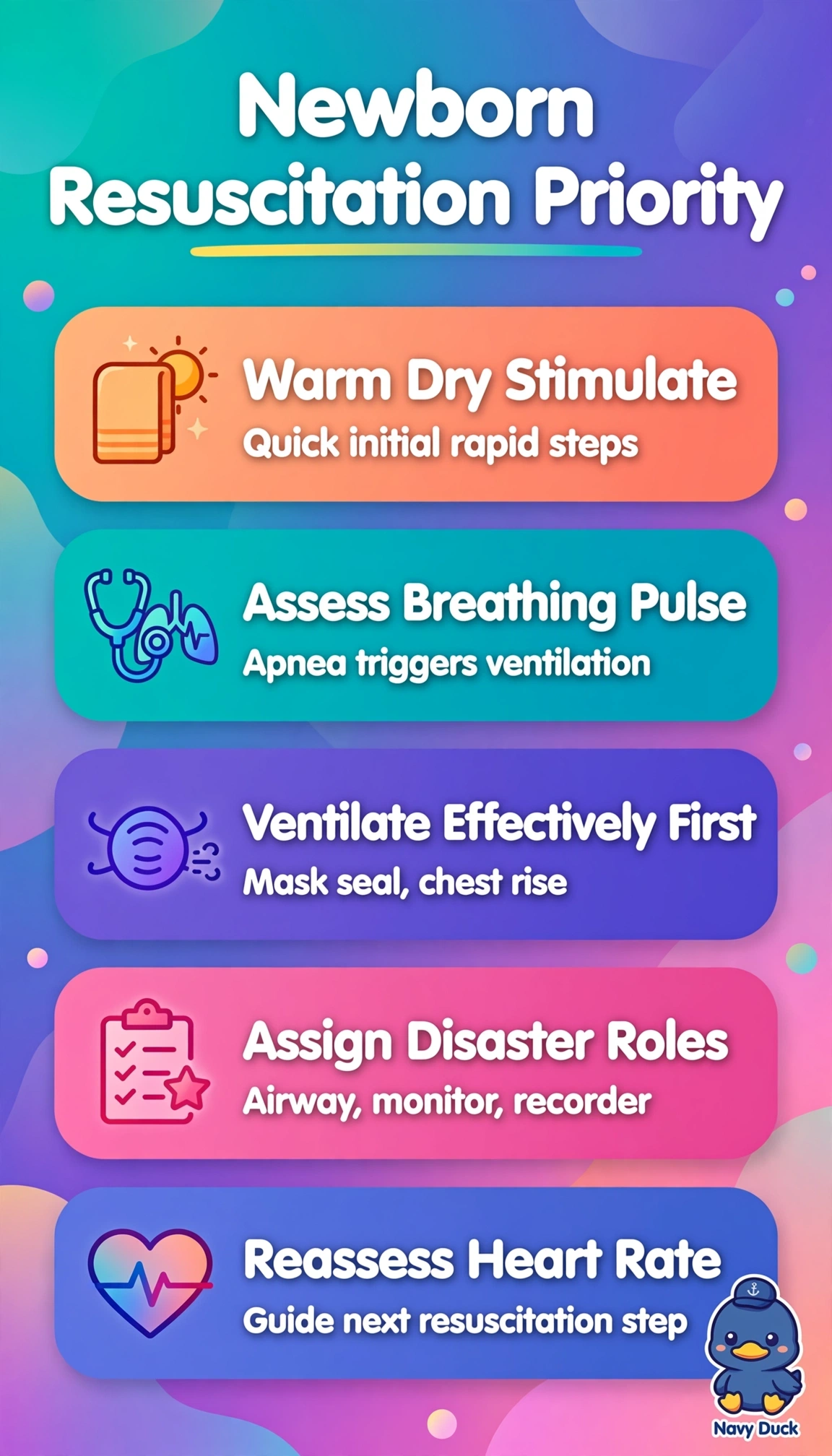
Neonatal resuscitation prioritizes warmth, drying, stimulation, then prompt positive-pressure ventilation for persistent apnea or bradycardia because most newborn compromise is respiratory, and disaster conditions require clear role assignment and adherence to protocol despite crowding to avoid delays. Prolonged stimulation with observation wastes the ventilation window when apnea persists after initial steps, allowing hypoxia and bradycardia to worsen while waiting for ideal resources. Starting compressions and epinephrine before effective ventilation reverses the resuscitation sequence, since circulation fails secondary to asphyxia and will not recover without lung inflation and oxygenation first. Triaging a viable apneic newborn to a waiting area abandons the resuscitation obligation and misapplies disaster triage, which prioritizes immediate reversible life threats. Exam caveat is that ventilation effectiveness is judged by chest rise and heart rate response before advancing steps, and practical check is to ensure warm dry environment, correct mask seal, pressure settings, and continuous heart rate and saturation monitoring.