
A 78-year-old with end-stage COPD and documented do-not-resuscitate order develops respiratory distress, and family demands intubation despite the patient previously refusing it when competent. The care team is conflicted. Which medical ethics reasoning in this clinical scenario should guide the therapist's actions?
Select an answer to reveal the explanation.
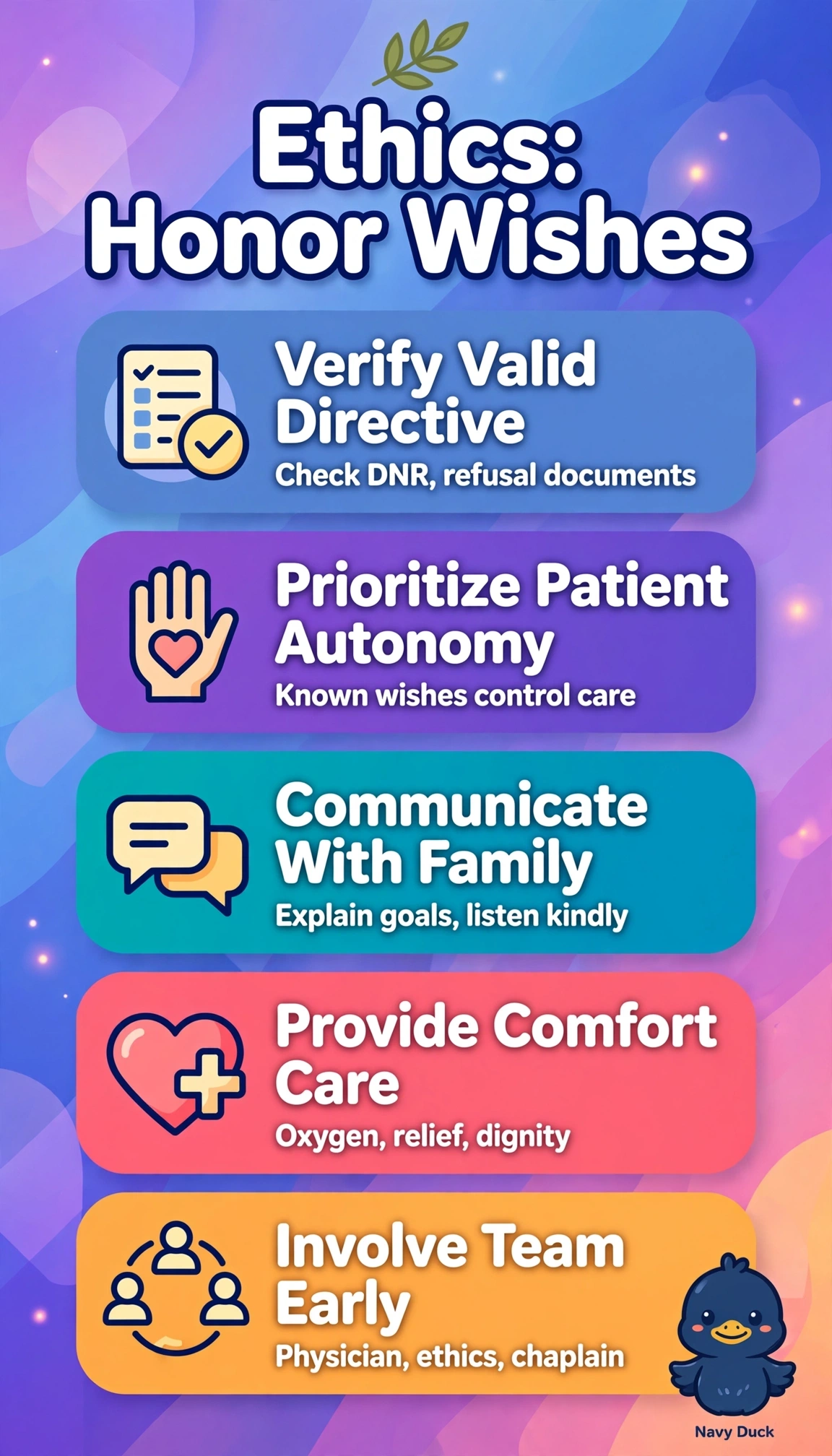
Short Explanation
You're caught between love and law, and it's heart-wrenching to navigate. Respecting prior wishes upholds autonomy even when emotions run high in the room.
Full Explanation
Medical ethics prioritizes patient autonomy expressed through informed refusal and valid advance directives, balanced with beneficence, nonmaleficence, and justice, so a competent refusal and DNR remain binding even when surrogates disagree, requiring the therapist to uphold the order, facilitate goals-of-care communication, and provide palliative respiratory support. Following family demands for intubation violates autonomy by substituting surrogate preference for the patient's known wishes and exposes the patient to unwanted invasive harm. Delaying while providing full aggressive support defaults to unwanted resuscitation and prolongs moral distress rather than honoring the existing directive during ethics review. Proceeding briefly to test reversibility still performs a refused invasive procedure and uses trial intubation to override autonomy, which is ethically impermissible without consent. Exam caveat is that surrogates decide only when patient wishes are unknown and within the patient's best interests, and practical check is to verify directive documentation, notify physician and ethics, and support family with clear compassionate explanation.