
In the emergency department a 68-year-old with COPD exacerbation is tachypneic, using accessory muscles, SpO2 88% on 2 L, and is alert but anxious with a limited history available. Multiple orders compete for attention. Which information-gathering priority should the respiratory therapist choose first to interpret severity and guide next assessment?
Select an answer to reveal the explanation.
Short Explanation
Good judgment starts with what keeps them alive right now. Focused assessment sorts signal from noise so urgent hypoxemia guides your next move.
Full Explanation
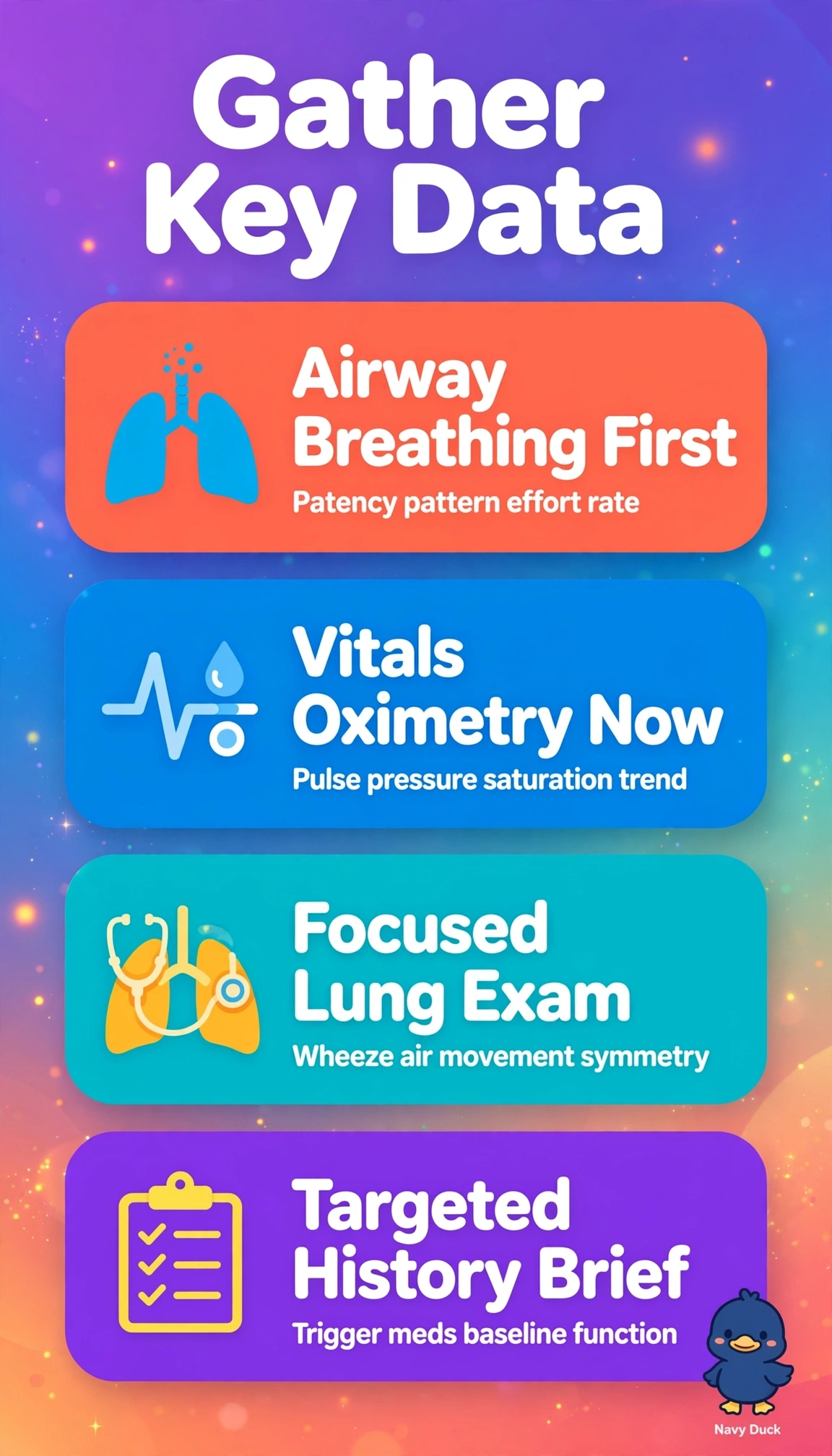
In this distressed COPD exacerbation with tachypnea, accessory-muscle use, SpO2 88% on 2 L, and anxious alert mentation, immediate assessment of airway patency, breathing pattern, vital signs, focused lung findings, and oximetry defines severity, reveals fatigue or impending failure, and sequences oxygen titration and escalation amid competing orders. Arterial blood gas analysis with ventilatory trend review is standard to quantify hypercapnia, acidosis, and hypoxemia and guide therapy, but as a subsequent diagnostic it cannot establish real-time airway and work-of-breathing status and should follow initial stabilization assessment. Focused exacerbation history including onset, triggers, adherence, and prior intubation is routinely useful for etiology and risk stratification, but it presumes detailed cooperation that cannot be prioritized when the patient is tachypneic, anxious, and able to provide only limited history. Review of the oxygen prescription, delivery device, and adherence is important troubleshooting for persistent hypoxemia on low-flow therapy, but it centers on equipment rather than whole-patient physiology and misses vital instability and increased work of breathing. Examination items often test first-versus-next priority by embedding cues such as hypoxia, retractions, anxiety, and limited history to separate bedside stabilization from valuable later steps. As a practical check, confirm a patent airway, count rate, observe rhythm and retractions, auscultate, verify a good oximetry waveform with vital trends, then decide timing of gases, history depth, and oxygen changes.