
A 64-year-old with COPD exacerbation is alert, tachypneic, using accessory muscles, pH 7.31, PaCO2 68 mm Hg, and hypoxemic on 2 L, with no apnea, shock, or inability to protect airway. Which noninvasive ventilation and medical treatment combination best manages hypercapnic COPD exacerbation without intubation criteria?
Select an answer to reveal the explanation.
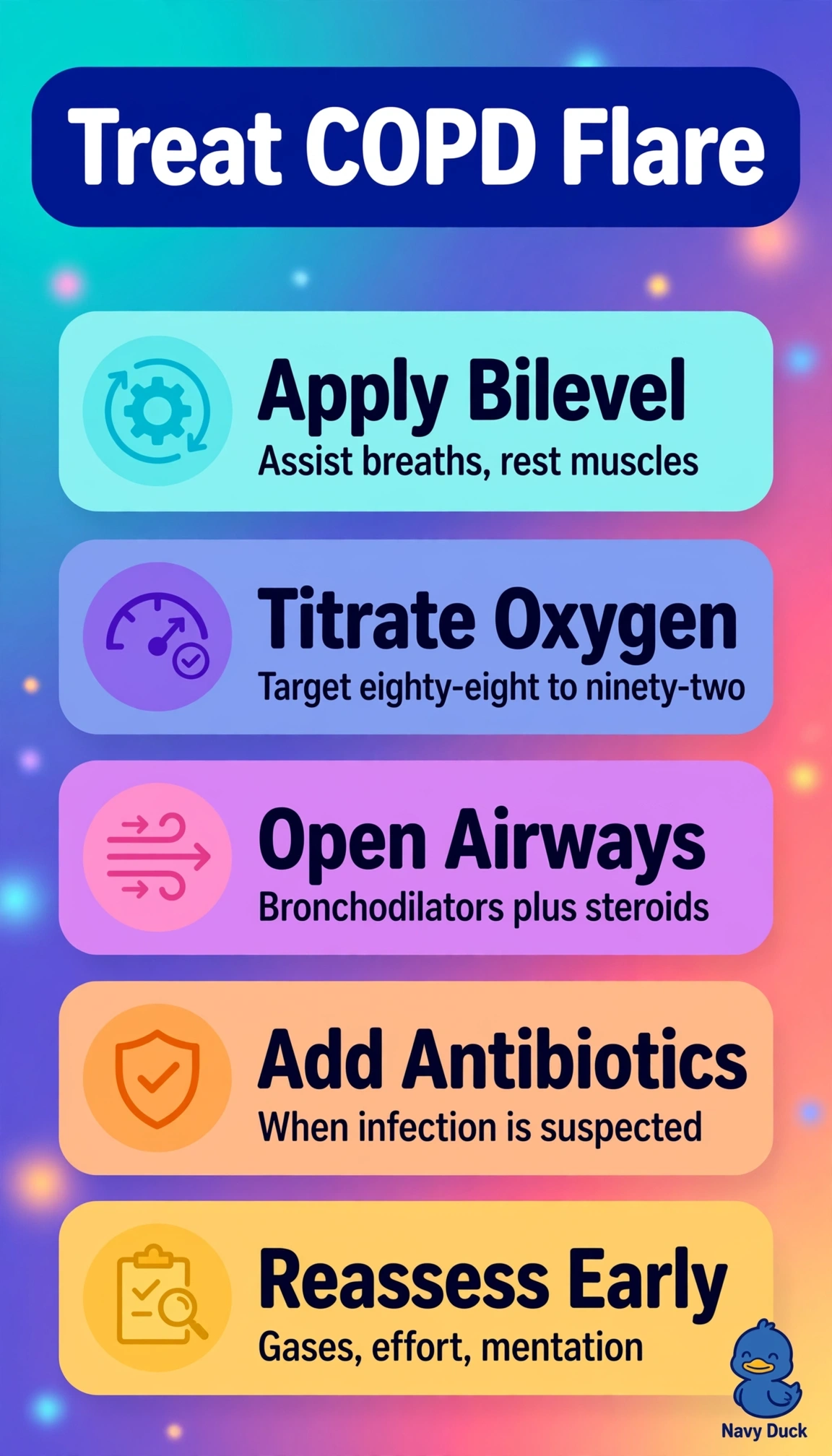
Short Explanation
You're catching a tiring COPD patient just before the crash. Timely bilevel unloads work while targeted drugs reverse the trigger driving the flare.
Full Explanation
Acute hypercapnic COPD with acidosis, increased work, and no contraindication benefits from bilevel support to augment alveolar ventilation and rest fatiguing muscles, titrated oxygen to 88-92% to avoid worsening hypercapnia, plus short-acting bronchodilators, systemic steroids, and antibiotics when infection is suspected. High-flow oxygen alone pursues saturation but fails by concept because uncontrolled oxygen worsens V/Q mismatch and hypercapnia without providing inspiratory assistance to reverse acidosis. Immediate intubation with high-rate ventilation pursues control but fails by concept because intubation is not indicated without failure criteria and high rates worsen dynamic hyperinflation while withholding bronchodilators ignores reversible obstruction. Sedative anxiolysis with low-flow oxygen and physiotherapy pursues comfort but fails by concept because sedation depresses drive in hypercapnic failure and physiotherapy alone cannot correct alveolar hypoventilation. Exam caveat: alertness with pH above 7.25 and manageable secretions favors a bilevel trial, and practically fit the mask carefully, reassess gases and dyspnea in one to two hours, and escalate promptly if mentation or acidosis worsens.