
A home-care therapist visits a 74-year-old on 2 L concentrator with chronic hypercapnia, morning headaches, and daytime sleepiness. Power is unreliable, backup E-cylinders are empty, and transport to clinic is a 40-minute bumpy ride. Which out-of-hospital judgment should the therapist apply for home care, transport and emergency response?
Select an answer to reveal the explanation.
Short Explanation
Safety net first, road trip second. You can’t fix headaches if the oxygen runs dry mid-ride. Contingency planning keeps a fragile setup from collapsing when the lights flicker.
Full Explanation
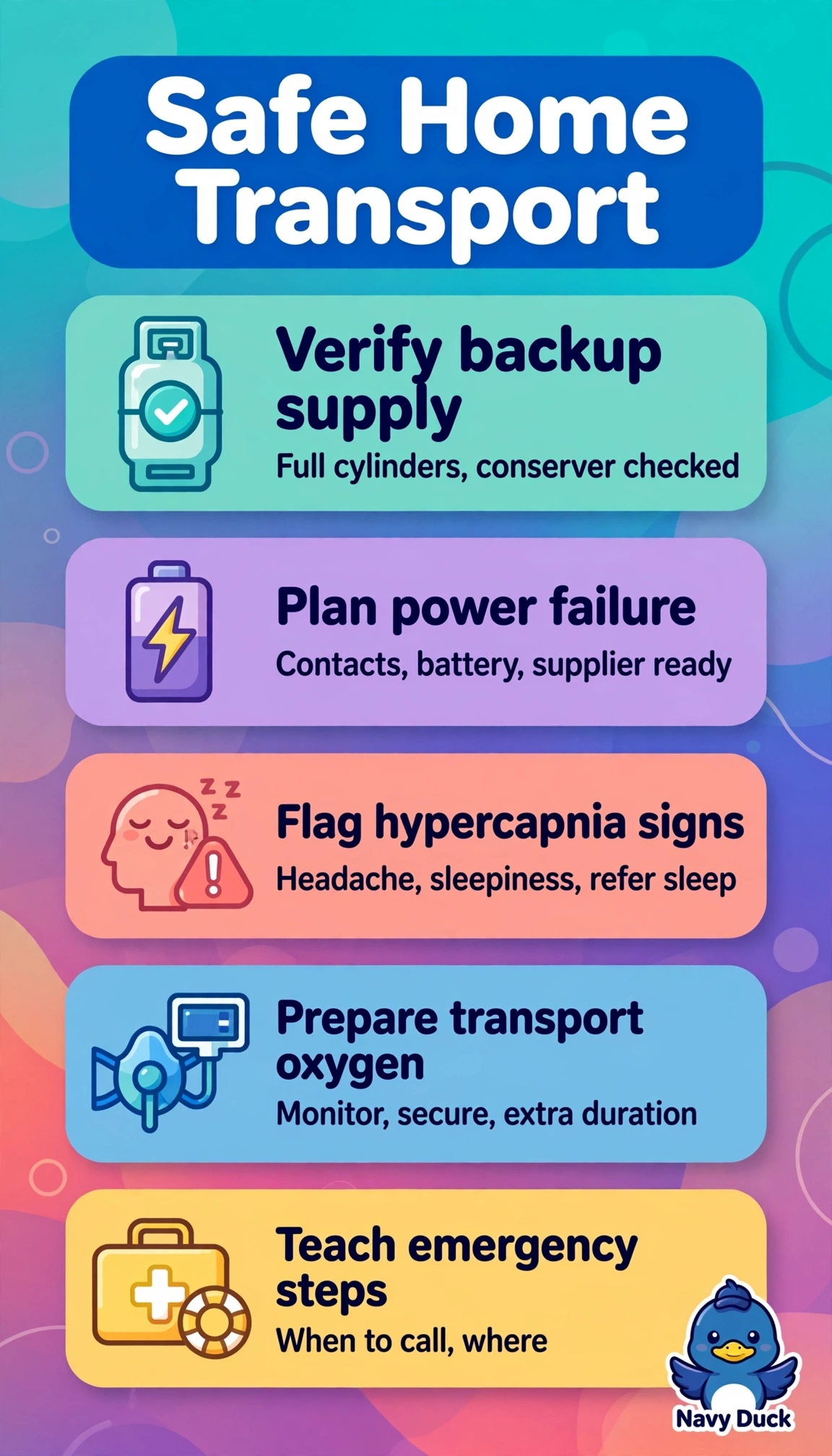
The correct judgment integrates all three linked risks: chronic hypercapnia with morning headaches and daytime sleepiness suggests nocturnal hypoventilation and possible sleep-disordered breathing requiring referral rather than empiric oxygen increases, while unreliable power with empty E-cylinders means the 2 L concentrator-dependent patient has no continuity, so backup refill and power contingency must precede any 40-minute bumpy travel that can interrupt delivery and worsen dislodgement or monitoring artifact. Arranging monitored transport with sleep referral while postponing backup planning fails on emergency preparedness and continuity, because it leaves the home unsafe during the next outage and assumes clinic travel alone resolves supply failure. Refilling backup and securing power while titrating oxygen upward to relieve symptoms fails on hypercapnia physiology, because excess oxygen can blunt hypoxic drive, worsen V/Q mismatch and CO2 retention, deepening headache, confusion and narcosis rather than treating hypoventilation. Securing backup and power while dismissing sleepiness as normal aging fails on pattern recognition, because it normalizes classic nocturnal hypercapnia clues and delays needed sleep evaluation and potential noninvasive ventilation assessment. Exam caveat: do not equate more oxygen with more safety in chronic CO2 retainers, and do not prioritize movement over supply security. Practical check: verify filled cylinder pressure and regulator function, test power backup and conserver setting, confirm portable oximetry, travel securing, and documented referral before departure.