
A 58-year-old with COPD exacerbation on 2 L nasal cannula shows improved wheezing, SpO2 94%, pH 7.38, PaCO2 48 mm Hg after bronchodilators and steroids, but remains mildly dyspneic on exertion. The physician asks about next respiratory therapy. Which therapy decision should the therapist recommend to decide to add, modify, continue or discontinue therapy?
Select an answer to reveal the explanation.
Short Explanation
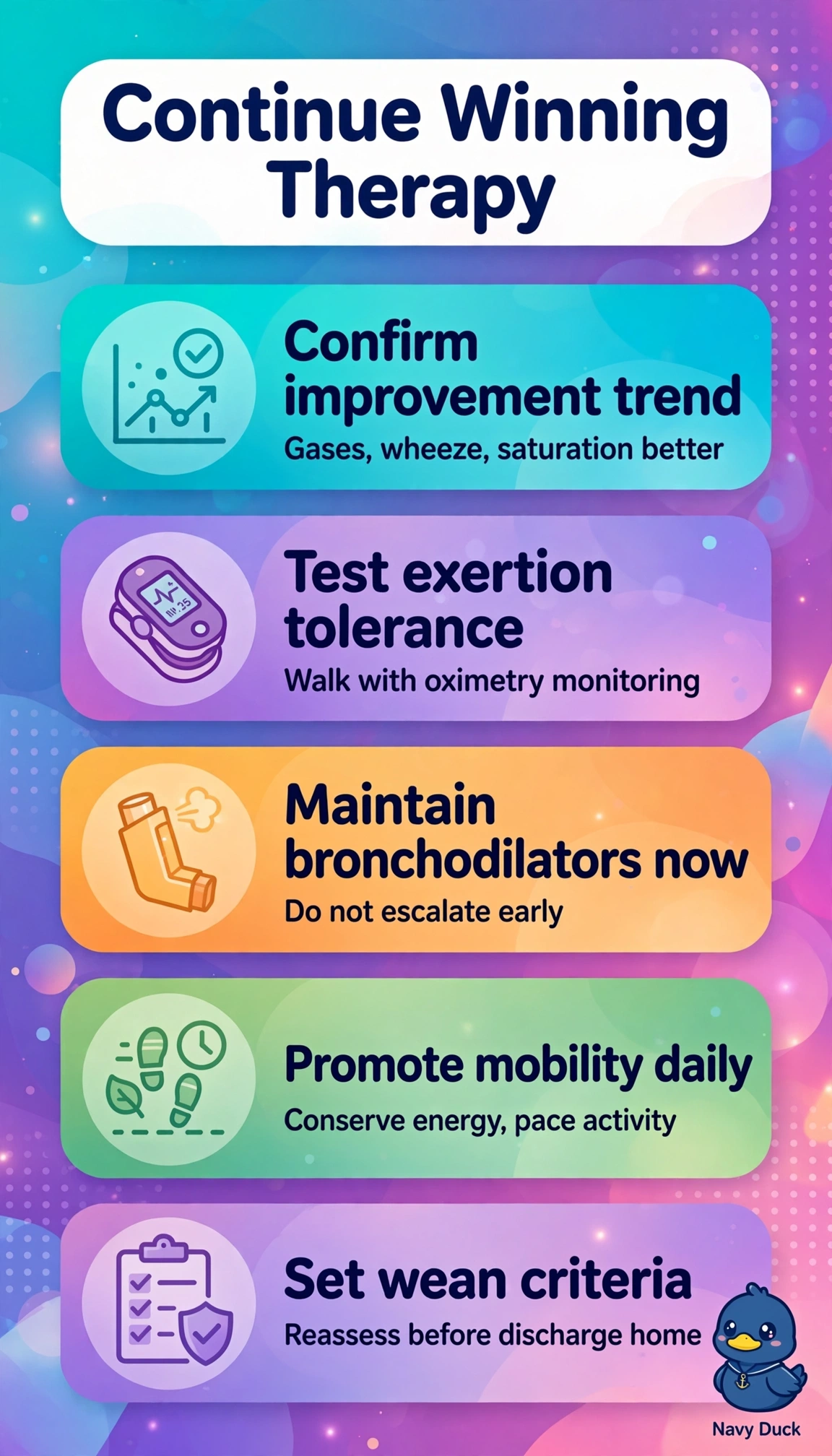
Good news — you’re winning, so don’t bench the starters. Staying the course while testing activity tolerance locks in gains. Continue with monitoring keeps recovery steady without overkill.
Full Explanation
The patient shows response but not resolution, so continuing proven therapy with functional reassessment is indicated. Improved wheezing, SpO2 94% on 2 L, pH 7.38 and PaCO2 48 mm Hg indicate compensated stability on current bronchodilators, steroids and low-flow oxygen, yet persistent mild exertional dyspnea means exacerbation recovery is incomplete and discharge criteria are not yet met; maintaining schedule while adding ambulation with oximetry tests exertional tolerance, detects desaturation, guides titration and prevents premature step-down. Weaning oxygen to room air based on resting saturation is premature because 94% was achieved on supplemental oxygen, not on room air, and exertional dyspnea suggests continued oxygen need until exertional oximetry on lower FiO2 is proven stable. Changing scheduled bronchodilators to as-needed dosing misapplies stable-disease maintenance to active exacerbation recovery, where scheduled short-acting agents maintain airway patency until symptoms and activity tolerance normalize and steroids have completed effect. Adding intermittent noninvasive ventilation misapplies acute hypercapnic failure management because there is no decompensated respiratory acidosis, pH is normal and PaCO2 is only mildly elevated and improved, so routine ventilatory support adds complexity without indication. Exam caveat is to distinguish improved from resolved and resting from exertional status, reading carefully whether gases and saturation were obtained on oxygen or room air before recommending wean or discharge. Practical check is to walk the patient on current 2 L with continuous oximetry, document dyspnea score, SpO2 nadir and recovery time, and reassess wheeze, work of breathing and gases before any change in discharge planning.