
A 60-year-old with sudden dyspnea after central line placement has diminished right breath sounds, tachypnea and SpO2 90%. The therapist is asked to perform focused palpation before imaging. Which palpation finding for pulse, asymmetry, crepitus, fremitus and tracheal deviation best clarifies this presentation?
Select an answer to reveal the explanation.
Short Explanation
You're hunting for subtle clues before the X-ray arrives, and your hands can speak volumes. Feeling for that missing vibration is your touch shortcut to a collapsing lung.
Full Explanation
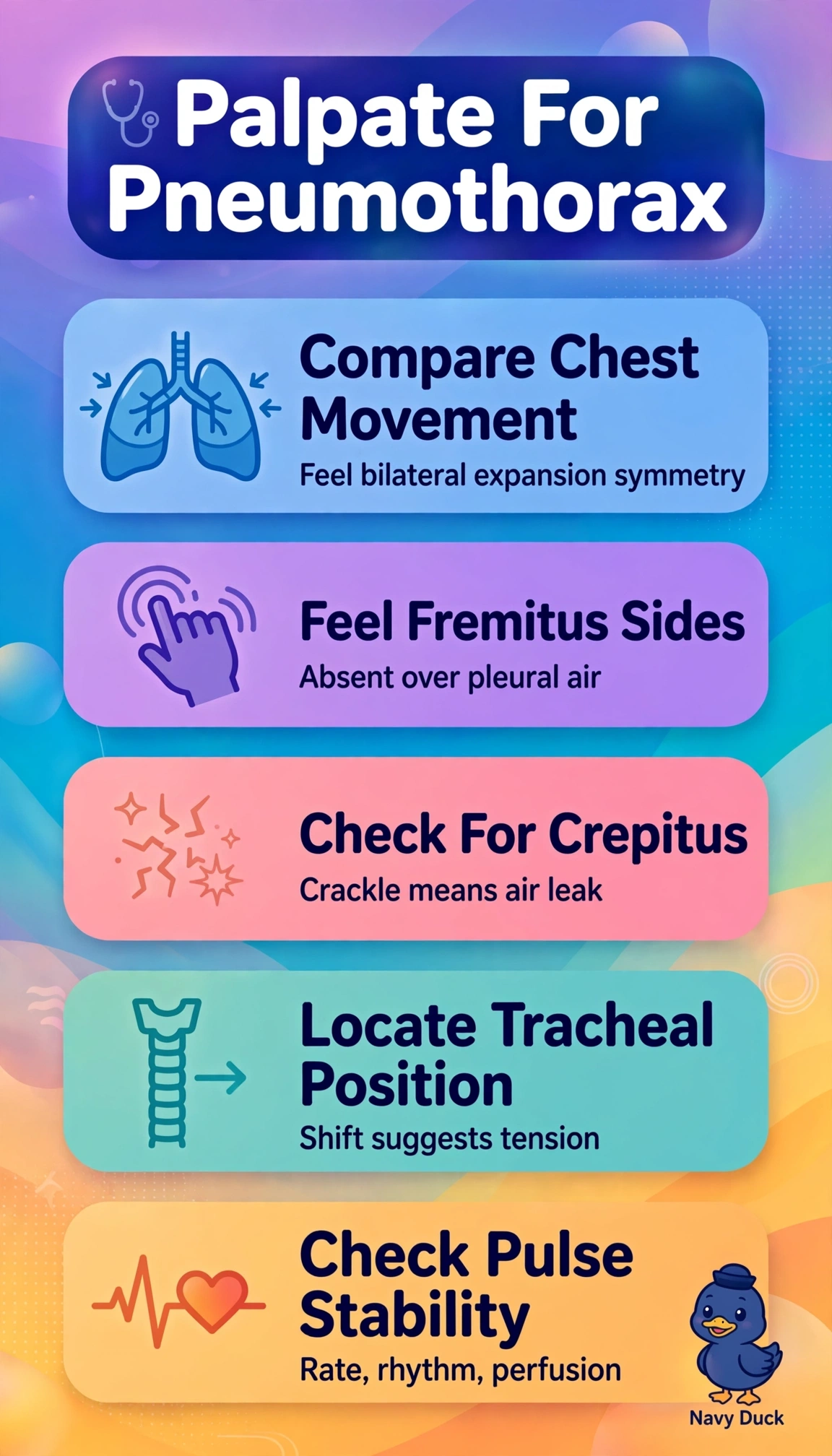
Sudden dyspnea with tachypnea, SpO2 90% and diminished right breath sounds immediately after central line placement strongly suggests iatrogenic pneumothorax, and focused palpation should demonstrate absent or markedly decreased tactile fremitus on the right because pleural air blocks vibration transmission, reduced asymmetric expansion, palpable subcutaneous crepitus along the neck and chest from air leak, thready or unequal pulse if venous return falls, and tracheal shift away from the affected side under tension. The increased fremitus consolidation description fails on transmission concept because consolidated lung with patent airways accentuates fremitus and is inconsistent with abrupt postprocedural diminished sounds and expected loss of vibration. The pleural effusion description with absent crepitus and midline trachea fails on etiology concept because effusion can also reduce fremitus and expansion but typically evolves more gradually, lacks crepitus, and does not follow needle-related air tracking. The symmetric expansion hyperventilation description fails on laterality concept because anxiety produces bilateral equal movement with preserved fremitus and midline trachea and cannot explain unilateral loss with hypoxemia. An exam caveat is that small anterior pneumothoraces may show subtle palpation changes, especially supine, so normal palpation never excludes disease. Always compare sides systematically, feel for crepitus, check trachea at the sternal notch, and expedite imaging with continuous oximetry.