
A 65-year-old with COPD exacerbation has a chart noting sulfa allergy with rash, home warfarin and albuterol, a new order for trimethoprim-sulfamethoxazole, a signed DNR order, and no documented influenza vaccination. Which medication reconciliation and order conflict should the therapist clarify first before treatment?
Select an answer to reveal the explanation.
Short Explanation
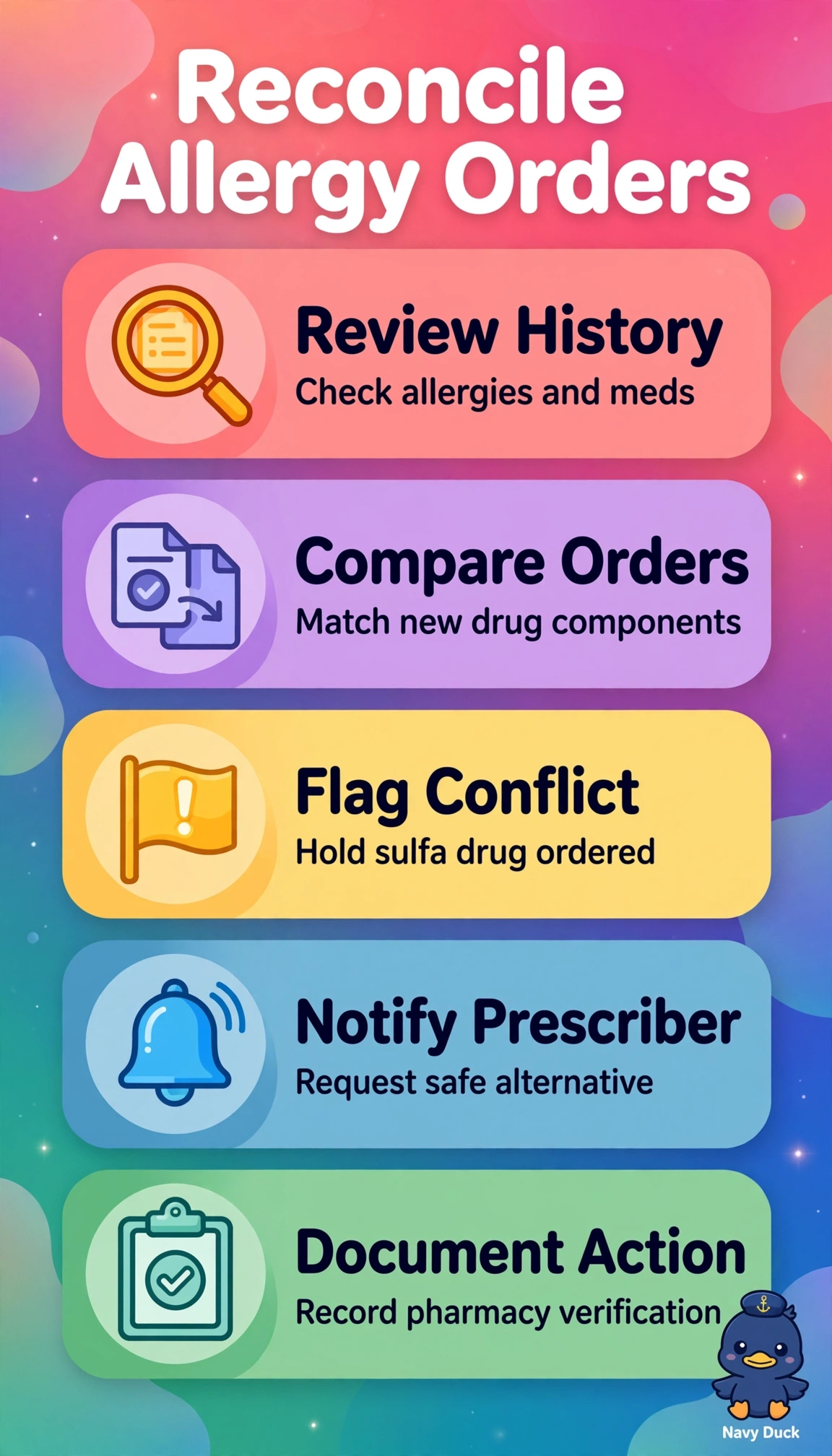
You're connecting allergy history to a new order before anything else. That sulfa-containing antibiotic could trigger harm despite the infection. Flagging that allergy conflict protects your patient and satisfies reconciliation duty.
Full Explanation
The priority is holding trimethoprim-sulfamethoxazole and clarifying the documented sulfa allergy with rash because reconciliation requires stopping any new order that conflicts with a recorded allergy before administration, since sulfonamide re-exposure can provoke recurrent hypersensitivity from rash and angioedema to Stevens-Johnson syndrome or anaphylaxis, requiring verification of reaction history, severity, and alternative antibiotics with the prescriber. Continuing the home albuterol regimen with breath-sound and bronchodilator monitoring is guideline-concordant for COPD exacerbation bronchospasm but fails on prioritization by advancing symptomatic therapy while leaving a high-risk allergy-order interaction unresolved. Continuing home warfarin while checking INR, bleeding signs, and airway-clearance precautions reflects sound anticoagulation reconciliation for bleeding prevention but fails on urgency because routine monitoring does not mitigate acute immunologic risk. Assessing influenza vaccination history and arranging later immunization addresses missing COPD prevention documentation but fails on timing because routine prophylaxis is never emergent over an active contraindication. The exam caveat is that clarify-first questions test safety hierarchy, so a routinely correct action is still wrong first when a contraindicated order exists. The practical check is to compare every new order to the allergy band and home list, hold the conflicted drug, notify prescriber and pharmacist, and document clarification before bronchodilators, anticoagulants, or vaccines.