
A home-care therapist visits a 72-year-old with COPD on 2 L/min concentrator who reports increased dyspnea, SpO2 88% on current flow, spare E-cylinder low, and a long transport to clinic in winter. Power and roads are stable. Which out-of-hospital judgment for home care and transport best protects this patient?
Select an answer to reveal the explanation.
Short Explanation
You're juggling low saturation plus a risky ride, so planning oxygen for the whole trip matters. Solid transport judgment means no gap in support from bedroom to clinic door.
Full Explanation
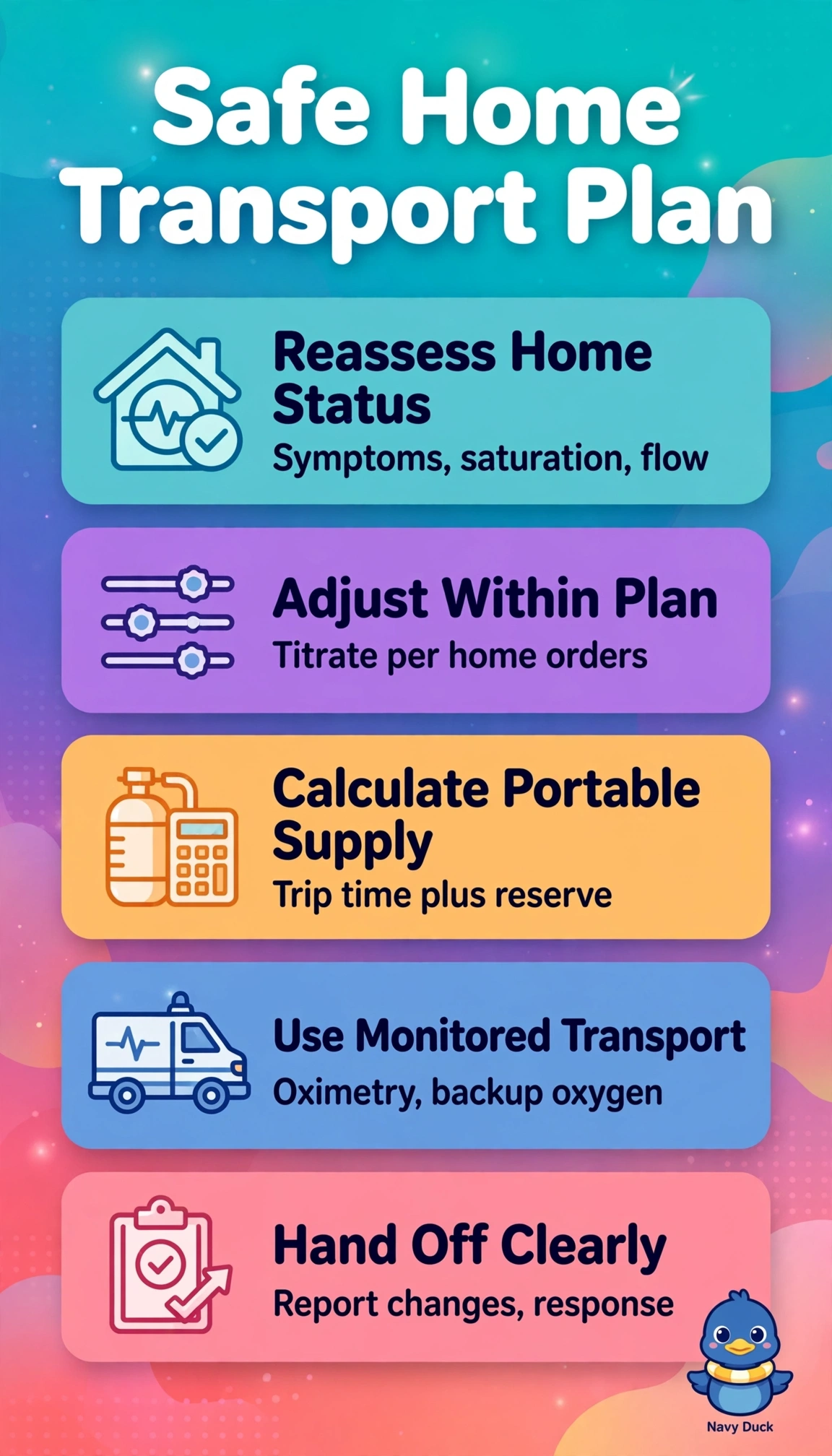
The correct judgment combines titration, logistics, and monitoring because worsened dyspnea with SpO2 88% on 2 L/min signals inadequate oxygenation that requires escalation per the home plan with ongoing reassessment, while a low spare cylinder plus long winter transport demands calculation of remaining minutes from pressure and flow with backup oxygen secured, and monitored transport ensures continuous observation and timely intervention if deterioration occurs. Maintaining current flow to limit hypercapnia risk fails by titration priority because controlled increases with monitoring are indicated for persistent hypoxemia and sustained SpO2 in the high 80s risks myocardial strain, confusion, and respiratory failure, whereas hypercapnia risk is managed by targeted saturation goals and vigilance rather than withholding needed oxygen. Increasing oxygen with continuous oximetry but without confirming backup supply duration fails by transport logistics because monitoring cannot prevent supply exhaustion on a prolonged cold-weather trip with limited refill opportunities, making verification and reserve essential. Increasing oxygen with verified supply but using unmonitored private car to save time fails by surveillance because an unstable older adult with active dyspnea needs trained assessment, positioning, and escalation capability en route. Exam caveat is that COPD oxygen caution never justifies tolerating marked hypoxemia when titration and monitoring are available. Practical check is to estimate travel time plus reserve, confirm cylinder contents and backup, set target saturation, and document serial SpO2, symptoms, and flow.