
A 55-year-old with a cuffed tracheostomy has a persistent low-pressure alarm, audible peritubal leak, and cuff manometer reading falling from 25 to 12 cm H2O after inflation. Tubing and pilot balloon connections appear intact but the pilot valve feels loose. Which troubleshooting step best addresses suspected cuff and manometer system leak?
Select an answer to reveal the explanation.
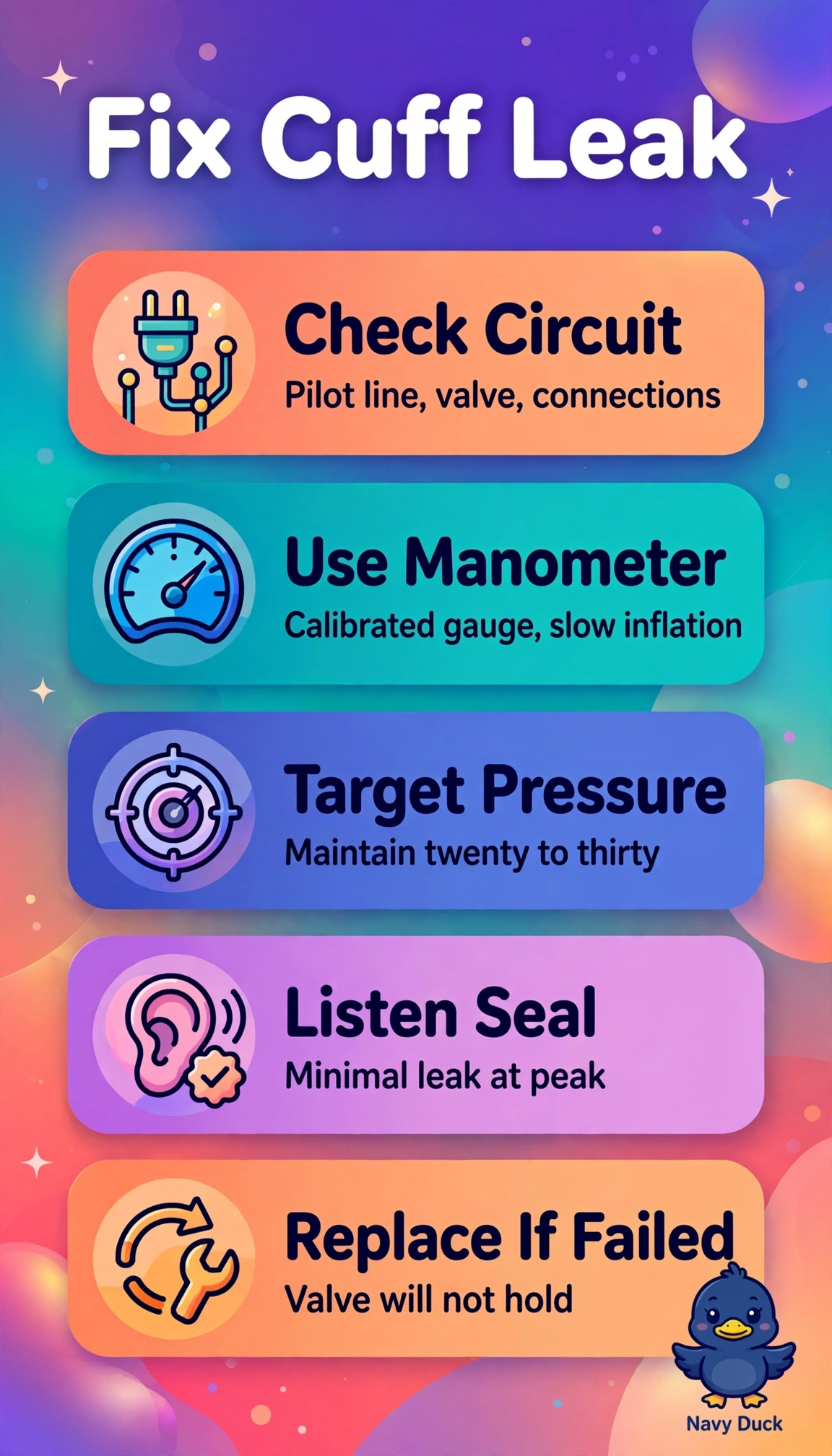
Short Explanation
You're hunting a slow leak, so start with the simplest fixable joints. A calibrated check restores seal without risking tracheal injury from blind overinflation.
Full Explanation
The correct troubleshooting step is right because falling cuff pressure from 25 to 12 cm H2O with persistent low-pressure alarm and audible peritubal leak despite intact connections points directly to a leak within the cuff-pilot-valve system, and the loose pilot valve is the key localizing clue, so systematic inspection of pilot tubing and valve combined with slow reinflation using a calibrated manometer both identifies correctable valve dysfunction and restores the recommended 20-30 cm H2O seal without mucosal injury. Reinflating to target with a calibrated manometer and only monitoring stability is inadequate by the concept of source control because it restores pressure temporarily but leaves the loose valve unexamined to leak again. Inspecting then reinflating by syringe feel fails by the concept of measurement accuracy because tactile estimation cannot ensure target range and risks underinflation with aspiration or overinflation with tracheal ischemia despite appropriate inspection. Securing ventilator circuits and suctioning secretions fails by the concept of anatomic level because it addresses ventilator tubing and supracuff secretions rather than the documented cuff-system pressure loss. An exam caveat is to distinguish low-pressure cuff alarms from ventilator disconnect or low airway pressure alarms by pairing the alarm with manometer trend and leak sound rather than assuming circuit displacement. A practical check is to reinflate slowly, observe manometer needle stability for 1-2 minutes, listen for leak resolution, confirm target range documentation, and escalate for tube or valve replacement if pressure will not hold.