
An adult with ARDS on volume ventilation starts inhaled nitric oxide from a cylinder system with scavenging, but the therapist notes a low-delivery alarm, fluctuating ppm readings, and rising nitrogen dioxide on the monitor. Cylinders, power, and ventilator function appear intact. Which troubleshooting action should the therapist perform first to restore safe nitric oxide delivery?
Select an answer to reveal the explanation.
Short Explanation
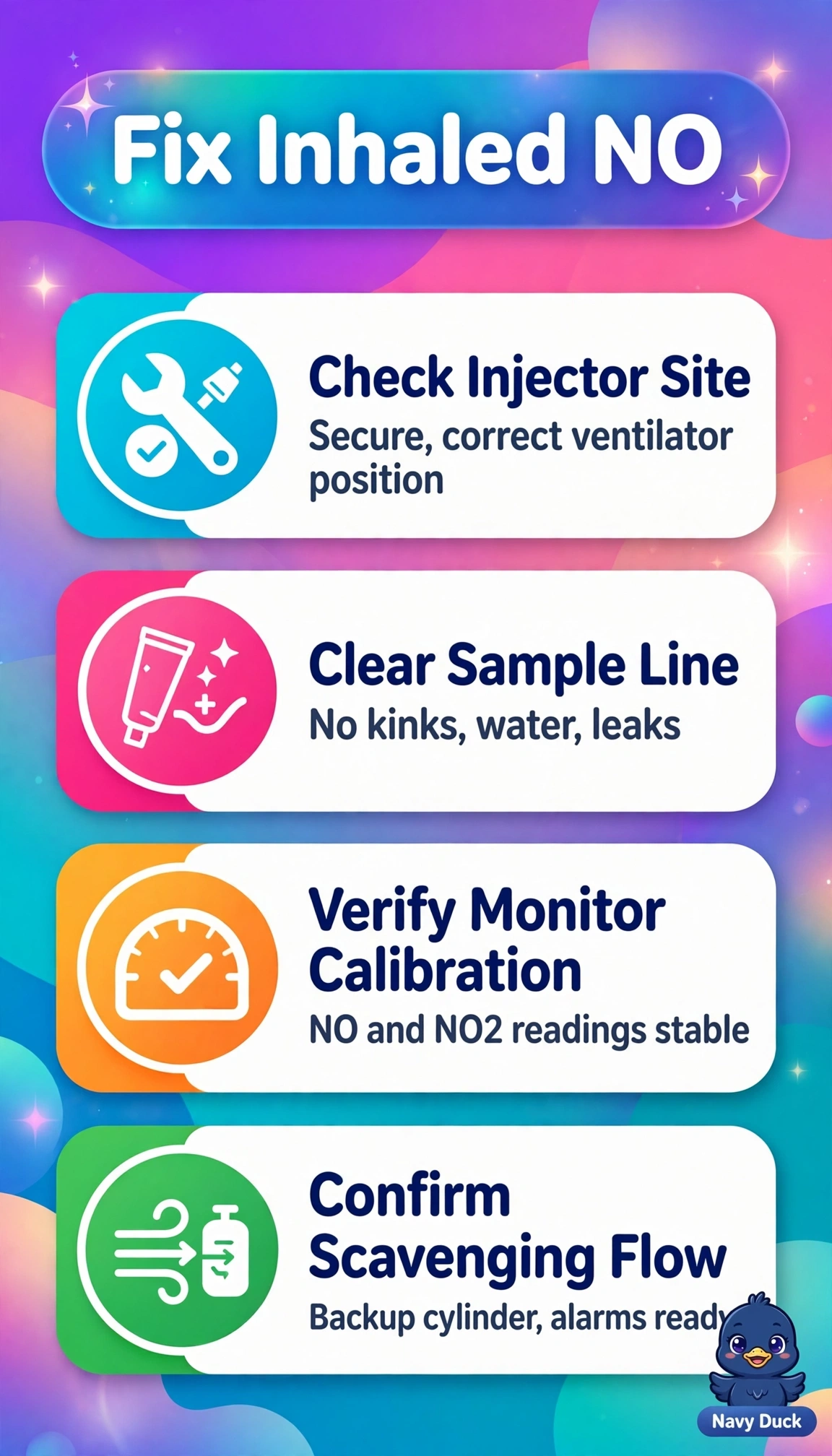
When your readings fluctuate and nitrogen dioxide rises, a problem in the delivery pathway may be disrupting nitric oxide dosing. Check the injector module, sampling line, and scavenging circuit for leaks, kinks, moisture, and calibration error to restore safe delivery.
Full Explanation
Inspecting the injector, sampling line, and scavenging circuit is the best first action because intact cylinders, power, and ventilator function make a delivery-path or monitoring problem more likely. Leaks or malposition at the injector, kinks or moisture in the sampling line, and calibration error can produce a low-delivery alarm and fluctuating readings; checking these components can restore accurate dosing and help limit nitrogen dioxide exposure. Connecting a backup nitric oxide controller and recalculating dose from measured minute ventilation may address controller failure, but it does not first investigate the delivery and measurement problems suggested by this pattern. Increasing scavenger vacuum and replacing the nitrogen dioxide absorber may help control rising nitrogen dioxide, but treating that byproduct alone leaves unstable, low nitric oxide delivery unresolved. Raising inspired oxygen and adjusting volume ventilation can support oxygenation in ARDS, but neither action corrects nitric oxide delivery or prevents nitrogen dioxide injury. Exam caveat: when the stem indicates that the cylinders, power, and ventilator are intact, prioritize the delivery and monitoring pathway rather than replacing the supply or changing ventilator settings. Practical check: confirm the injector is seated without leaks, inspect the sampling line for kinks or moisture, check calibration, and verify scavenging function and continuous nitric oxide/nitrogen dioxide readings before retitrating.