
A 30-week, 1250-g preterm infant in the NICU is intubated and on pressure-limited ventilation for worsening RDS with tachypnea, nasal flaring, low lung volumes, and FiO2 rising from 0.30 to 0.55 to maintain SpO2 above 90%. Blood gases show respiratory acidosis and hypoxemia despite optimal PEEP and short inspiratory times. Which surfactant replacement approach best manages neonatal respiratory distress syndrome for this intubated preterm infant?
Select an answer to reveal the explanation.
Short Explanation
You're spotting a classic surfactant deficiency, so replacement is the fix. Intratracheal dosing restores compliance the way soap breaks surface tension in tiny alveoli.
Full Explanation
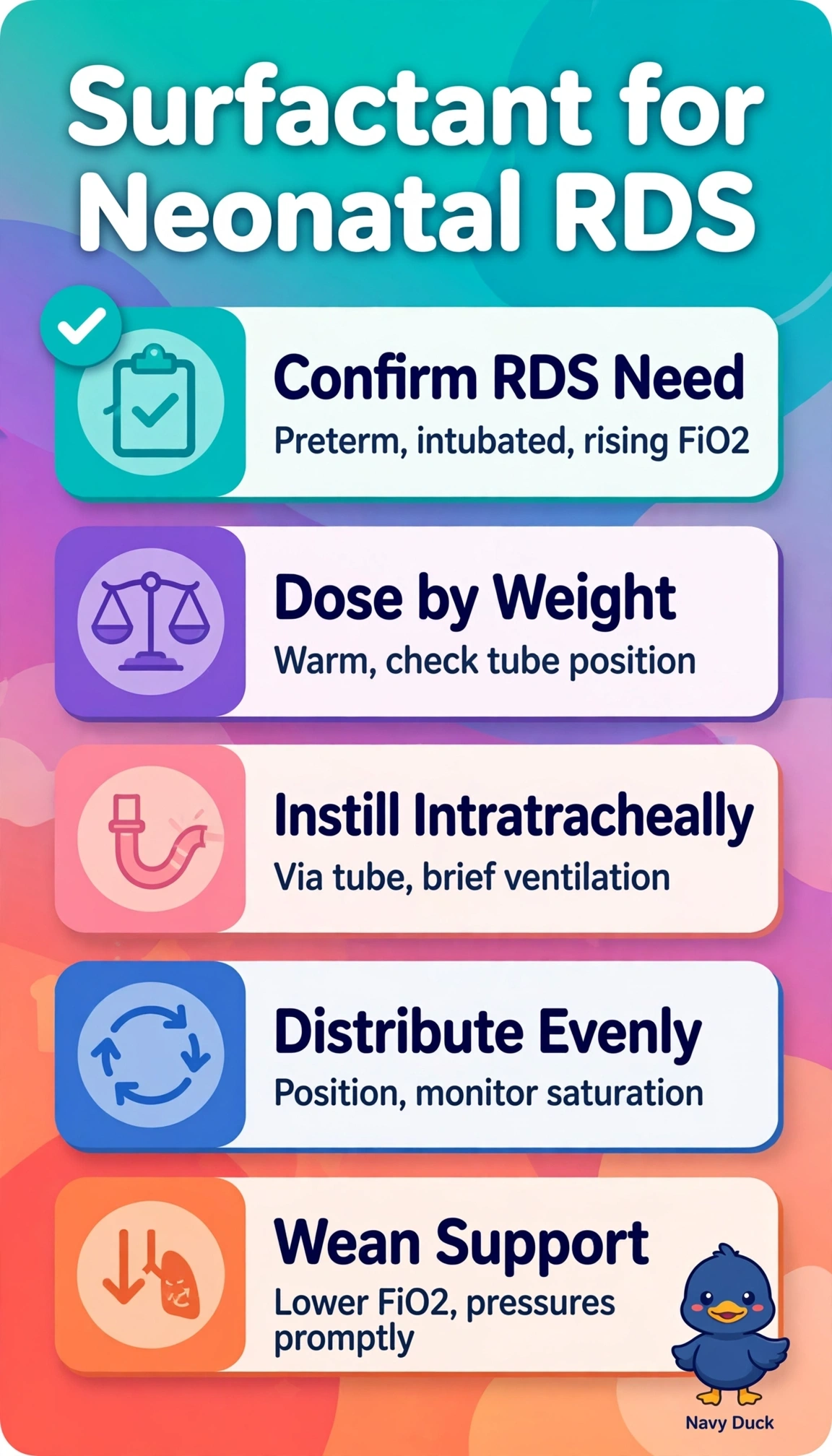
For this intubated 30-week, 1250-g infant with worsening RDS, low lung volumes, rising FiO2 from 0.30 to 0.55, and respiratory acidosis with hypoxemia despite optimal PEEP, intratracheal surfactant through the existing endotracheal tube directly treats primary surfactant deficiency by lowering alveolar surface tension, recruiting atelectatic units, improving compliance and ventilation-perfusion matching, and permitting protocol-driven FiO2 and ventilator weaning to limit oxygen toxicity and barotrauma. Prompt extubation to nasal CPAP for thin-catheter surfactant during spontaneous breathing is a sound minimally invasive approach for milder disease, but it fails here on respiratory support concept because an intubated infant with ventilatory failure and acidosis requires continued invasive ventilation. Continued optimization of pressure-limited ventilation with PEEP and FiO2 titration is essential supportive care, but it fails on pathophysiology because oxygen and pressure alone do not replace deficient surfactant and leave atelectasis and high oxygen needs unresolved. Instillation followed by rapid extubation to CPAP represents INSURE to avoid prolonged ventilation, but it fails on clinical trajectory because worsening hypoxemia, hypercarbia, and increased work demonstrate need for ongoing ventilation rather than immediate extubation. Exam caveat is to match technique to intubation status and severity, since criteria and methods differ for CPAP with thin catheter, brief intubation with rapid extubation, and rescue dosing through an indwelling tube. Practical check is to verify tube position and patency, monitor heart rate, saturation, and chest excursion during dosing, then confirm response by falling FiO2 needs, improved inflation, gases, and work of breathing.