
In a busy pulmonary function lab, reusable mouthpieces, spacers and nebulizer cups from stable outpatients must be reprocessed between uses. Staff are debating rinse-only versus full disinfection. Which disinfection policy for reusable respiratory equipment should the therapist apply to ensure safety?
Select an answer to reveal the explanation.
Short Explanation
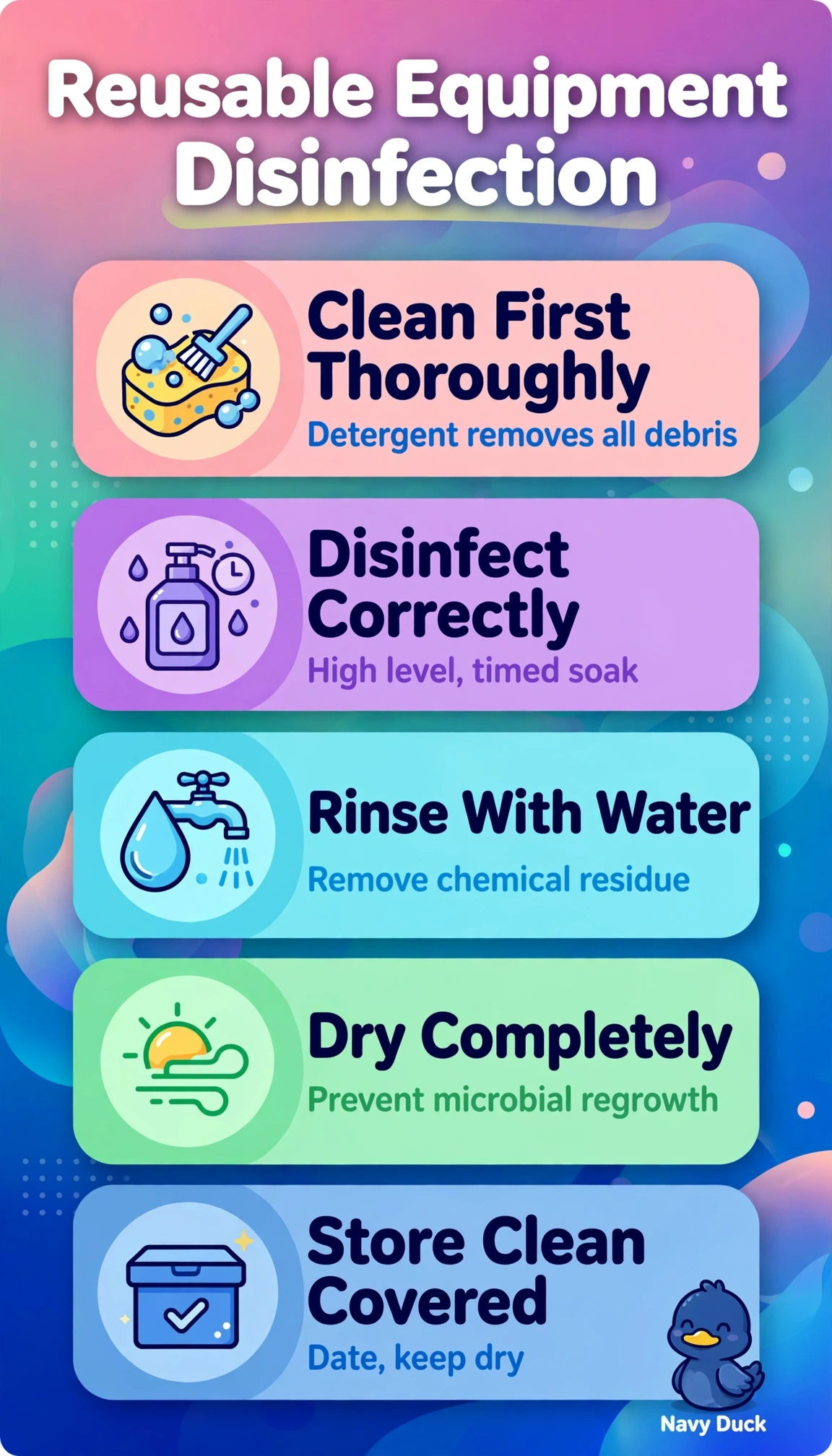
You’re right to avoid shortcuts in a busy lab, because respiratory equipment needs more than a rinse to be safe between uses. Detergent cleaning followed by high-level disinfection, rinsing, complete drying, and proper storage is your barrier against carrying germs to the next patient.
Full Explanation
Reusable mouthpieces, spacers and nebulizer cups touch mucous membranes and secretions, making them semicritical under Spaulding classification. The appropriate policy is to clean with detergent, then perform high-level disinfection, rinse thoroughly, dry completely and store the equipment in a protected dry place. Detergent cleaning removes sputum and biofilm; high-level disinfection is effective against vegetative bacteria, mycobacteria, fungi and viruses. Cleaning followed by low-level disinfection is inadequate because low-level products are intended for noncritical surfaces and intact-skin items and do not reliably destroy mycobacteria and hardier respiratory pathogens that semicritical devices may harbor. Cleaning and high-level disinfection followed by storage while damp fails to control moisture: residual water in cups, spacers and tubing can allow Pseudomonas aeruginosa and Burkholderia cepacia complex to multiply, and damp respiratory equipment has been linked to outbreaks. High-level disinfection without separate detergent cleaning first fails because organic soil shields microbes and can inactivate glutaraldehyde, ortho-phthalaldehyde and hydrogen peroxide systems; even an extended soak cannot make disinfection without prior cleaning reliable. An exam caveat is that stable outpatient status does not lower the requirement: visual cleanliness, rinsing alone or workload pressure cannot replace full contact time and drying, although routine sterilization is not required for these items. As a practical check, verify disinfectant compatibility, test-strip concentration and contact time, then confirm a copious rinse, forced-air drying until completely dry, and ventilated dry storage.