
A 42-year-old needs emergent intubation for airway protection with morbid obesity, short thick neck, limited mouth opening, beard, and prior difficult intubation noted. Stridor is present and bag-mask seal is poor. Which difficult airway recognition finding should the therapist report first to prepare the airway team?
Select an answer to reveal the explanation.
Short Explanation
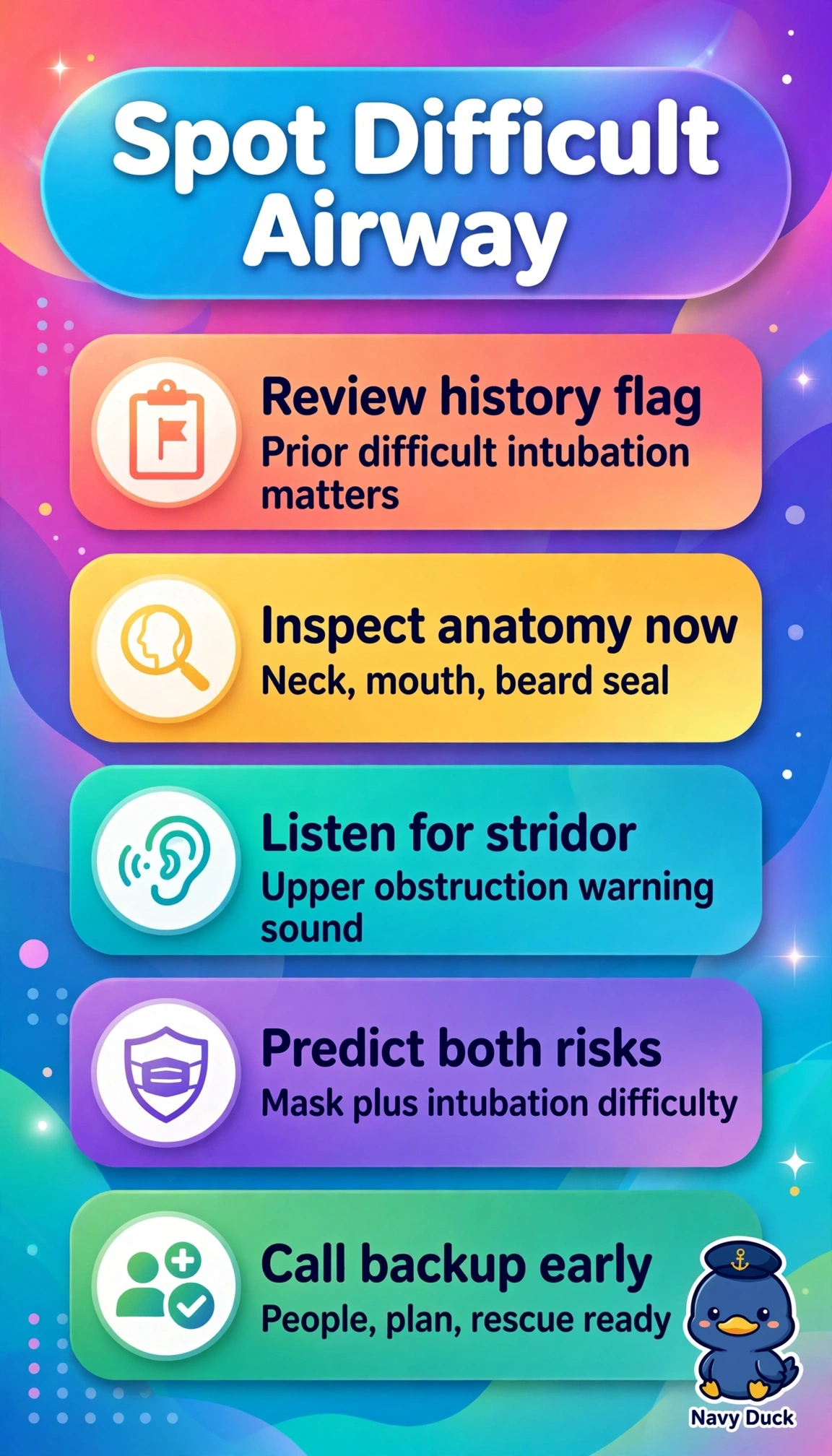
You've got several red flags stacking up here, so you can't just fixate on one vital sign when your patient shows this pattern. You're watching storm clouds gather, and that means calling for expert help early and getting your backup plan ready with extra equipment.
Full Explanation
The correct report is right because morbid obesity, beard and poor seal establish difficult mask ventilation while limited opening, short thick neck and prior difficult intubation establish difficult intubation, and stridor with emergent need for protection makes dual failure imminent so the team must mobilize backup plans immediately. The statement describing combined predictors for routine induction without added urgency fails on urgency triage because it correctly identifies anatomy yet treats an obstructed emergent airway as elective, inviting routine induction without rescue readiness. The statement prioritizing video laryngoscopy from anatomy and history fails on ventilation coverage because intubation planning does not solve the predicted inability to oxygenate when seal is already poor in an obese bearded patient. The statement optimizing mask technique from obesity, beard and seal fails on intubation coverage because improved ventilation buys time but does not address glottic exposure problems from limited opening, thick neck and prior difficulty. An exam caveat is that stridor plus emergent indication plus both MOANS and LEMON features points to combined difficult ventilation and intubation with backup, so single-domain or routine answers are traps despite competent wording. A practical check is to brief MOANS and LEMON findings aloud, confirm two-person mask technique, adjuncts, video laryngoscopy, supraglottic rescue and surgical backup at bedside before sedation.