
An adult with COPD on volume assist-control shows expiratory flow not returning to zero, rising peak pressures, and a scooped inspiratory pressure scalar with patient effort. Blood pressure is soft and breath stacking is seen. Which ventilator adjustment best corrects auto-PEEP with inspiratory flow starvation shown on scalars?
Select an answer to reveal the explanation.
Short Explanation
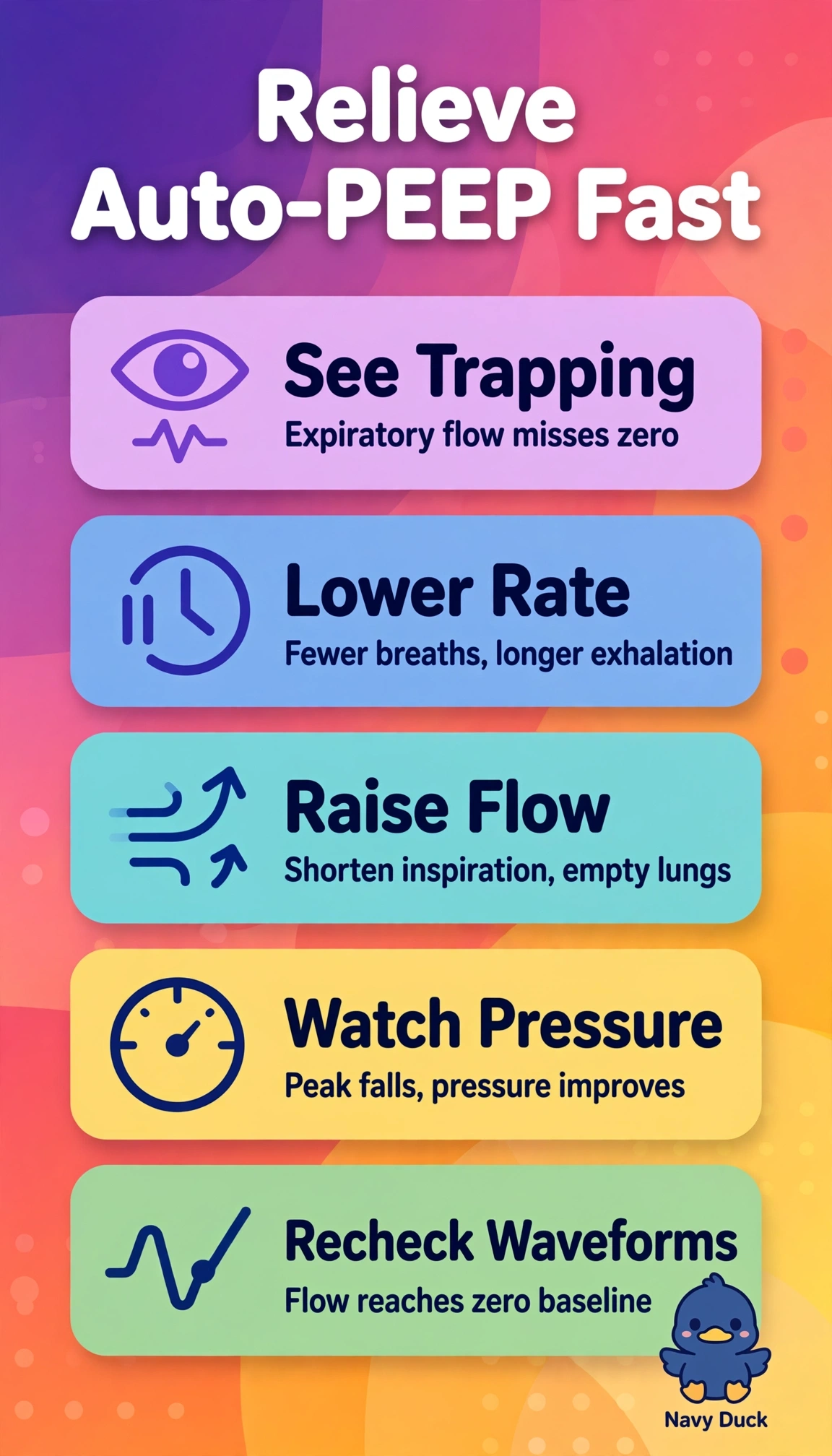
You're watching trapped air stack up, so you must give it more time to escape. Prolonged expiration relieves air-trapping faster than any added pressure or volume ever could.
Full Explanation
Auto-PEEP from incomplete emptying is identified when expiratory flow fails to reach zero, and flow starvation appears as scooping with accessory effort, so reducing minute ventilation demand by lowering rate and shortening inspiration with higher inspiratory flow lengthens expiration, permits emptying, lowers intrathoracic pressure, and improves triggering and hemodynamics. Increasing tidal volume with an inspiratory hold pursues recruitment but fails by concept because larger volumes and added hold shorten expiration and worsen hyperinflation and barotrauma risk in obstructive disease. Increasing set PEEP to match auto-PEEP while raising rate pursues trigger ease and CO2 clearance but fails by concept because higher rate further truncates expiration and total PEEP rises, depressing venous return without solving trapping. Lengthening inspiratory time with lower flow pursues comfort but fails by concept because prolonged inspiration directly steals expiratory time and deepens flow starvation and dyssynchrony. Exam caveat: expiratory flow not returning to zero is the hallmark cue for auto-PEEP, and practically check scalars after each change, watch blood pressure, wheeze, and missed triggers, and treat bronchospasm in parallel.