
A 28-week preterm infant at 2 hours of life has grunting, nasal flaring, retractions, tachypnea, and increasing FiO2 need on nasal CPAP, with classic ground-glass appearance and air bronchograms on chest film. The team plans surfactant replacement through the airway. Which surfactant management approach should the therapist support for neonatal respiratory distress syndrome?
Select an answer to reveal the explanation.
Short Explanation
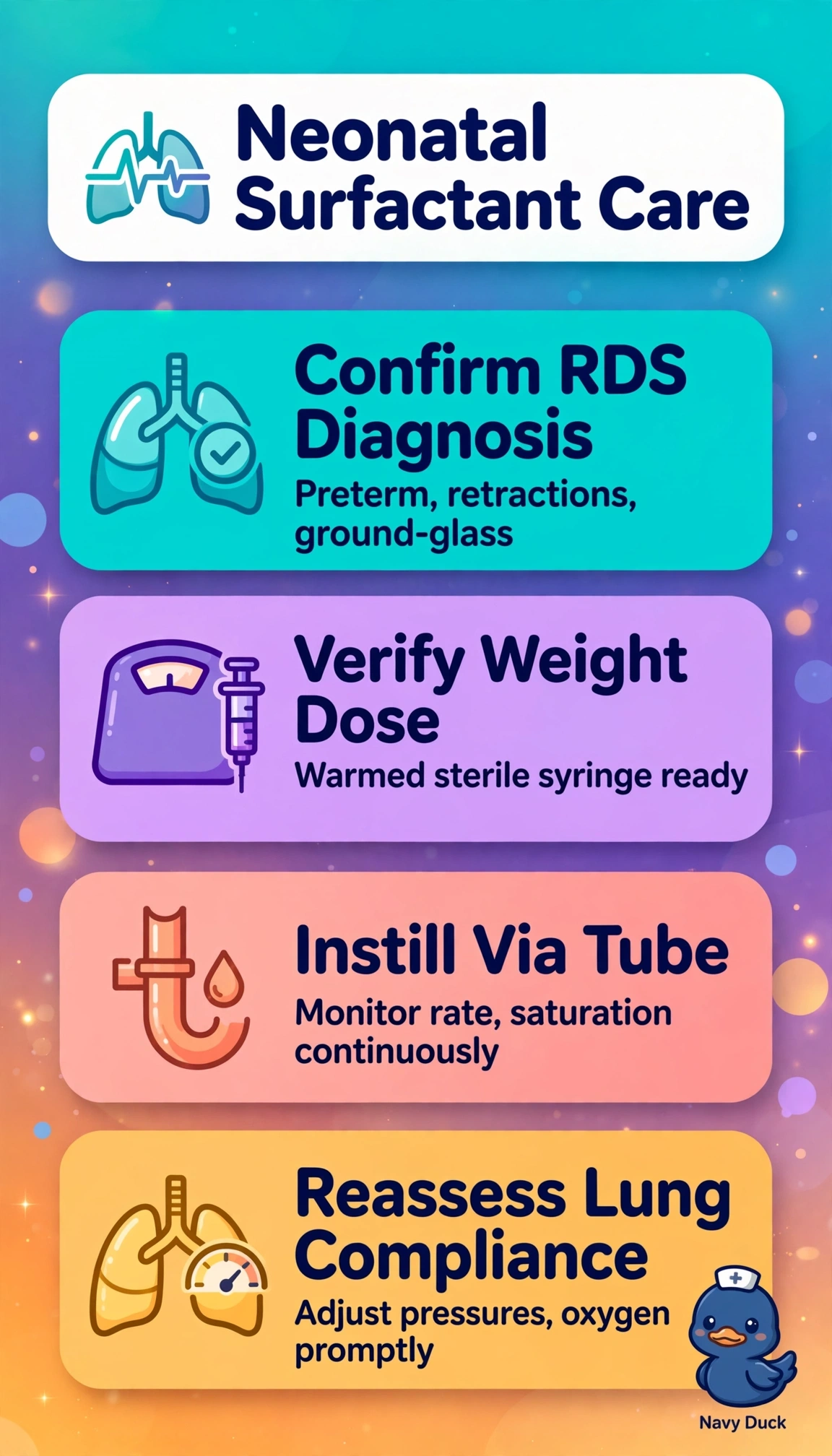
You've nailed it — your little one's stiff lungs are like damp sponges that won't stretch without soapy help, so they've collapsed fast. You'll support weight-based dosing with sterile instillation while you watch vitals closely and reassess right after the dose.
Full Explanation
Primary surfactant deficiency increases surface tension and alveolar collapse, so intratracheal replacement directly lowers opening pressures, improves compliance and oxygenation, and is indicated for preterm infants with clinical and radiographic RDS and escalating support needs, with weight-based dosing, warming, sterile technique, positioning per protocol, and monitoring for obstruction, bradycardia, desaturation, and rapid compliance change requiring ventilator adjustment. Nebulized surfactant during CPAP is not the established replacement method and would deliver unpredictable alveolar dosing while delaying effective therapy. Saline boluses do not replace surfactant and risk desaturation, airway obstruction, and infection without addressing surface tension. Waiting for severe acidosis while maintaining high FiO2 prolongs hypoxemia, barotrauma risk, and lung injury when early rescue surfactant improves outcomes. Exam caveat: surfactant is an endotracheal drug with preoxygenation, monitoring, and post-dose ventilator reassessment, not an aerosol or lavage. Practical check: verify weight, dose, tube position, suction setup, and reduce pressures promptly as compliance improves.