
In the delivery room a term newborn is limp and apneic after drying and stimulation, heart rate is 55 bpm by stethoscope, and effective positive-pressure ventilation has been given for 30 seconds with chest rise and good seal. The warmer, suction, and code medications are available with a team present. Which neonatal resuscitation intervention should the team implement next for this bradycardic newborn?
Select an answer to reveal the explanation.
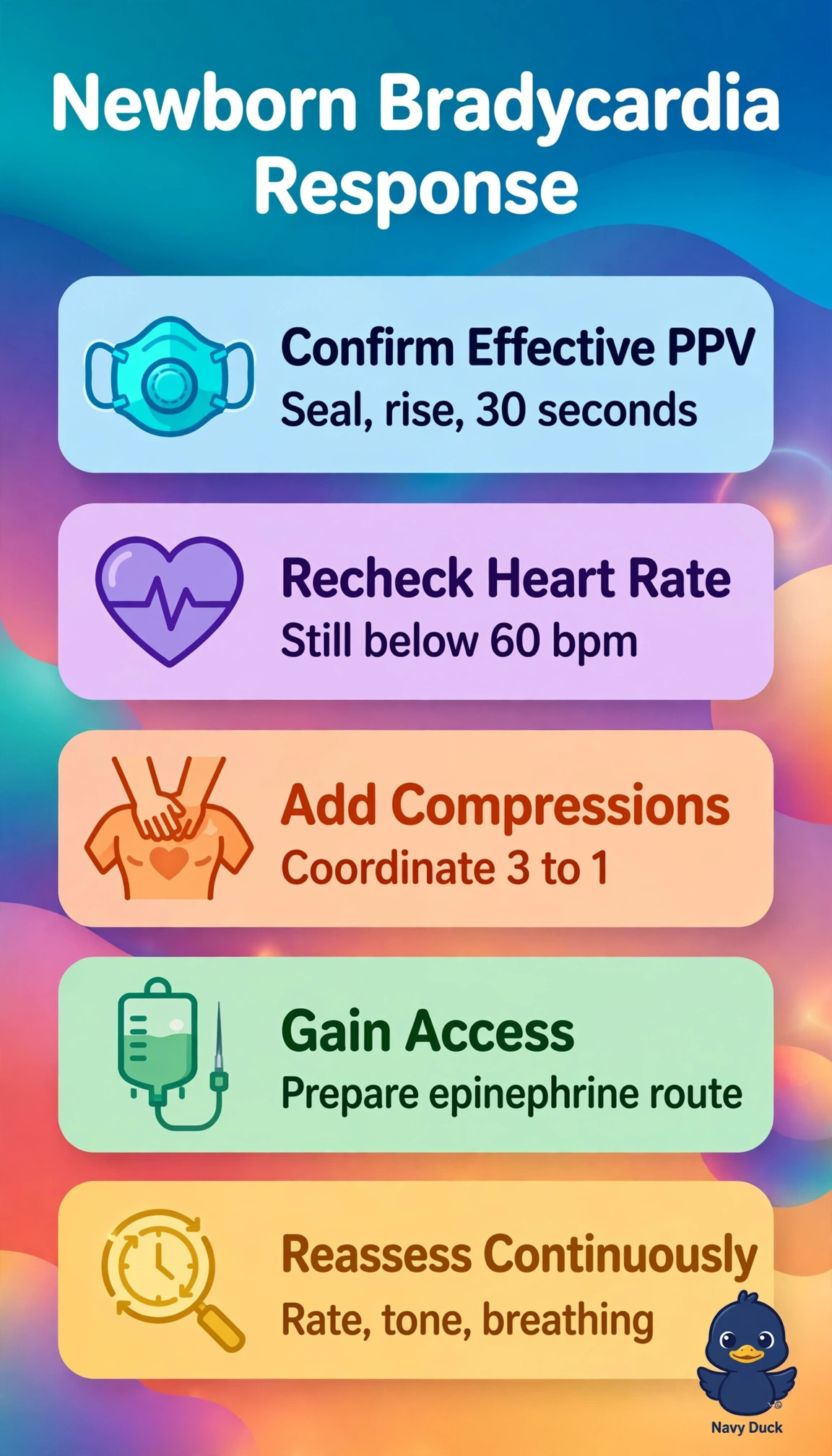
Short Explanation
You nailed the turning point where ventilation alone was not enough. Effective breaths plus compressions restore coronary flow, like priming a pump before adding fuel with epinephrine.
Full Explanation
Persistent HR 55 bpm after 30 seconds of effective PPV with good seal and chest rise in a limp apneic term newborn mandates compressions because HR <60 despite adequate ventilation reflects severe hypoxia with myocardial depression requiring augmented perfusion, so 3:1 compressions with continued ventilation must start at once while emergency umbilical venous access is secured in parallel for timely epinephrine if indicated. Prolonging ventilation to place an advanced airway before compressions fails by prioritization because ventilation is already effective and airway work must proceed alongside, not before, compressions. Deferring vascular access until later reassessment fails by parallel preparation because placement takes time and the route must be ready if HR stays <60 after 60 seconds of coordinated compressions and ventilation. Giving epinephrine immediately with compressions and access fails by medication timing because epinephrine is reserved for HR <60 despite 60 seconds of coordinated compressions with effective ventilation. Exam caveat: ineffective ventilation causes most bradycardia, so documented seal and chest rise mean corrective steps are done. Practical check: reauscultate HR, keep 90 compressions and 30 breaths/min with full recoil without pausing ventilation, and verbalize catheter and epinephrine dosing.