
A 62-year-old with severe COPD exacerbation shows worsening hypercapnia with pH 7.22, altered mentation, accessory muscle use, and inability to tolerate BiPAP due to copious secretions despite maximal bronchodilators, steroids, and antibiotics. Which invasive ventilation strategy best manages this COPD exacerbation requiring intubation?
Select an answer to reveal the explanation.
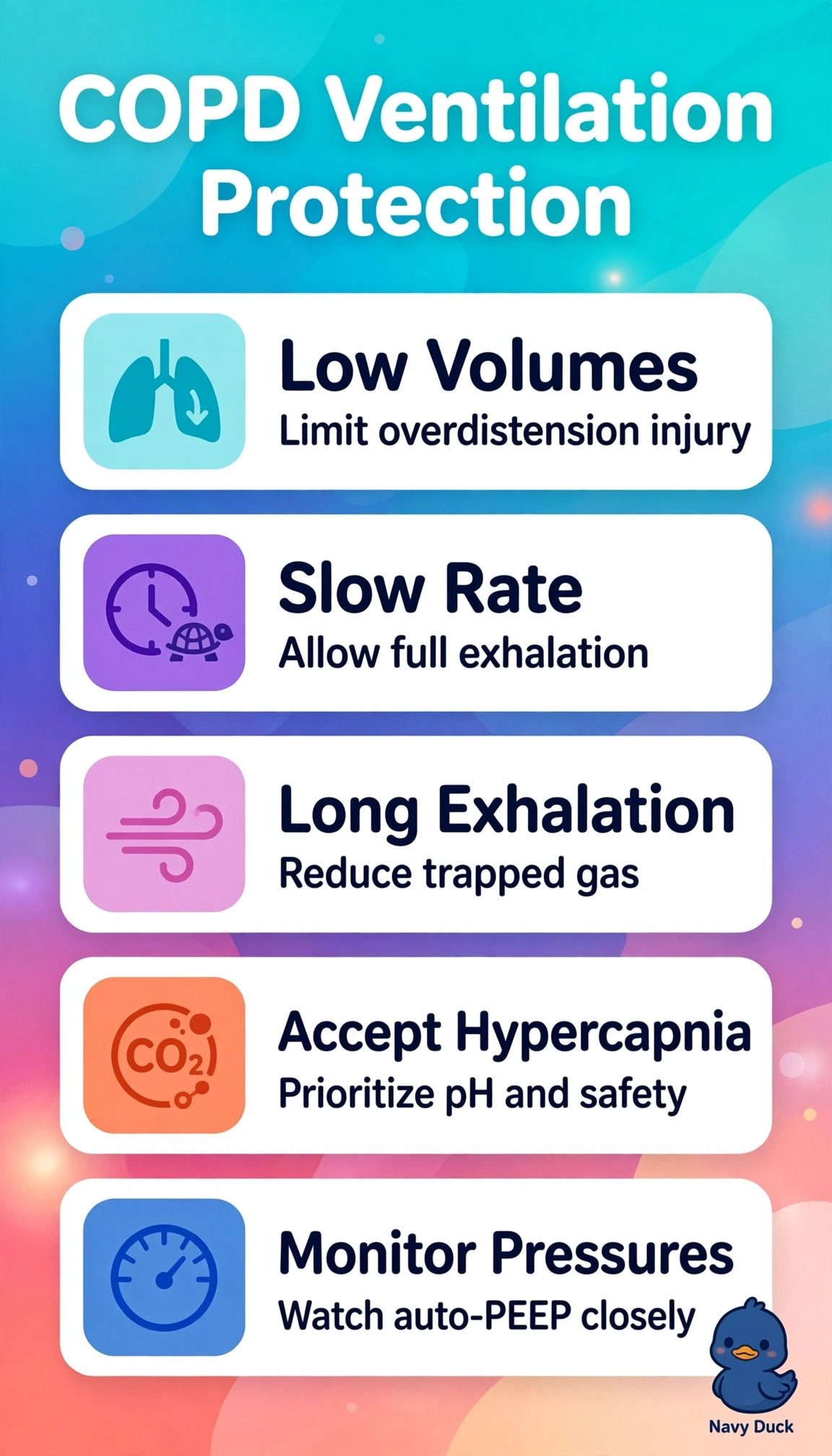
Short Explanation
You are protecting lungs that cannot empty fast enough. Slow, roomy exhalation prevents stacking breaths and your air trapping stays controlled. Permissive hypercapnia is safer than chasing normal gases.
Full Explanation
Obstructive exacerbations create expiratory flow limitation and dynamic hyperinflation, so controlled intubation with modest tidal volumes, low respiratory rate, and prolonged expiratory time allows trapped gas to escape, reduces auto-PEEP, and avoids barotrauma while tolerating elevated PaCO2 until obstruction improves. Large tidal volumes with rapid rates worsen hyperinflation by shortening exhalation and increasing intrathoracic pressure, risking hypotension and pneumothorax despite seemingly correcting gases faster. Continuing noninvasive support when mentation is depressed and secretions cannot be cleared violates airway protection principles and sedation for tolerance increases aspiration risk without securing the airway. High PEEP with short expiratory time suits recruitable ARDS physiology but in COPD adds further hyperinflation and impedes venous return. Examination vignettes emphasize secretion burden plus intolerance of BiPAP as intubation triggers, and clinically verify auto-PEEP, plateau pressure, and blood pressure closely after initiating obstructive ventilation.