
A 68-year-old postoperative patient on a general floor wears a simple oxygen mask at 6 L/min but SpO2 stays 88%, respiratory rate is 26/min, the mask sits loosely with open side gaps, and the tubing is unkinked with audible flow. Which troubleshooting action best restores effective oxygen mask gas delivery?
Select an answer to reveal the explanation.
Short Explanation
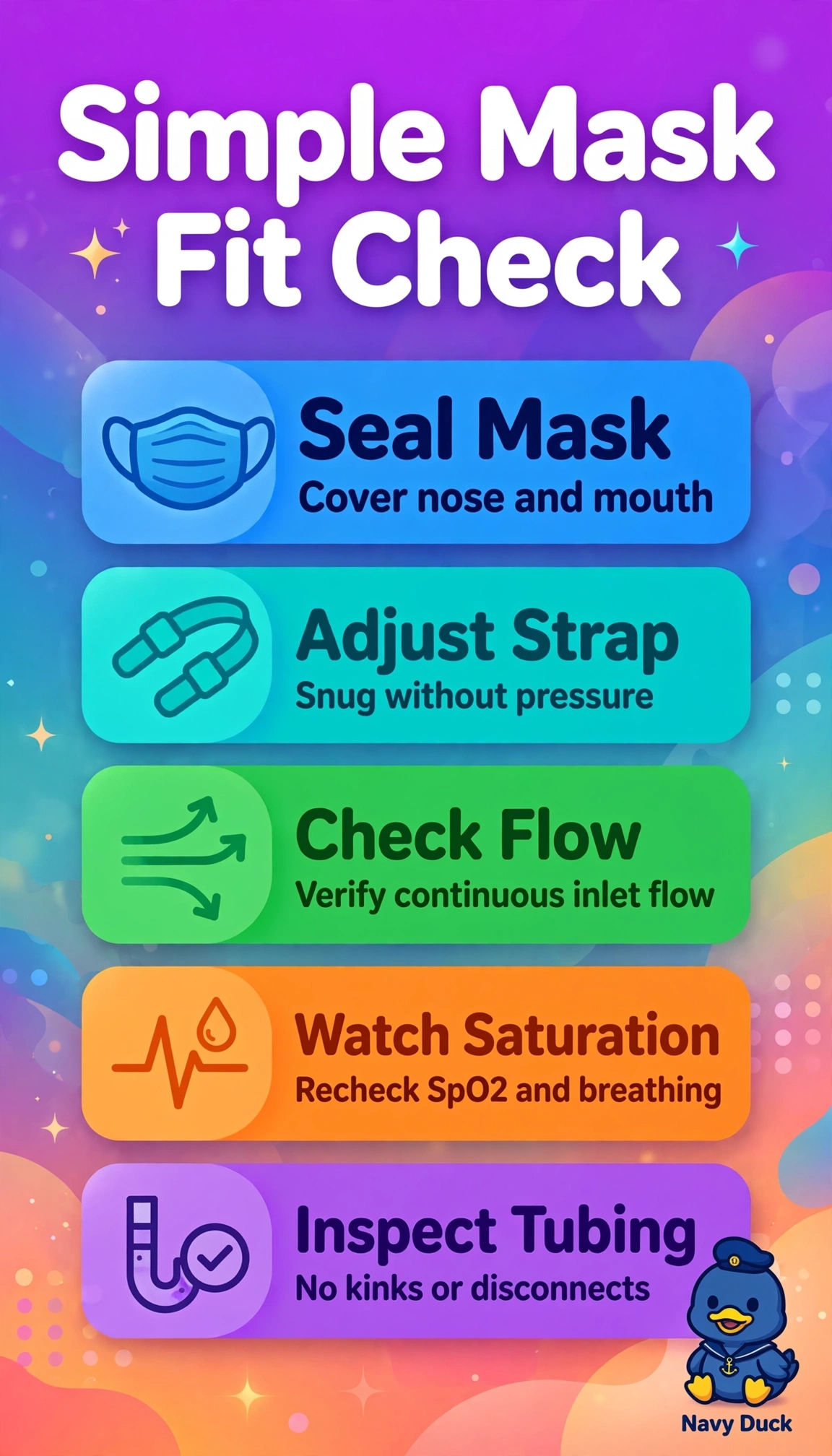
You nailed the real leak here — fit matters more than extra flow. A snug seal keeps your oxygen reservoir from washing out with room air. Cinch, check flow, then recheck SpO2.
Full Explanation
The correct response works because a simple mask depends on a relatively closed reservoir over nose and mouth, and with open side gaps room air entrainment dilutes delivered oxygen, an effect magnified by tachypnea at 26/min that raises peak inspiratory flow above the 6 L/min supply, so refitting snugly with the nose clip and strap restores the intended FiO2 while confirming continuous flow to the inlet verifies the supply already suggested by unkinked tubing with audible flow. Increasing flow to 8 L/min is sound for increased demand and remains within the 5-10 L/min range for a simple mask, but it fails by the concept of seal before flow because added oxygen still entrains through gaps and does not correct dilution. Switching to a nonrebreather at 12 L/min is familiar escalation for persistent postoperative hypoxemia, but it fails by the concept of troubleshooting before upgrading because a nonrebreather also requires a tight seal and adequate flow, so moving up without fixing fit wastes time and obscures the simple cause. Verifying probe placement and waveform is routine for unexpected desaturation, but it fails by the concept of monitor versus delivery because tachypnea corroborates true hypoxemia rather than artifact and the visible leak is the priority. For exams, distinguish delivery failure from refractory disease and do not escalate devices before correcting obvious fit and flow problems while remembering never to run a simple mask below 5 L/min due to CO2 rebreathing. In practice, feel for flow at the inlet port, mold the nose clip, adjust the strap without pressure injury, watch gaps close on inspiration, then recheck SpO2, rate, work of breathing, and mental status.