
In the delivery room a full-term newborn is limp and apneic after drying and stimulation, heart rate is 80/min by stethoscope, and no cry or effective breathing is present. The warmer is on and airway is positioned open. Which neonatal resuscitation intervention should the team initiate first for this apneic bradycardic newborn?
Select an answer to reveal the explanation.
Short Explanation
You nailed the priority here — ventilation drives recovery. NRP rewards prompt ventilation because most newborn bradycardia reverses once lungs inflate.
Full Explanation
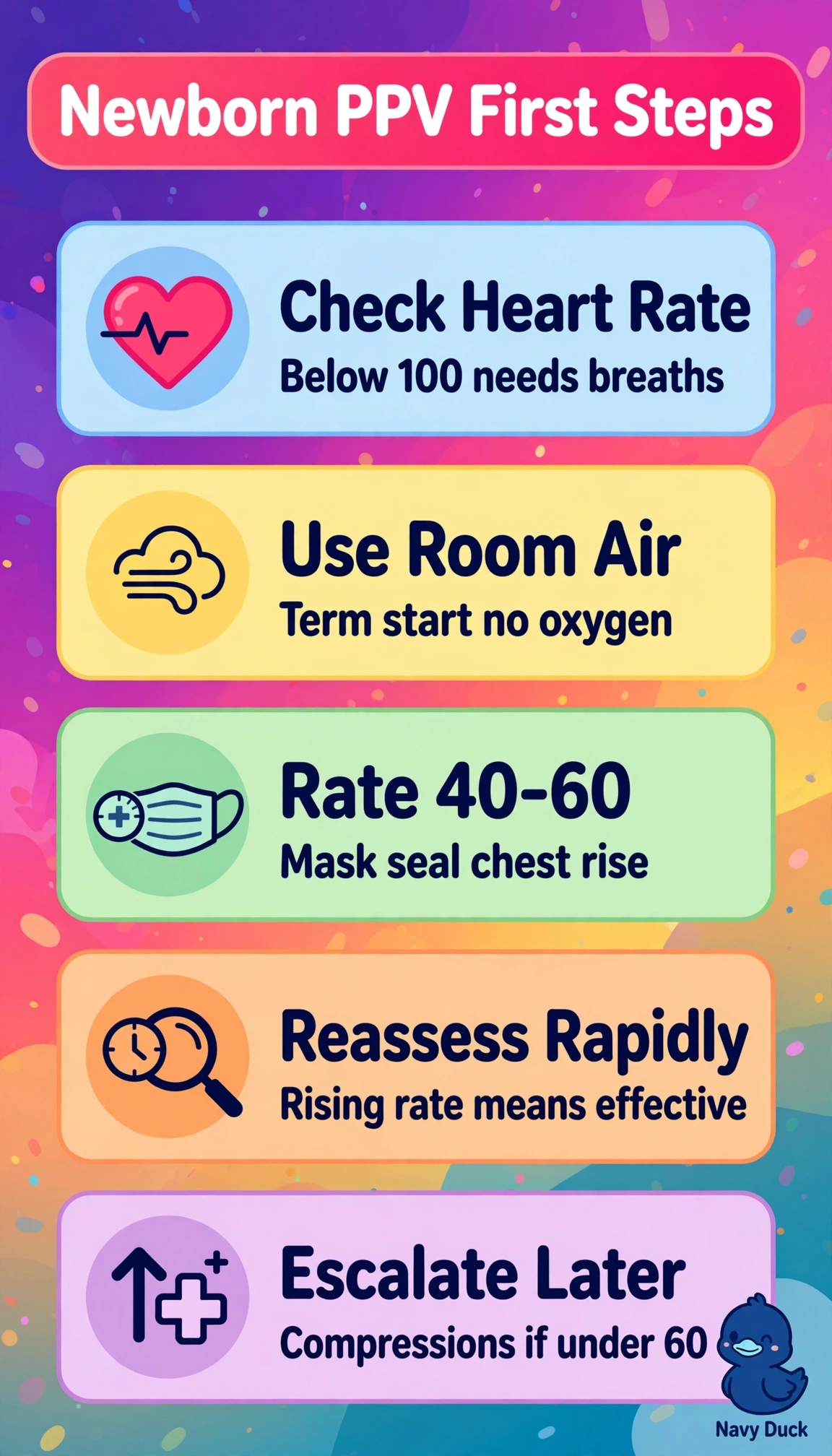
Current neonatal resuscitation prioritizes lung inflation because persistent apnea and heart rate below 100/min indicate inadequate ventilation, and positive-pressure ventilation with room air at 40-60/min restores functional residual capacity and oxygenation in most term infants. Starting compressions coordinated with ventilation is reserved for heart rate below 60/min despite at least 30 seconds of effective ventilation that moves the chest, so it is premature when the heart rate is 80 and ventilation has not been tried. Immediate intubation with intravenous epinephrine skips essential ventilation steps and epinephrine is indicated only for persistent bradycardia below 60 after effective ventilation and compressions, with vascular access required. Nasal CPAP requires spontaneous breathing effort to be effective and does not provide breaths for an apneic infant, so it fails to meet the stated apnea requirement. Exam caveat is to confirm effective mask seal and chest movement before escalating care, and practical check is to auscultate rapid heart rate rise as the best sign ventilation is working.