
A 68-year-old with COPD exacerbation is alert, decisionally capable, and refuses intubation after informed discussion of risks, benefits, and alternatives. His daughter demands intubation and cites family consensus. The advance directive supports comfort-focused care. Which ethical response best applies medical ethics reasoning to this refusal of life support?
Select an answer to reveal the explanation.
Short Explanation
You've got a capable patient speaking clearly, so you're bound to follow their voice. Autonomy means autonomy outweighs even loving family pressure when decision-making capacity is intact.
Full Explanation
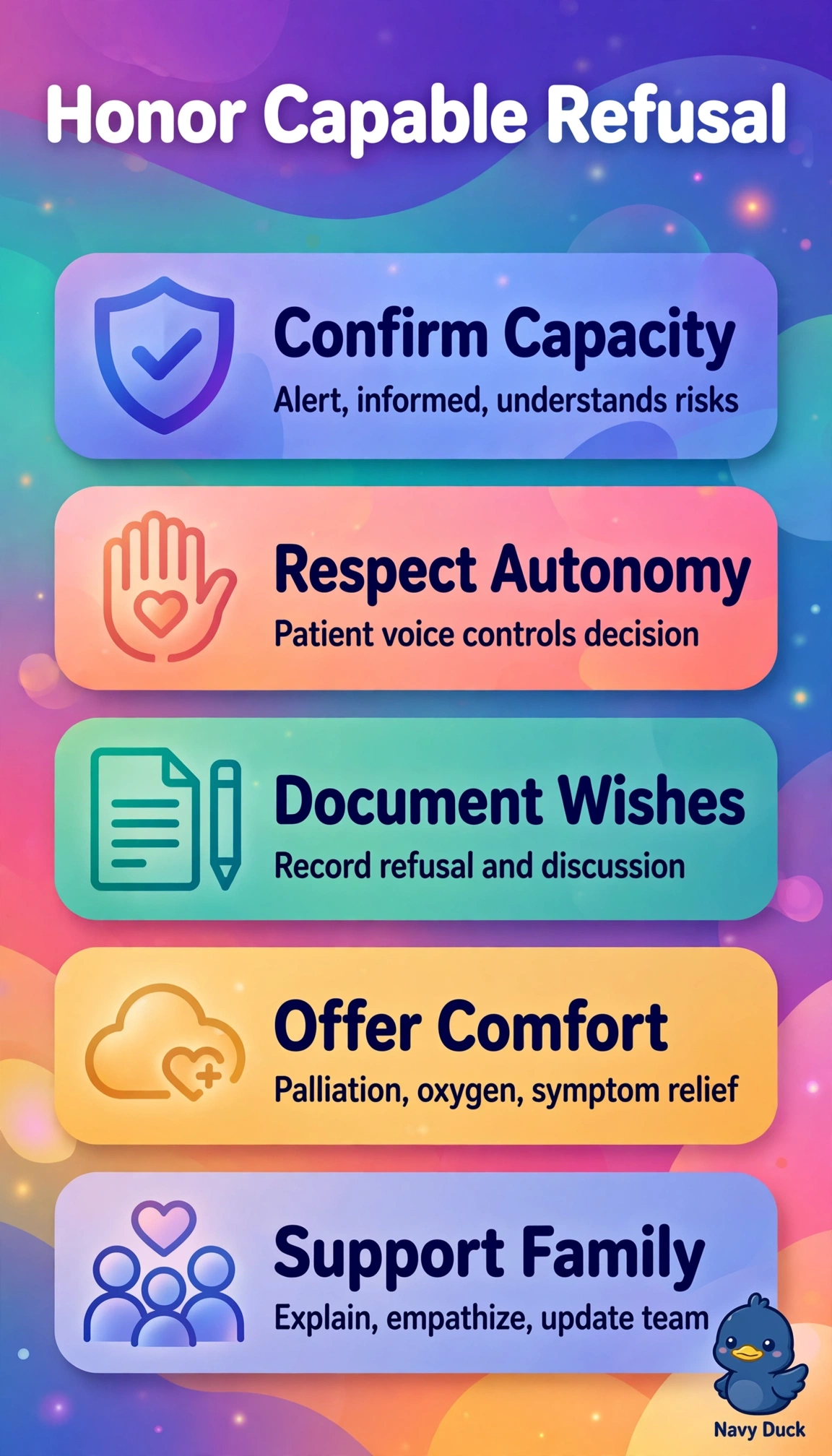
The correct response honors autonomy because an alert, decisionally capable adult after adequate disclosure may refuse life support even if death results, and here refusal is strengthened by concordance with a comfort-focused advance directive, while beneficence is preserved by providing dyspnea relief, anxiolysis, and clear documentation of capacity, discussion, and plan. A structured family conference to negotiate consensus is usually sound patient-centered care for exploring values and mitigating conflict, but it fails on decisional authority because surrogate or family agreement cannot override a capable patient's settled refusal. Formal psychiatric reassessment of capacity before accepting high-stakes refusal is appropriate when capacity is doubtful, fluctuating, or poorly documented, but it fails on clinical facts because capacity and informed understanding are already established, so added evaluation only delays rightful honoring of refusal. Providing comfort care while awaiting the daughter's authorization gets the treatment direction right yet fails on surrogate hierarchy because no proxy permission is required while the patient retains capacity, implicitly granting veto power the daughter does not hold. Exam caveat: urgent language and distressed relatives do not transfer decision rights, so do not select delay or deferral strategies when capacity is stated. Practical check is to document the four capacity elements, the disclosed risks and alternatives, directive concordance, comfort orders, and empathic family support offered.