
An overnight medical-surgical therapist is called for a 63-year-old with heart failure who developed new dyspnea, RR 26, SpO2 90% on room air, bibasilar crackles and 2+ edema after 1 L IV fluids. Chest film shows vascular congestion and BNP is elevated. Which assessment cluster best interprets gathered information about fluid-related gas exchange impairment?
Select an answer to reveal the explanation.
Short Explanation
You’re connecting the dots like a detective with fluid clues. Crackles plus edema, fluids, congestion and BNP all point to overload, so you’ll nail it by linking oxygenation trends to volume status.
Full Explanation
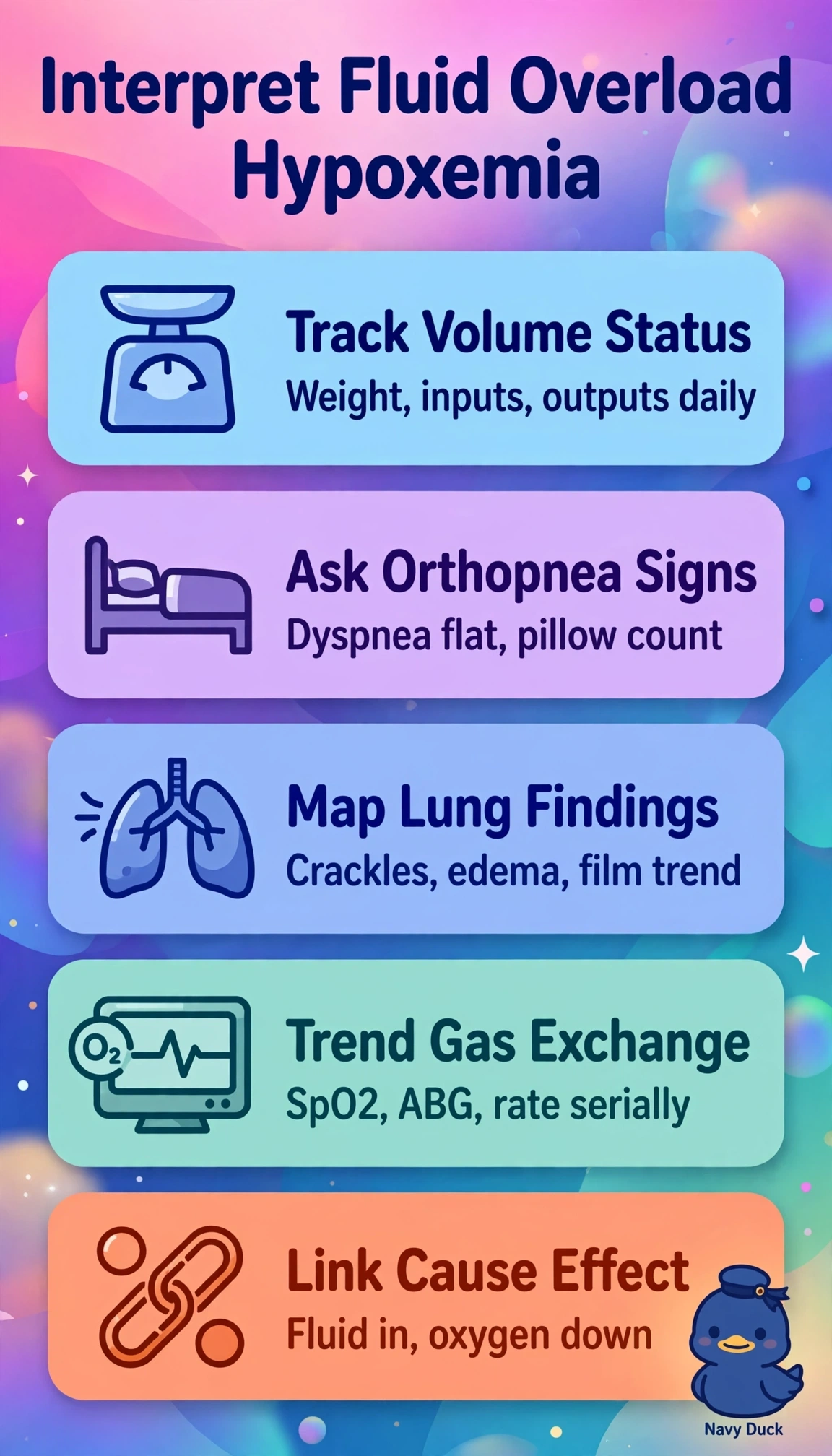
The correct cluster is right because tachypnea, SpO2 90%, crackles, edema after 1L fluids with vascular congestion and elevated BNP indicates acute fluid overload with cardiogenic gas exchange impairment, so correlating orthopnea, weight gain and net balance with lung findings plus serial ABG-oximetry trends directly links volume cause to oxygenation effect and informs diuresis, positioning and oxygen titration. The daily weight, intake-output, lung sound and imaging cluster fails by gas exchange omission because it soundly tracks congestion and balance but lacks ABG-oximetry interpretation of hypoxemia, hypercapnia and shunt required by the stem. The rate, saturation, blood gas, work of breathing and auscultation cluster fails by etiologic omission because it expertly grades hypoxemia severity yet ignores preceding fluids, weight, congestion and BNP that prove fluid-related mechanism and alter management from isolated oxygen therapy. The weight, balance, BNP, orthopnea and oximetry cluster fails by pulmonary incompleteness because it evaluates retention status but omits integration of crackles, film findings and ABG ventilation detail needed to interpret alveolar flooding effects. Exam caveat is to require both volume and oxygenation data when the stem asks about fluid-related gas exchange, not fluid status or hypoxemia alone. Practical check is to reweigh, reconcile balance, reauscultate, review oximetry-ABG pairs and orthopnea before and after diuresis to confirm oxygenation improves as balance becomes negative.