
A patient submits a complaint alleging that a surgeon dismissed worsening postoperative pain and delayed evaluating an infected wound, resulting in an unplanned readmission. How should the quality director handle the clinical aspect of this complaint?
Select an answer to reveal the explanation.
Short Explanation
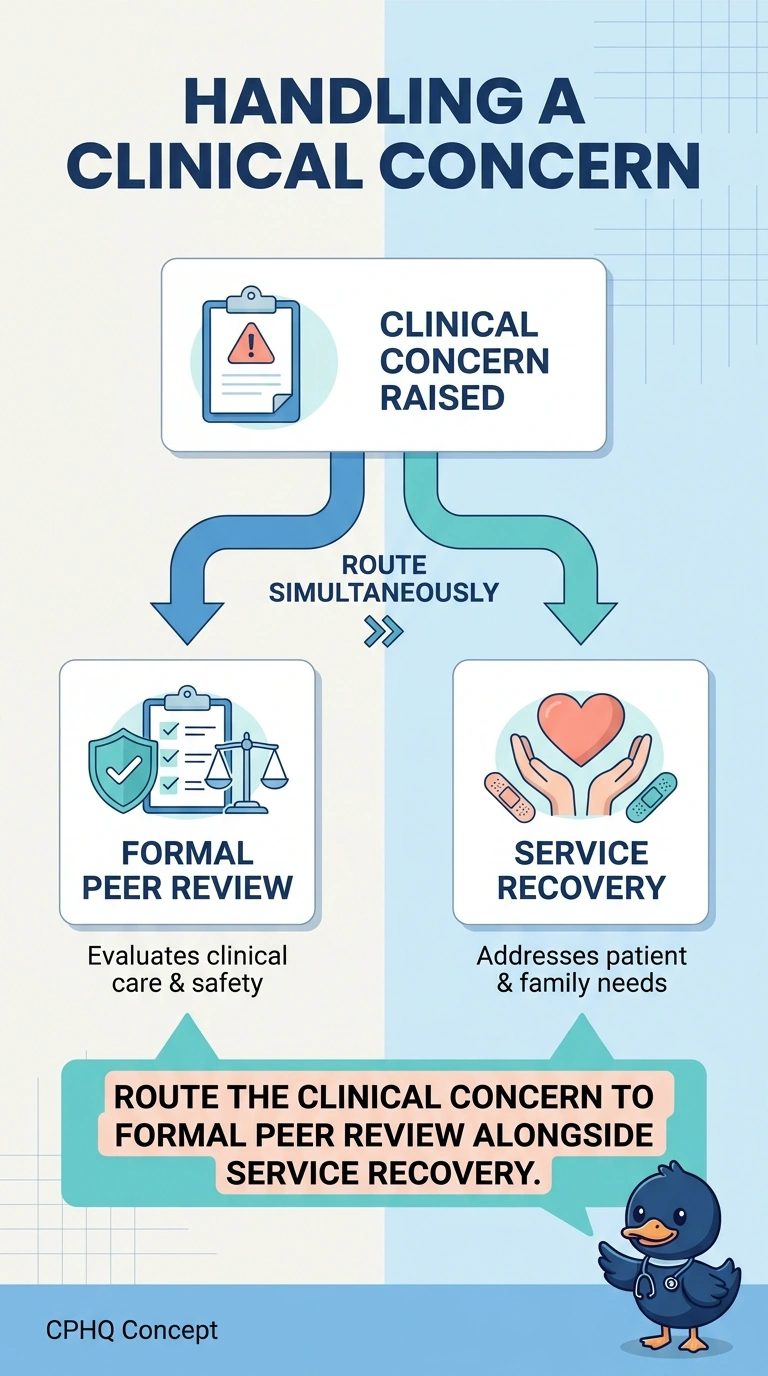
When a patient flags both a communication breakdown and a clinical delay, you have to tend the relationship while still inspecting the engine. The trap is treating a safety-linked complaint as pure customer service, when the right move is to Route the clinical concern to formal peer review alongside service recovery.
Full Explanation
Patient complaints frequently surface legitimate clinical quality or safety failures alongside communication gaps. Choosing to Route the clinical concern to formal peer review alongside service recovery works because it addresses the patient's immediate grievance while triggering an objective, confidential evaluation of clinical judgment and timeliness under medical staff bylaws. Choosing to Close the complaint after the surgeon sends the patient a personal apology letter leaves potential diagnostic delays unexamined and exposes future patients to harm. Choosing to File a summary in the confidential credentials file before anyone reviews the clinical record prejudges the case and violates due process by documenting conclusions before facts are established. Choosing to Hold the review until the surgeon accumulates three similar complaints delays accountability and misses timely opportunities for remediation. One caveat is that service-recovery correspondence must follow CMS 42 CFR 482.13 grievance timelines without disclosing privileged peer-review deliberations. As an operational check, audit monthly patient-relations logs to verify every clinical-quality allegation has a documented referral to medical staff peer review.
Prefer to study offline? Printable PDF study book + test engine ($7.50, unofficial). These questions stay free here.