
A multi-hospital system participates in an AHRQ-listed Patient Safety Organization (PSO) to learn from near-miss analyses across its facilities. To preserve federal privilege and confidentiality protections under the Patient Safety and Quality Improvement Act, how must the quality team manage Patient Safety Work Product?
Select an answer to reveal the explanation.
Short Explanation
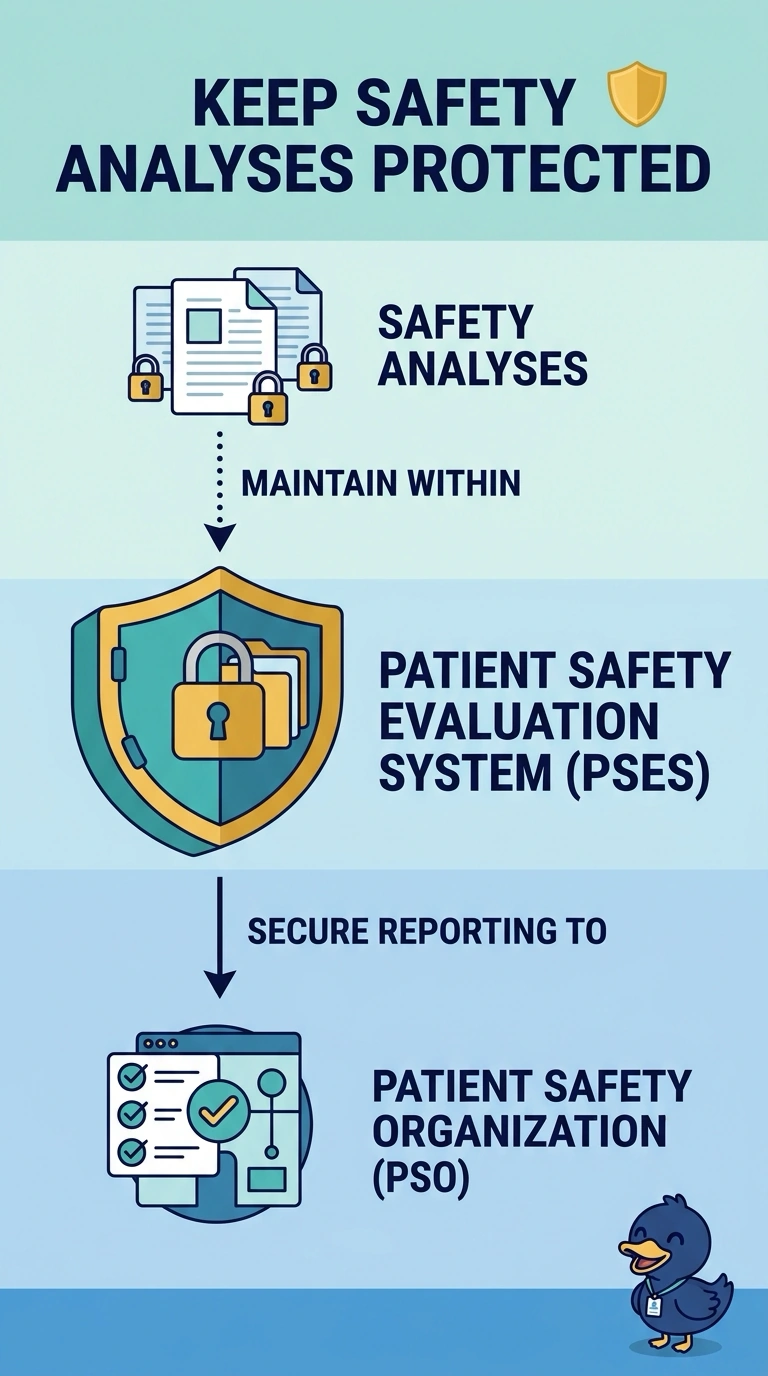
Think of your Patient Safety Evaluation System as a protected vault: safety analyses stay privileged only if you keep them inside that defined system for PSO reporting. The trap is mixing protected safety deliberations into the medical record or public files, which can strip away federal protections.
Full Explanation
The correct approach is to "Maintain safety analyses within the patient safety evaluation system for PSO reporting" because doing so preserves federal privilege and confidentiality under the Patient Safety and Quality Improvement Act (42 CFR Part 3). Patient Safety Work Product assembled inside a clearly documented Patient Safety Evaluation System for reporting to an AHRQ-listed Patient Safety Organization is protected from discovery in federal and state legal proceedings. Choosing to "File all internal safety analyses directly inside each patient's permanent legal medical record" strips away protection because original patient medical records are explicitly excluded from Patient Safety Work Product. Choosing to "Post de-identified root cause analysis reports on the hospital's public transparency webpage" risks impermissible disclosure outside statutory exceptions unless strict non-identifiability and governance rules are satisfied. Choosing to "Share raw event investigation notes with outside defense attorneys before PSO submission" can jeopardize privilege if records were not created and maintained within the Patient Safety Evaluation System for PSO purposes. One crucial caveat is that original clinical records, mandatory state adverse-event reports, and billing files remain discoverable and cannot be shielded simply by copying them into a PSO folder. Operationally, maintain a written Patient Safety Evaluation System policy separating clinical documentation from protected safety analyses.
Prefer to study offline? Printable PDF study book + test engine ($7.50, unofficial). These questions stay free here.