
A health system updates its venous thromboembolism prophylaxis guideline across all surgical services, yet three months after emailing the new policy, chart audits show 35% of eligible patients still receive outdated regimens. Which quality review action best drives consistent guideline compliance?
Select an answer to reveal the explanation.
Short Explanation
Sending another policy email when 35% of orders are outdated is like putting up a new speed limit sign while leaving the old GPS route active. When you build the guideline straight into the ordering workflow, the right choice becomes the easiest choice. The trap is treating a workflow design gap as a memory or discipline problem.
Full Explanation
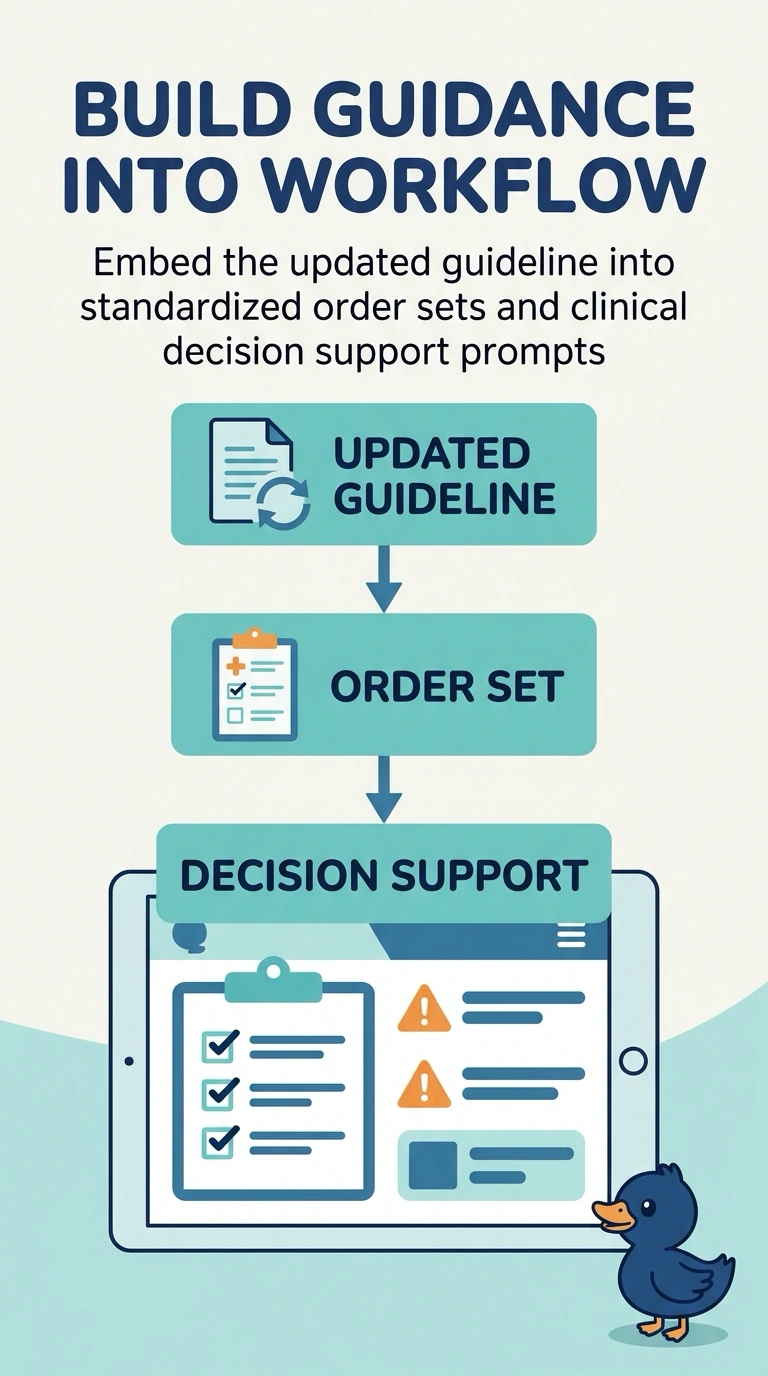
The most effective action is to "Embed the updated guideline into standardized order sets and clinical decision support prompts" so evidence-based prophylaxis becomes the default path at the exact moment clinicians write orders. Passive policies buried in email inboxes rarely change bedside habits during busy surgical admissions, whereas hardwired order-set defaults and risk-stratification prompts reduce cognitive load and practice variation. Choosing to "Resend the updated policy email weekly and require every surgeon to sign an annual attestation" relies on human memory and adds administrative friction without altering the ordering screen. Electing to "Require a pharmacist co-signature on every prophylaxis order that does not match the new default" creates a manual bottleneck that delays timely prophylaxis and burdens pharmacy without making the correct choice automatic. Deciding to "Wait for annual peer review cycles to flag noncompliant prophylaxis orders retrospectively" leaves patients unprotected for months and delays corrective action. As a caveat, clinical decision support must allow documented clinical exceptions so prescribers avoid alert fatigue or unsafe workarounds. For an operational check, audit monthly prophylaxis order-set utilization and review documented exception reasons with surgical champions.
Prefer to study offline? Printable PDF study book + test engine ($7.50, unofficial). These questions stay free here.