
A hospital's quarterly quality report shows an unexpected spike in hospital-acquired pressure injuries, yet bedside skin audits show most wounds were already present when patients arrived from nursing facilities. Which documentation audit priority should the quality team address first?
Select an answer to reveal the explanation.
Short Explanation
If a wound walks in the door with the patient but nobody records it on day one, your hospital gets blamed for causing it. The trap is fighting payers later instead of tightening Present on Admission documentation at intake.
Full Explanation
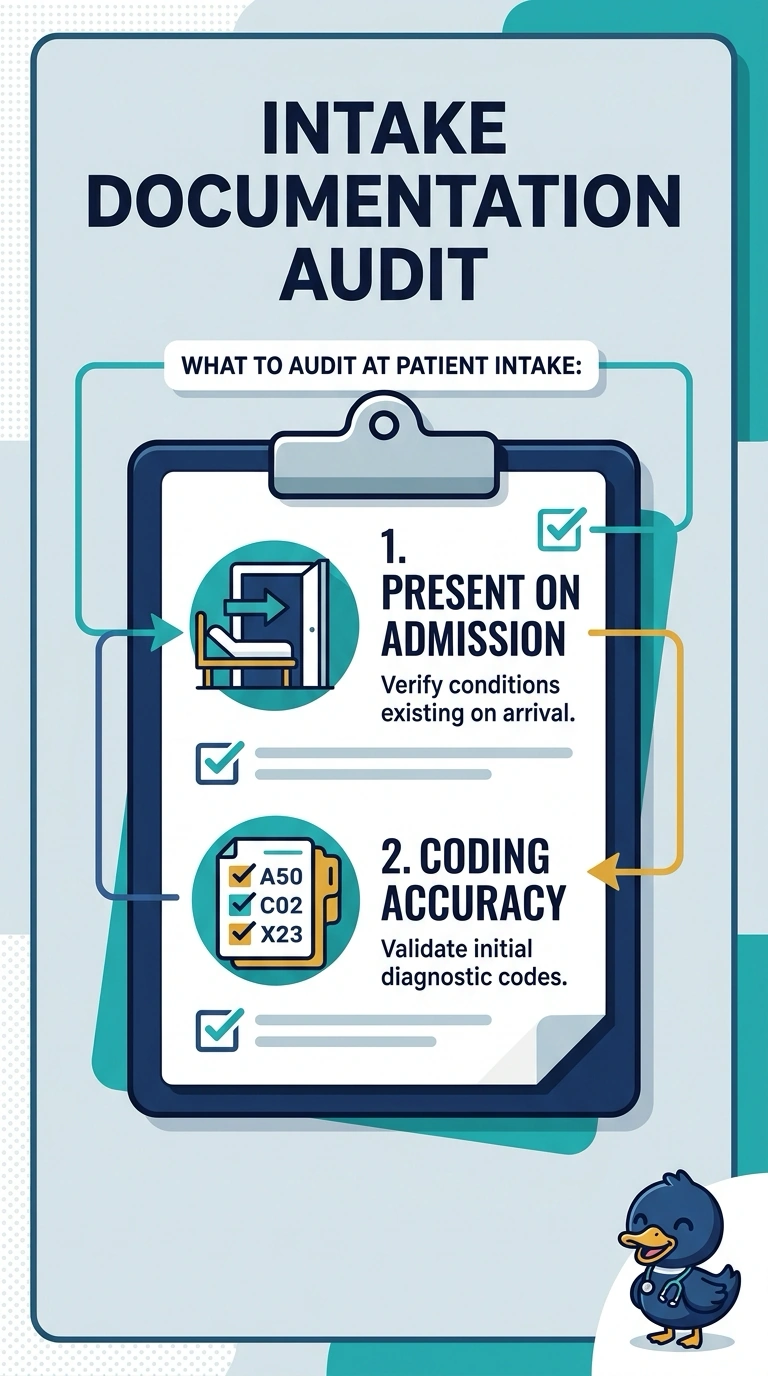
Auditing Present on Admission documentation and coding accuracy at intake ensures that conditions existing when the patient arrives are accurately captured in provider and nursing records and coded with the correct Present on Admission indicator. Under CMS Hospital-Acquired Condition rules and public quality reporting, missing or ambiguous admission skin documentation causes pre-existing wounds to be misclassified as hospital-acquired complications. Appealing external payer denials for hospital-acquired conditions after the quarterly report is published fails because appeals cannot succeed without contemporaneous clinical documentation proving onset before admission. Moving pressure injury screening from emergency department intake to the day-three nursing reassessment eliminates early detection and increases the risk of missed admission skin checks. Delaying the first skin assessment until twenty-four hours after arrival is a weak Present on Admission practice. NPIAP good practice is a head-to-toe skin check as soon as possible after admission, while a common documentation window is within 24 hours; an exam that slips past that window can cause a wound from the nursing facility to be treated as hospital-acquired. As a caveat, auditing Present on Admission capture must never pressure clinicians to mislabel true hospital-acquired injuries. Operationally, pair admission skin-check compliance audits with monthly coding reviews of flagged complication cases.
Prefer to study offline? Printable PDF study book + test engine ($7.50, unofficial). These questions stay free here.