
A hospital's inpatient falls and sepsis improvement projects stall for months because electronic health record build requests and bedside call-bell repairs sit in separate departmental queues with no shared priority. How should the quality leader address this organizational barrier?
Select an answer to reveal the explanation.
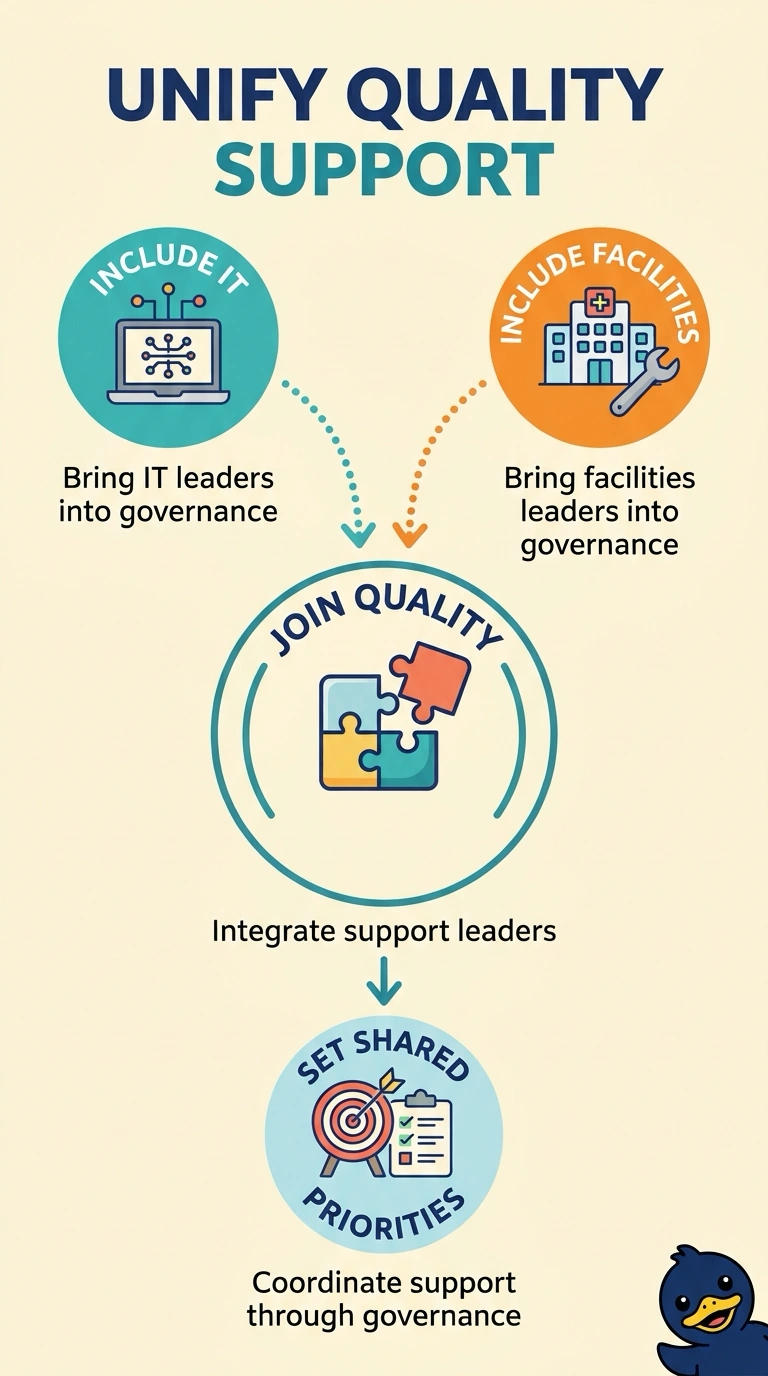
Short Explanation
Even the best clinical care team cannot outwork broken equipment or delayed software builds. When you bring support departments into the same quality governance room, infrastructure fixes move at the speed of patient care instead of sitting at the bottom of an unrelated ticket queue.
Full Explanation
Choosing to Integrate support leaders from information technology and facilities into quality governance aligns clinical safety priorities with the technical and physical infrastructure needed to execute them. When support leaders share visibility and accountability at the quality table, safety-critical builds and repairs receive coordinated prioritization rather than competing blindly with routine maintenance. Telling leadership to Instruct clinical unit managers to fund outside contractors from supply budgets fragments vendor oversight, creates compliance risks, and fails to fix enterprise prioritization. Deciding to Pause new clinical improvement projects until support ticket backlogs clear halts patient safety progress without changing how urgent clinical needs are triaged. Asking leadership to Ask bedside nurses to log manual workarounds while waiting for repairs normalizes unsafe conditions and adds cognitive burden to frontline staff. One caveat is that quality governance must apply clear risk criteria when flagging priority requests so support teams are not overwhelmed by routine items. As an operational check, track average turnaround times for quality-prioritized information technology and facilities tickets at monthly steering meetings.
Prefer to study offline? Printable PDF study book + test engine ($7.50, unofficial). These questions stay free here.