
A health system sends the exact same 40-page quarterly statistical quality report to board trustees, department directors, and bedside nurses, yet none of the groups use it to guide decisions. How should the quality director redesign quality performance communication?
Select an answer to reveal the explanation.
Short Explanation
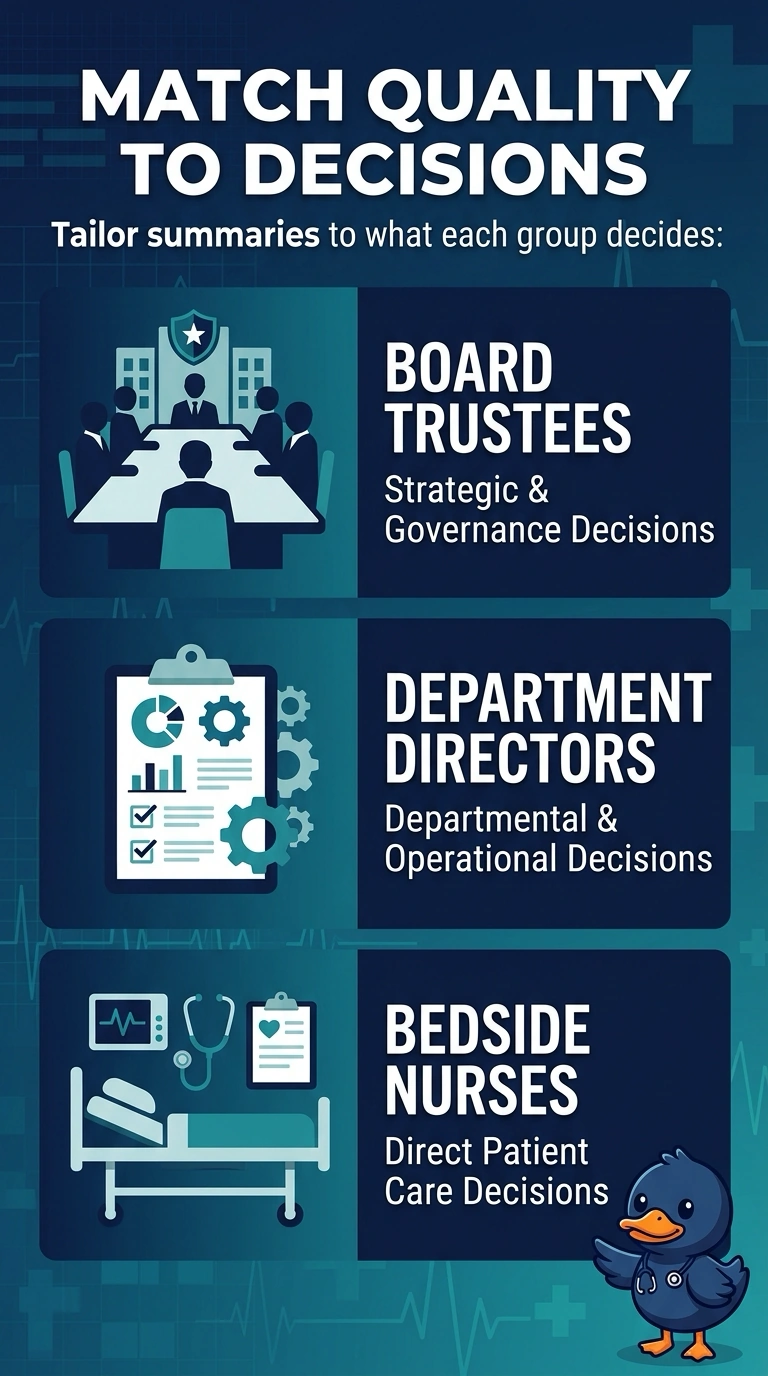
Handing a board trustee and a bedside nurse the exact same 40-page data packet is like giving a pilot and an air-traffic controller the same instrument panel. When you tailor quality metrics to the decisions each group actually makes, numbers turn into action instead of unread attachments.
Full Explanation
Choosing to Tailor concise quality summaries to the decisions each stakeholder group owns aligns quality reporting with governance and operational accountability. Trustees need strategic trend summaries and risk alerts for oversight, department directors need service-line variance and resource gaps, and frontline nurses need real-time unit process measures they can influence on their next shift. Trying to Distribute the 40-page report monthly instead of quarterly to keep data fresher only increases information overload without making the format usable. Deciding to Limit detailed quality reporting to the board and department directors starves frontline teams and unit leaders of the feedback needed to sustain daily improvements. Choosing to Replace numerical metrics with a short narrative summary of the quarter's patient stories eliminates objective trend tracking and makes it impossible to distinguish normal variation from real change. A key caveat is that every audience-specific view must pull from the same validated data definitions so numbers never contradict one another across meetings. As an operational check, gather brief semi-annual feedback from board, manager, and frontline representatives to verify whether reports actively inform their decisions.
Prefer to study offline? Printable PDF study book + test engine ($7.50, unofficial). These questions stay free here.