
Mid-year, four clinical departments simultaneously request dedicated quality analyst hours and new software licenses for separate unit initiatives, exceeding the quality department's budget. How should the quality leader prioritize these resource requests?
Select an answer to reveal the explanation.
Short Explanation
When four departments pull on your budget at once, splitting the pie evenly just leaves everyone hungry and your highest-risk patients unprotected. The trap is defaulting to first-come, first-served or equal slices instead of tying resources to strategy and safety.
Full Explanation
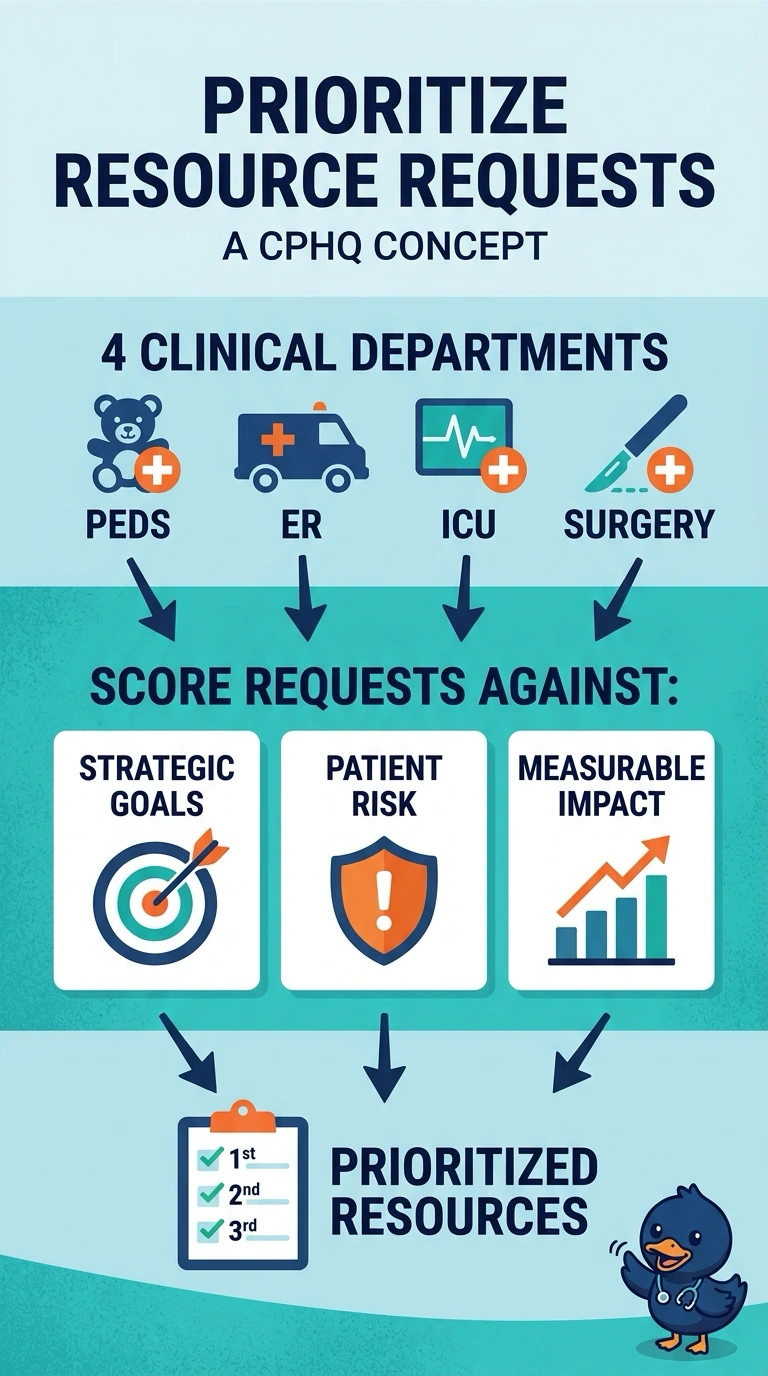
Quality leaders routinely face more improvement requests than analyst hours and software budgets can support, making transparent prioritization essential. Choosing to Score requests against strategic goals, patient risk, and measurable impact ties limited quality resources directly to organizational strategy, regulatory imperatives, and clinical safety exposure rather than internal politics. By contrast, Distribute analyst hours evenly across all four departments to keep the allocation fair spreads capacity too thin and starves high-risk safety initiatives so low-impact projects can proceed. Similarly, Approve requests strictly in the chronological order they were submitted rewards whoever emails first rather than addressing the greatest patient need or strategic priority. Likewise, Fund the department with the largest annual operating budget prioritizes financial margin over patient safety and enterprise quality goals, risking preventable harm in lower-margin services. One caveat is that scoring criteria must be agreed upon with executive sponsors in advance so departments view the ranking as fair rather than arbitrary. As an operational check, publish a weighted intake rubric and review deferred requests quarterly to confirm whether changing clinical risks warrant reprioritization.
Prefer to study offline? Printable PDF study book + test engine ($7.50, unofficial). These questions stay free here.