
A hospital's quality department builds and launches a new sepsis order set on its own, but emergency department physicians and nurses bypass it during busy shifts because it does not fit their workflow. What should the quality leader do next to improve adoption?
Select an answer to reveal the explanation.
Short Explanation
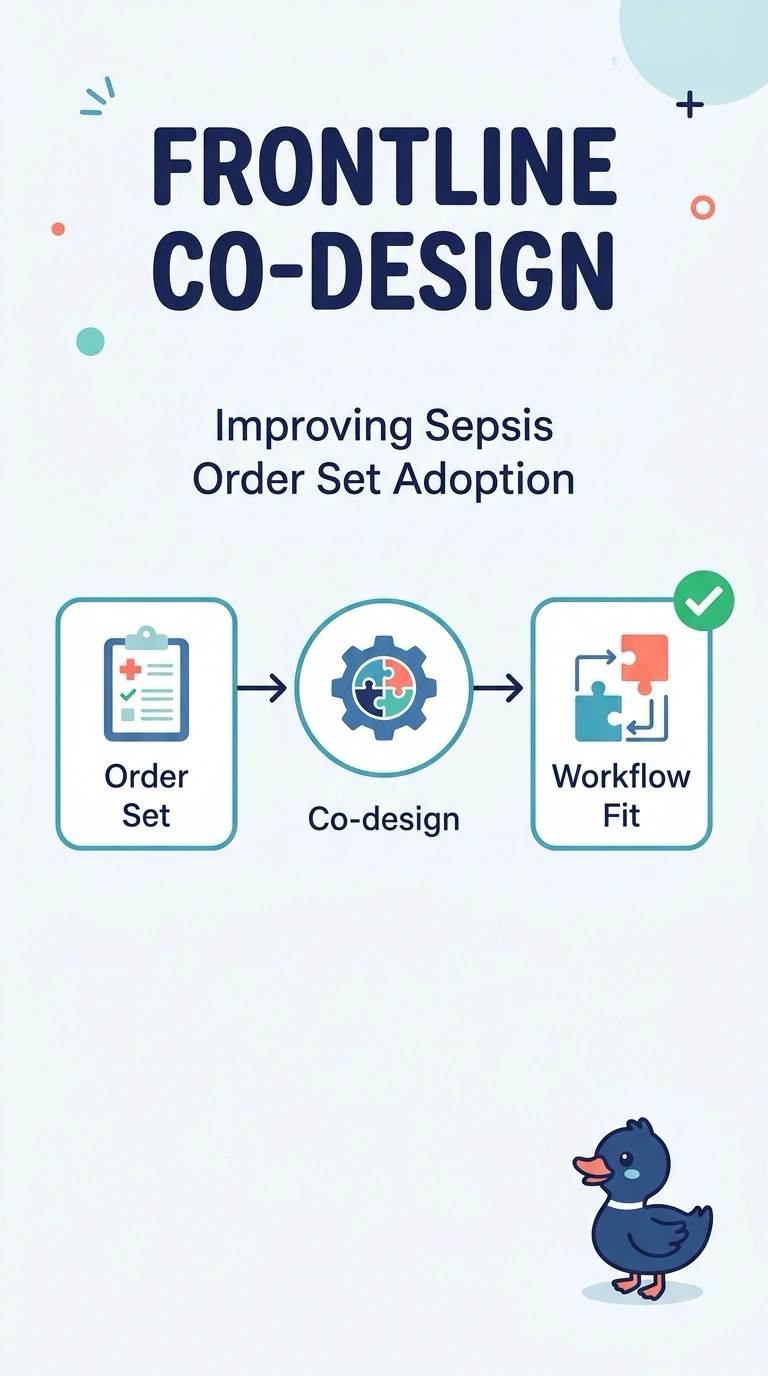
Nobody likes wearing shoes someone else bought without asking your size, and clinicians feel the same way about top-down order sets. You rebuild buy-in by bringing frontline doctors and nurses to the table to co-design the workflow, while the trap is forcing more online training or reporting staff for a design flaw.
Full Explanation
Convene frontline physicians and nurses to co-design workflow changes and address barriers because sustainable quality improvement depends on stakeholder engagement and fitting clinical decision support into real emergency department workflows rather than imposing top-down mandates. Require mandatory online training for all noncompliant staff assumes a knowledge gap when the actual problem is poor workflow fit and lack of frontline ownership. Report individual physicians to the medical executive committee escalates a system design failure into disciplinary theater, eroding trust between clinicians and the quality department. Revise the order set defaults using quality department staff alone repeats the original top-down error that caused bypassing by excluding frontline input and failing to address workflow barriers. As a caveat, co-design must still preserve evidence-based clinical elements of the sepsis bundle while adapting how orders and alerts are triggered. For an operational check, hold a rapid workflow walk-through with emergency department champions, revise the order set based on their feedback, and track weekly bundle utilization alongside clinician feedback.
Prefer to study offline? Printable PDF study book + test engine ($7.50, unofficial). These questions stay free here.