
A newly appointed hospital trustee with a finance background asks the quality director how the governing board can fulfill its quality oversight duty without micromanaging clinical care. What guidance should the quality director provide?
Select an answer to reveal the explanation.
Short Explanation
When you advise a governing board, remember that trustees steer the ship from the bridge rather than grabbing the mop or writing clinical orders on deck. The trap is confusing governance oversight with either micromanaging clinical work or handing off your organization's accountability to outsiders.
Full Explanation
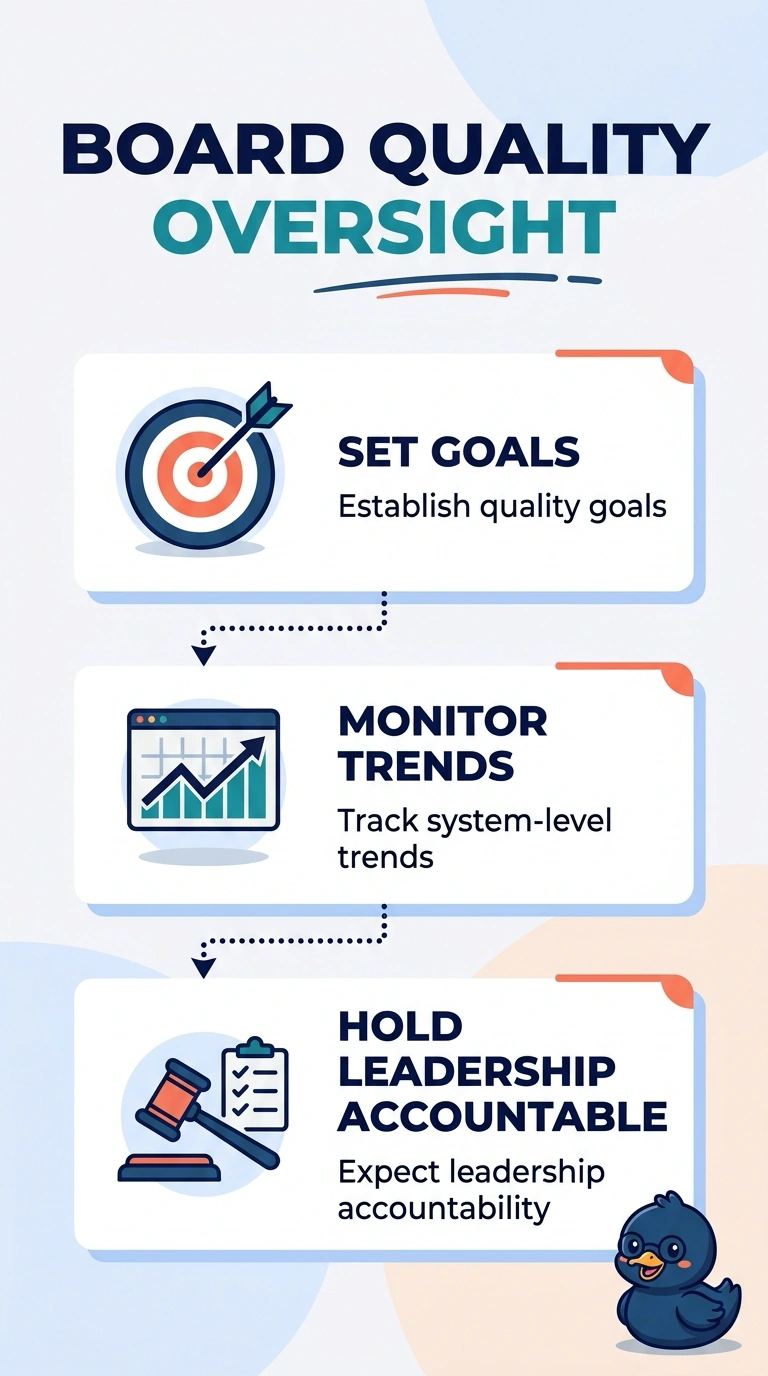
Effective healthcare governance separates strategic oversight from day-to-day clinical operations. Advising the trustee to Set quality goals, monitor system-level trends, and hold leadership accountable captures the board's core fiduciary role: establishing organizational priorities, reviewing aggregated quality and safety scorecards, ensuring adequate resources, and requiring corrective action when performance lags. Suggesting they Read a sample of patient complaint letters aloud at each monthly board meeting floods trustees with anecdotal noise and obscures systemic patterns. Suggesting they Delegate quality oversight to the hospital's external auditors with an annual summary abdicates a non-delegable governance duty under hospital licensing and Medicare Conditions of Participation at 42 CFR 482.21. Suggesting they Approve individual physician clinical protocols before bedside implementation crosses into clinical practice and medical staff authority rather than governance oversight. As a governance caveat, boards still need clear escalation triggers so serious sentinel events or systemic compliance failures reach trustees promptly. As an operational check, provide new trustees with an orientation briefing on the hospital's quality dashboard, benchmark definitions, and escalation thresholds.
Prefer to study offline? Printable PDF study book + test engine ($7.50, unofficial). These questions stay free here.