
A community hospital's governing board receives quarterly packets filled with raw unit-level audit spreadsheets, and trustees struggle to see how quality performance supports the hospital's five-year strategic plan. What should the quality director do first to strengthen board-level governance?
Select an answer to reveal the explanation.
Short Explanation
If you hand a pilot a stack of engine receipts instead of an instrument panel, flying gets harder fast. Your governing board needs a strategic scorecard tied to big-picture goals, and the trap is sending even more raw unit spreadsheets that bury critical trends in noise.
Full Explanation
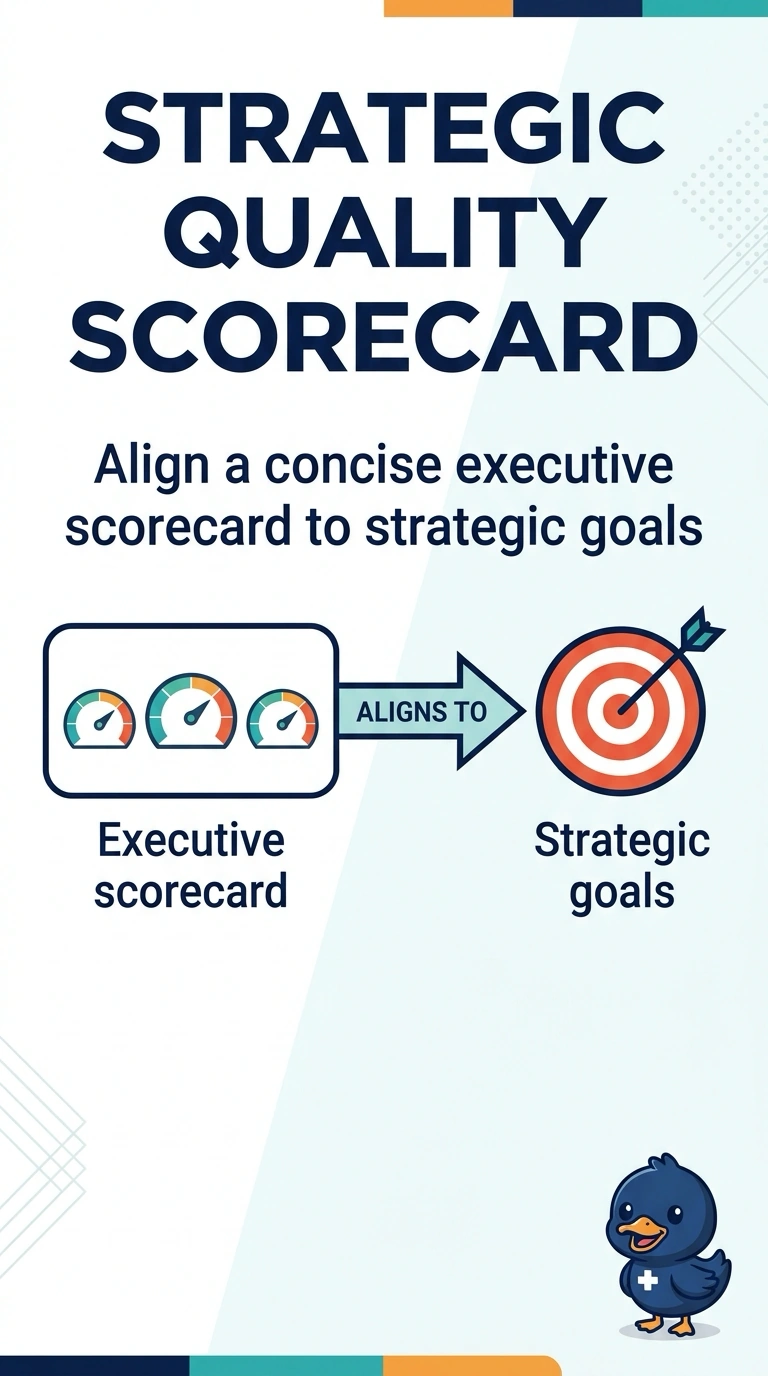
Align a concise executive scorecard to strategic goals so governing board members can see high-level trends, benchmark comparisons, and clear links between quality performance and organizational priorities without getting lost in operational noise. Distribute weekly unit-level audit spreadsheets before meetings floods trustees with unaggregated raw data, making it harder to distinguish systemic risks from routine unit variation. Delegate board quality reporting to the finance committee chair misplaces clinical accountability with financial oversight, depriving the board of appropriate clinical interpretation and governance of quality. Add a narrative of each unit's audit findings to every quarterly packet overwhelms trustees with operational detail, obscuring strategic trends and making it harder to prioritize system-level improvement. As a caveat, summarizing data for the board must not hide serious unit-level outliers or sentinel events that require executive awareness. For an operational check, map each scorecard metric directly to one of the five-year strategic pillars, include target thresholds and historical baselines, and verify during board orientation that trustees can interpret each indicator.
Prefer to study offline? Printable PDF study book + test engine ($7.50, unofficial). These questions stay free here.