
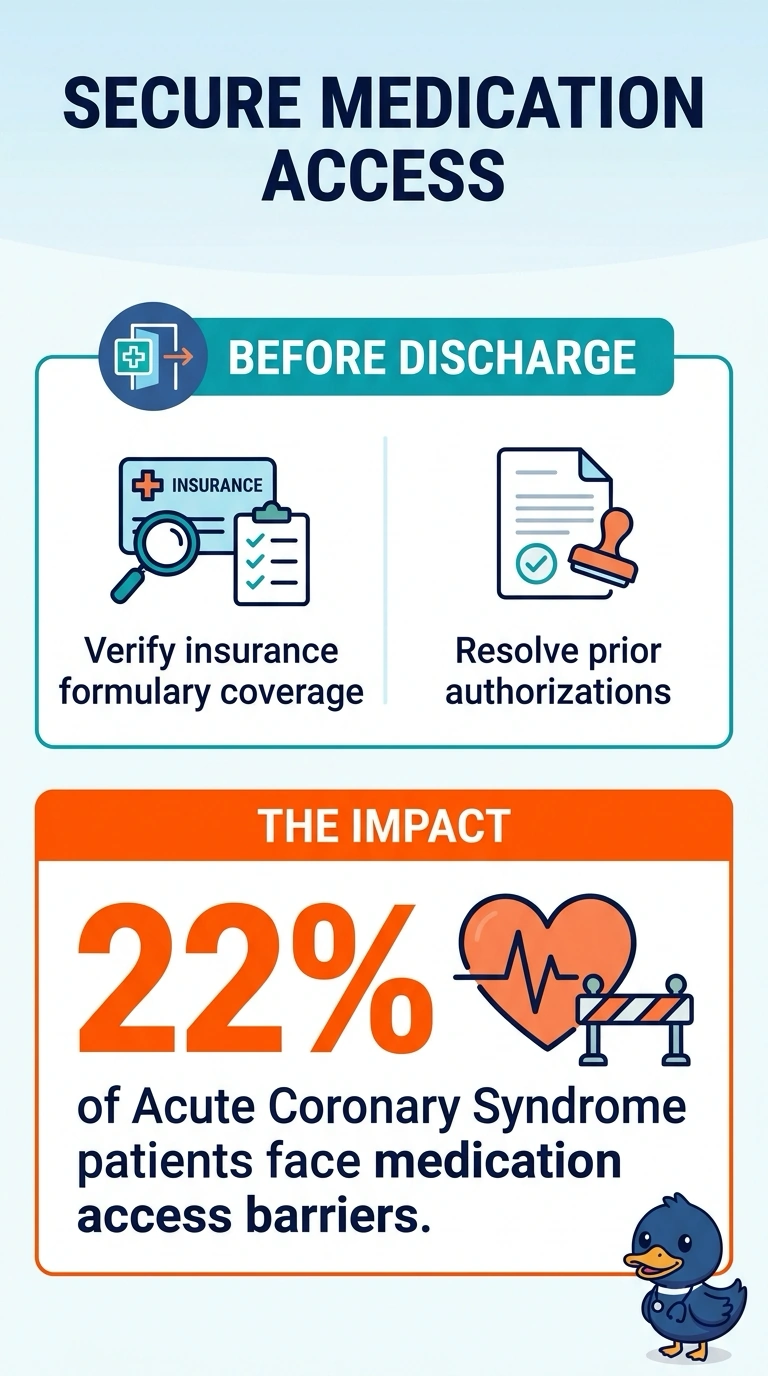
An accountable care organization finds that 22% of patients discharged after acute coronary syndrome never fill their prescribed antiplatelet medication at the outpatient pharmacy, leading to preventable readmissions. Which transition intervention best addresses primary medication non-adherence?
Select an answer to reveal the explanation.
Short Explanation
Sending a patient home with a prescription their insurance will not cover is like handing them a locked door without the key. The trap is assuming patients will untangle prior authorizations on their own while recovering from a heart event. Clear formulary and cost barriers before discharge so your patients actually leave with their medications.
Full Explanation
Primary medication non-adherence—never filling an initial prescription—frequently stems from unexpected out-of-pocket costs, non-formulary drugs, or pending prior authorizations. When the care team acts to "Verify insurance formulary coverage and resolve prior authorizations before discharge," they remove financial and administrative barriers while the patient is still in the hospital, enabling bedside delivery or seamless pharmacy pickup. Choosing "Instruct patients during discharge teaching to call their insurer if a copay seems high" places a complex administrative burden on acutely ill patients and often leads to abandoned prescriptions. Choosing "Mail a generic heart-health brochure to each patient two weeks after hospital discharge" arrives too late for time-sensitive antiplatelet therapy and fails to resolve coverage obstacles. Choosing "Limit discharge prescriptions to a three-day supply so patients see their primary doctor" increases the risk of a dangerous medication gap if follow-up appointments are delayed. As a caveat, even approved medications can remain unaffordable if high deductibles apply, requiring social work or patient-assistance screening. As an operational check, track the percentage of high-risk cardiac discharges leaving with medications in hand or confirmed pharmacy fill within 48 hours.
Prefer to study offline? Printable PDF study book + test engine ($7.50, unofficial). These questions stay free here.