
A federally qualified health center finds that patients with poorly controlled asthma frequently miss specialist appointments and return to the emergency department due to distrust, transportation barriers, and home environmental triggers. Which population health intervention best addresses these gaps?
Select an answer to reveal the explanation.
Short Explanation
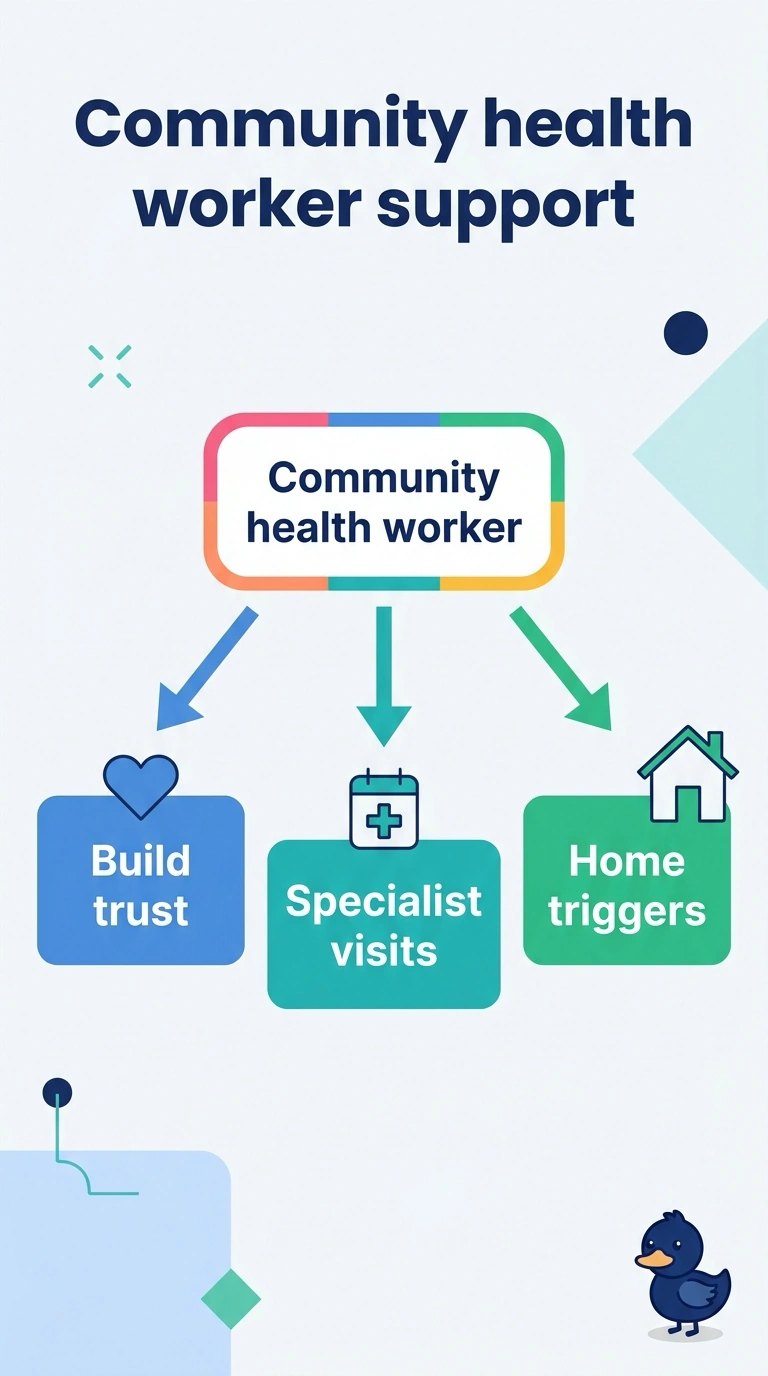
A brochure in the mailbox cannot ride the bus with a patient or spot mold triggers in an apartment. When distrust and social barriers drive emergency visits, community health workers bridge the gap between your clinic and daily life. The trap is relying on passive printouts or punitive rules that push vulnerable patients further away.
Full Explanation
Integrating community health workers to provide culturally concordant navigation and home support directly addresses medical distrust, transportation hurdles, and household asthma triggers such as pests or mold. Trusted peers from the community help patients arrange transit, navigate specialist scheduling, and build confidence in daily controller medications. Mailing standardized English-only asthma brochures to every patient after an emergency department visit fails to reach patients with limited English proficiency or low health literacy and does nothing to resolve transportation or home-environment hazards. Limiting specialist referrals to patients who have completed three consecutive clinic visits penalizes patients facing the very access barriers causing missed appointments, worsening inequities and acute flares. Offering evening specialist slots only to patients who have not had an emergency visit in the past year withholds expanded access from the highest-risk patients who most need specialist input, leaving distrust, transportation barriers, and home triggers unaddressed. As a caveat, community health worker programs require structured supervision, clear escalation protocols to clinical nurses, and sustainable funding. For an operational check, monitor completed specialist referrals and 90-day emergency department revisit rates among enrolled patients.
Prefer to study offline? Printable PDF study book + test engine ($7.50, unofficial). These questions stay free here.