
An accountable care organization finds that patients discharged after heart failure hospitalizations frequently miss refill windows and stop taking guideline-directed medications within 30 days. Which care transition partnership best addresses this adherence gap?
Select an answer to reveal the explanation.
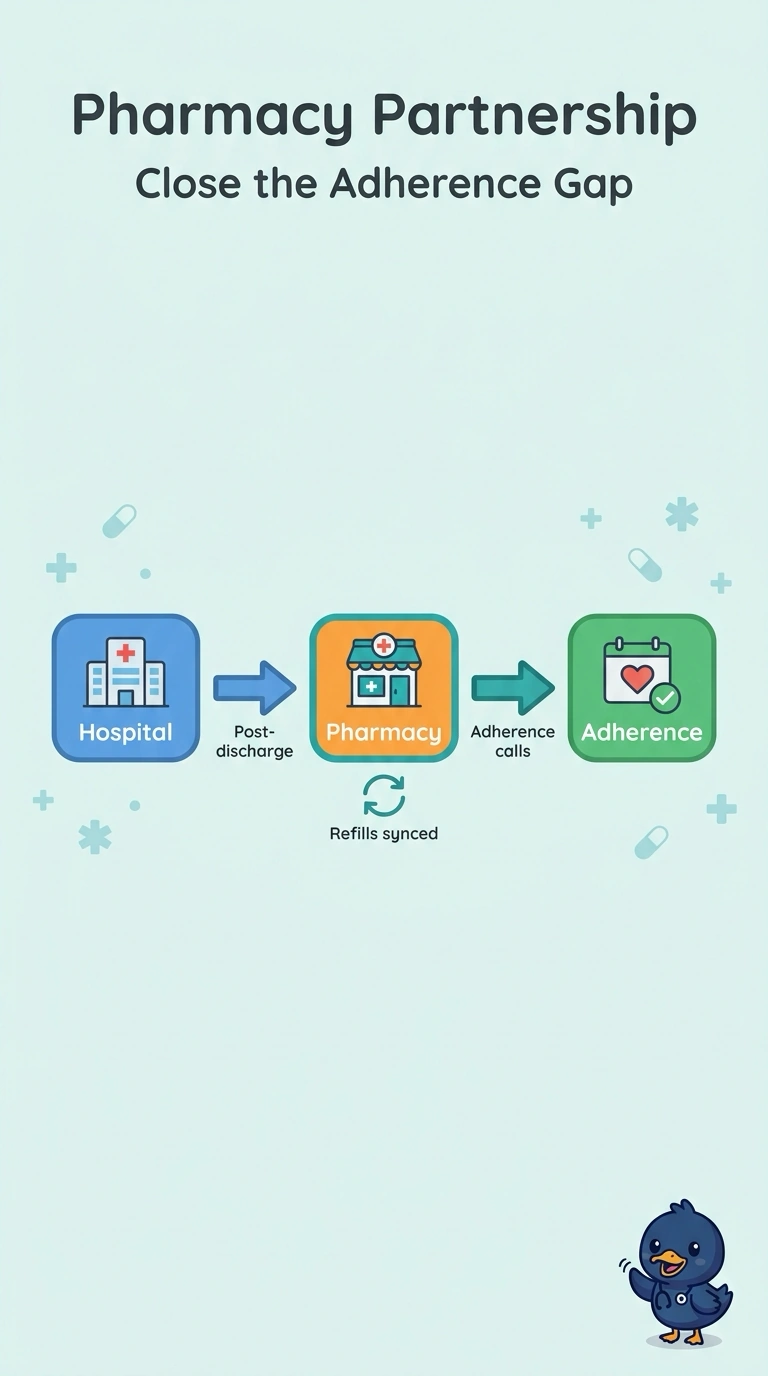
Short Explanation
Think of your local community pharmacist as a pit crew keeping your patients' medication regimen tuned between clinic visits. The trap is assuming a delayed mailout or a trip back to the hospital pharmacy fixes refill confusion, when you actually need synchronized, accessible neighborhood follow-up.
Full Explanation
Partnering with community pharmacies to synchronize refills and conduct post-discharge adherence calls works because it aligns prescription pickup dates and pairs them with proactive pharmacist outreach during the highest-risk transition window. Community pharmacists can spot insurance prior-authorization delays, duplicate therapies, and cost barriers early, then coordinate directly with the prescribing clinician before missed doses trigger decompensation. By contrast, Mailing printed medication calendars to each patient's home address four weeks after hospital discharge arrives too late, since many adherence breakdowns and early readmissions occur within the first two weeks. Requiring patients to return to the inpatient hospital pharmacy for their first refill after discharge creates transportation and geographic barriers that worsen non-adherence rather than improving convenience. Shortening discharge medication education so the primary care annual wellness visit covers refill planning removes critical transition reinforcement and leaves patients without timely guidance. One caveat is that pharmacy partnerships require secure bidirectional communication channels and patient consent for data sharing. As an operational check, audit 30-day proportion of days covered and 7-day post-discharge pharmacy contact completion rates across participating clinics.
Prefer to study offline? Printable PDF study book + test engine ($7.50, unofficial). These questions stay free here.