
A primary care medical home finds that patients discharged after chronic obstructive pulmonary disease exacerbations frequently return to the emergency department within five days for mild dyspnea because they are unsure when to adjust rescue inhalers or call the clinic. Which care transition intervention best addresses this gap?
Select an answer to reveal the explanation.
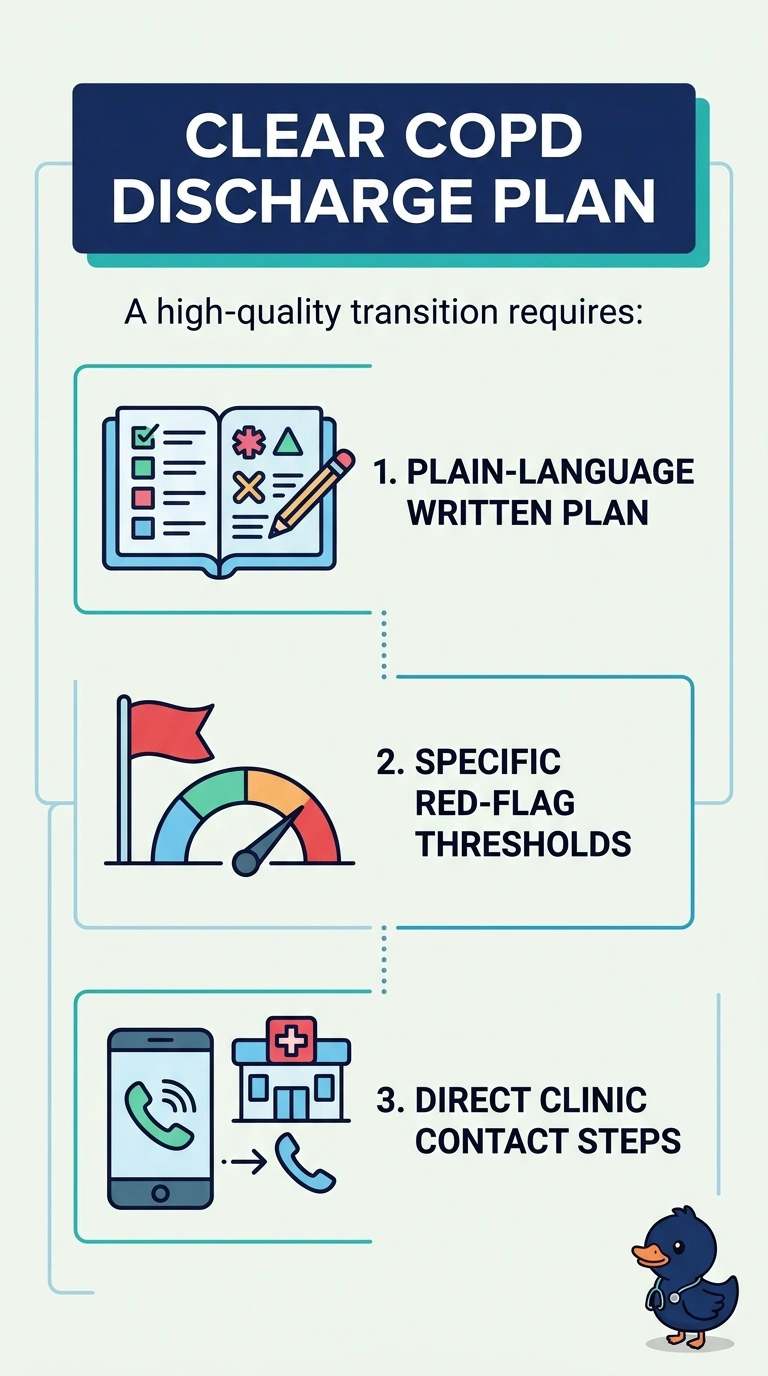
Short Explanation
Sending patients home without clear instructions for day-to-day symptom changes leaves them guessing at 2 a.m. The trap is relying on delayed paperwork or telling patients to wait for the next appointment before reporting changes. You prevent avoidable returns by giving them a clear action plan before they leave.
Full Explanation
Effective care transitions require actionable self-management support that bridges the high-risk first week at home. The team should Provide a plain-language written symptom action plan with specific red-flag thresholds and direct clinic contact steps so patients and caregivers know exactly which symptoms warrant home rescue therapy, when to call the clinic, and when emergency care is truly needed. Choosing to Mail a comprehensive clinical discharge summary to the patient's home address two weeks after hospital discharge arrives far too late for the critical five-day window and uses technical language written for clinicians. Choosing to Tell patients to wait for their next scheduled clinic appointment before reporting new breathing changes delays timely triage and allows mild dyspnea to escalate instead of teaching prompt outreach and safe self-management. Choosing to Schedule a routine primary care visit three weeks after discharge to review long-term pulmonary function test results misses the acute five-day vulnerability and focuses on long-term results rather than immediate rescue decisions. A key caveat is that written plans must be paired with teach-back and accessible language translation to ensure comprehension. As an operational check, audit 30-day COPD emergency department revisit rates and confirm documented teach-back completion prior to discharge.
Prefer to study offline? Printable PDF study book + test engine ($7.50, unofficial). These questions stay free here.