
A primary care network finds that eligible adults frequently leave clinic visits without needed pneumococcal and influenza vaccinations because clinicians focus on acute complaints and forget to enter vaccine orders. Which population health intervention best closes this preventive gap?
Select an answer to reveal the explanation.
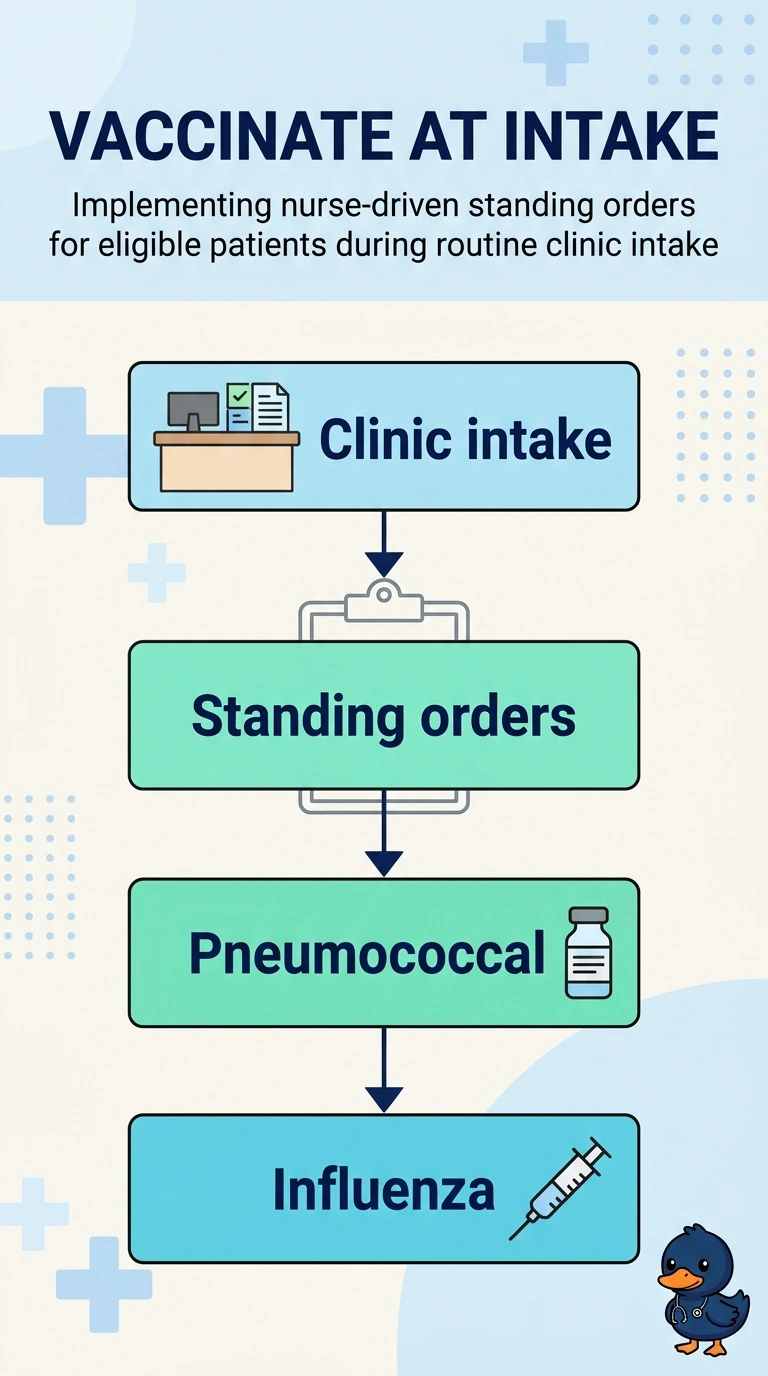
Short Explanation
Waiting for a busy physician to remember a preventive order during an acute visit is like hoping you remember milk without a grocery list. The trap is adding another reminder to the provider's plate instead of empowering the care team with standing orders.
Full Explanation
Implementing nurse-driven standing orders for eligible patients during routine clinic intake authorizes nurses and medical assistants to screen and administer indicated vaccines under approved clinical protocols without waiting for an individual provider order. Removing the provider bottleneck turns every routine visit into a reliable prevention touchpoint and consistently raises population immunization rates. Mailing annual vaccination postcards to patients who missed their last physical fails to fix the missed opportunities occurring among patients who are already sitting in exam rooms. Requiring physicians to review immunization registries before opening acute notes adds cognitive burden and alert fatigue during time-pressured visits, leading to frequent workarounds. Scheduling separate nurse-only vaccination clinics on weekends for all adults creates extra access and transportation barriers rather than capturing patients during existing care. As an important caveat, standing orders require clear contraindication screening criteria and state scope-of-practice alignment. Operationally, track monthly missed-opportunity rates alongside vaccine refusal documentation to verify protocol fidelity.
Prefer to study offline? Printable PDF study book + test engine ($7.50, unofficial). These questions stay free here.