
An acute care hospital sees frequent 14-day readmissions among frail older adults with mild cognitive impairment who are discharged home with complex wound care and new insulin regimens. Which discharge planning practice best addresses this transition gap?
Select an answer to reveal the explanation.
Short Explanation
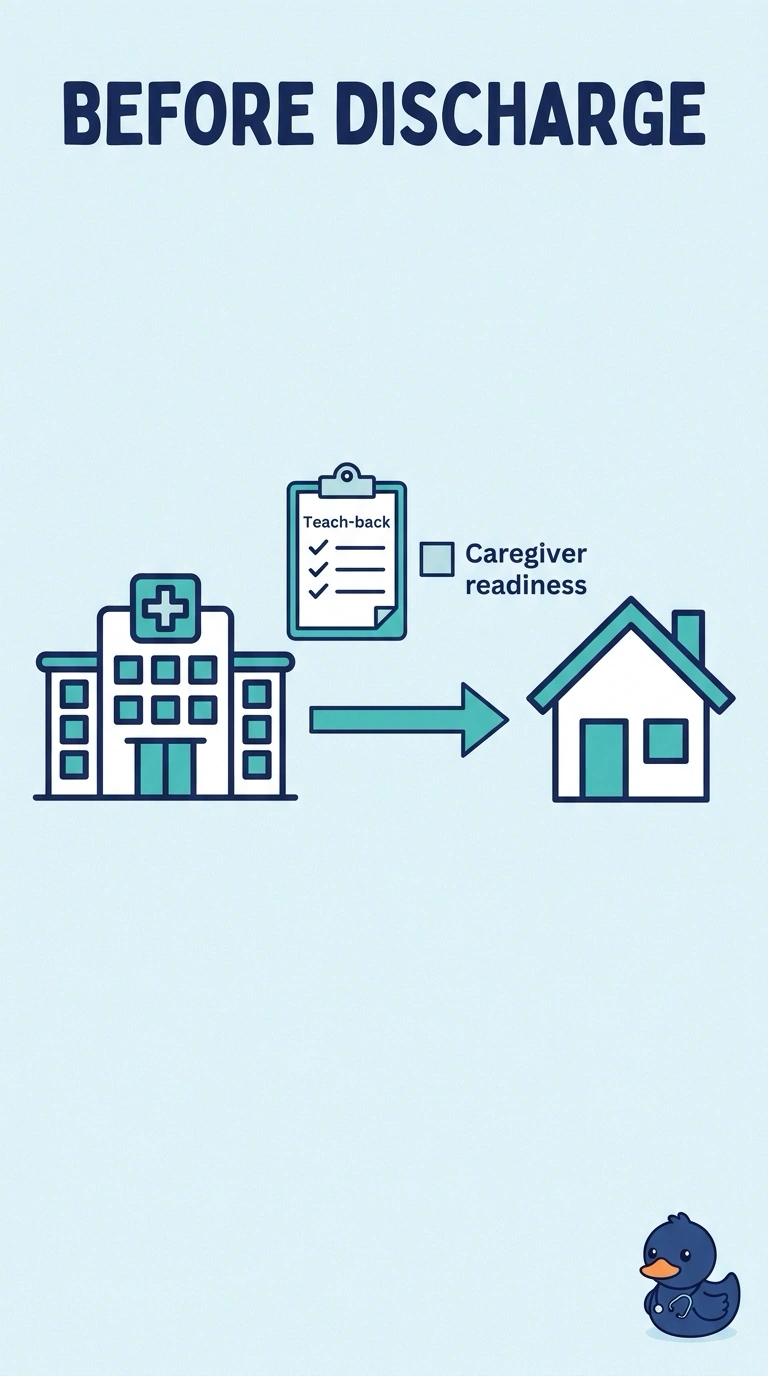
Sending someone home with complex wound care and insulin instructions without checking who can manage them is like handing over car keys without checking who can drive. You need more than clinic mailings or written hotlines: caregiver readiness and hands-on teach-back confirm that daily care can be managed safely at home.
Full Explanation
Assessing family caregiver readiness and providing hands-on teach-back before discharge confirms that the person who will deliver wound care and administer insulin at home understands the regimen, has the physical and emotional capacity to carry it out, and can demonstrate the correct technique before the patient leaves the hospital. With cognitive impairment, caregiver capability can be decisive in preventing medication errors and infection-related readmissions. Mailing a printed discharge summary to the primary care clinic supports clinician continuity, but does not prepare the home caregiver for day-one tasks. Scheduling a routine thirty-day outpatient follow-up leaves a potentially dangerous gap of several weeks, while complications may emerge in the first few days. Providing a standard brochure listing community support hotlines places the burden of finding help on an overwhelmed patient or family and does not verify comprehension or caregiving skills. Exam caveat: assess caregiver capacity early enough to arrange home-health or respite alternatives if needed. Practical check: audit high-risk discharge charts for documented caregiver participation and return-demonstration teach-back before release.
Prefer to study offline? Printable PDF study book + test engine ($7.50, unofficial). These questions stay free here.