
A health plan achieves an overall 78% colorectal cancer screening rate across its commercial and Medicaid members, meeting its aggregate target. However, community advocates report low screening uptake in several neighborhoods. What should the population health team do first to identify equity gaps?
Select an answer to reveal the explanation.
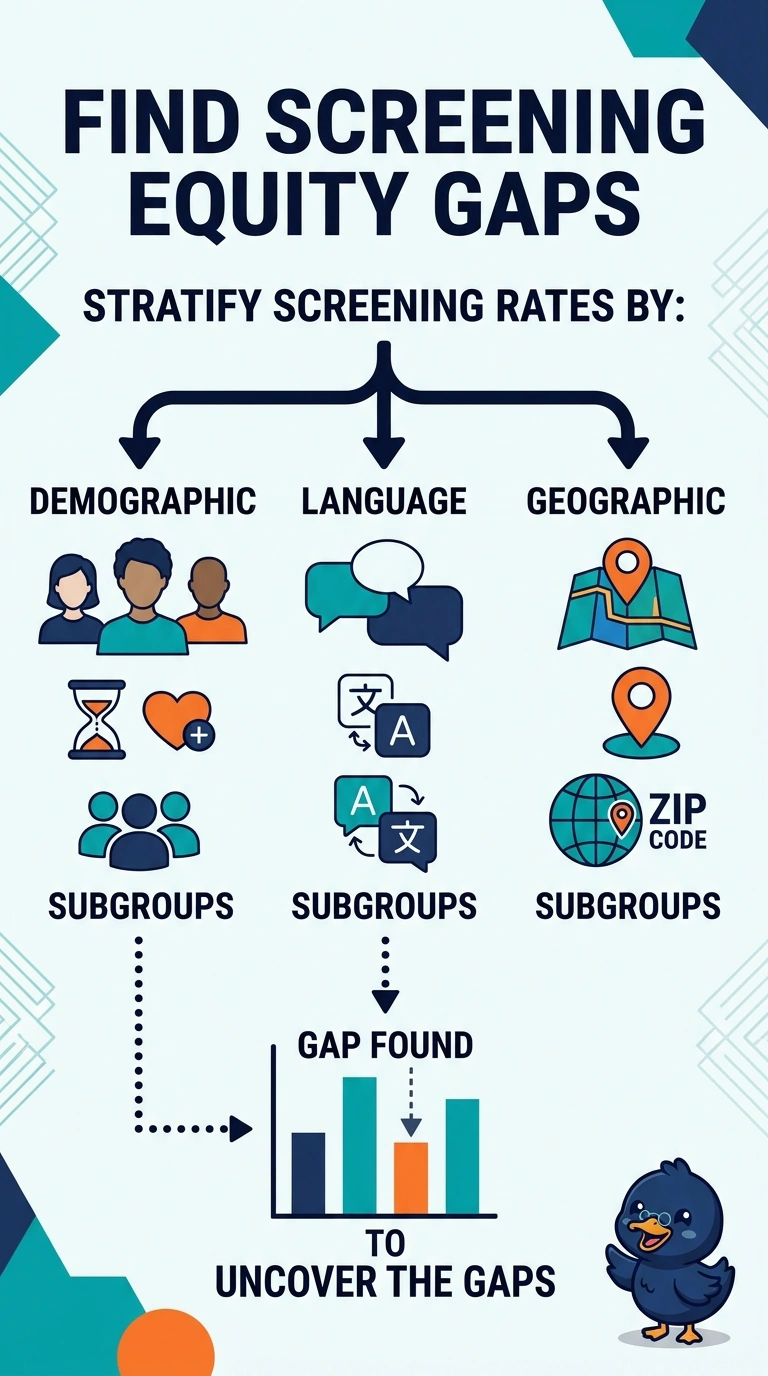
Short Explanation
An average score can hide a quiet crisis in your own backyard—just because the room averages 70 degrees does not mean nobody is freezing. The trap is launching blanket outreach or raising targets before breaking the data apart to see who is actually being left behind.
Full Explanation
Aggregate quality scores frequently mask disparities affecting smaller or underserved populations. Choosing to Stratify screening rates by demographic, language, and geographic subgroups breaks the 78% overall rate into actionable segments, revealing exactly which neighborhoods, preferred languages, or demographic groups face barriers such as transportation, clinic hours, or culturally mismatched outreach. By contrast, Increase automated reminder calls uniformly across the entire membership applies a one-size-fits-all tactic that often widens gaps by reaching already-engaged members while missing those with language or access barriers. Similarly, Raise the aggregate health plan screening target to eighty-five percent sets a higher numeric goal without diagnosing where inequities exist or why certain communities lag behind. Likewise, Survey members who completed screening to identify best practices for outreach introduces survivorship bias by overlooking the specific obstacles experienced by unscreened members. A key caveat is that small subgroup sample sizes can produce noisy percentages, so teams should examine multi-quarter trends or combine adjacent geographic areas carefully. As an operational check, audit race, ethnicity, and preferred-language completeness in enrollment records before designing targeted community interventions.
Prefer to study offline? Printable PDF study book + test engine ($7.50, unofficial). These questions stay free here.