
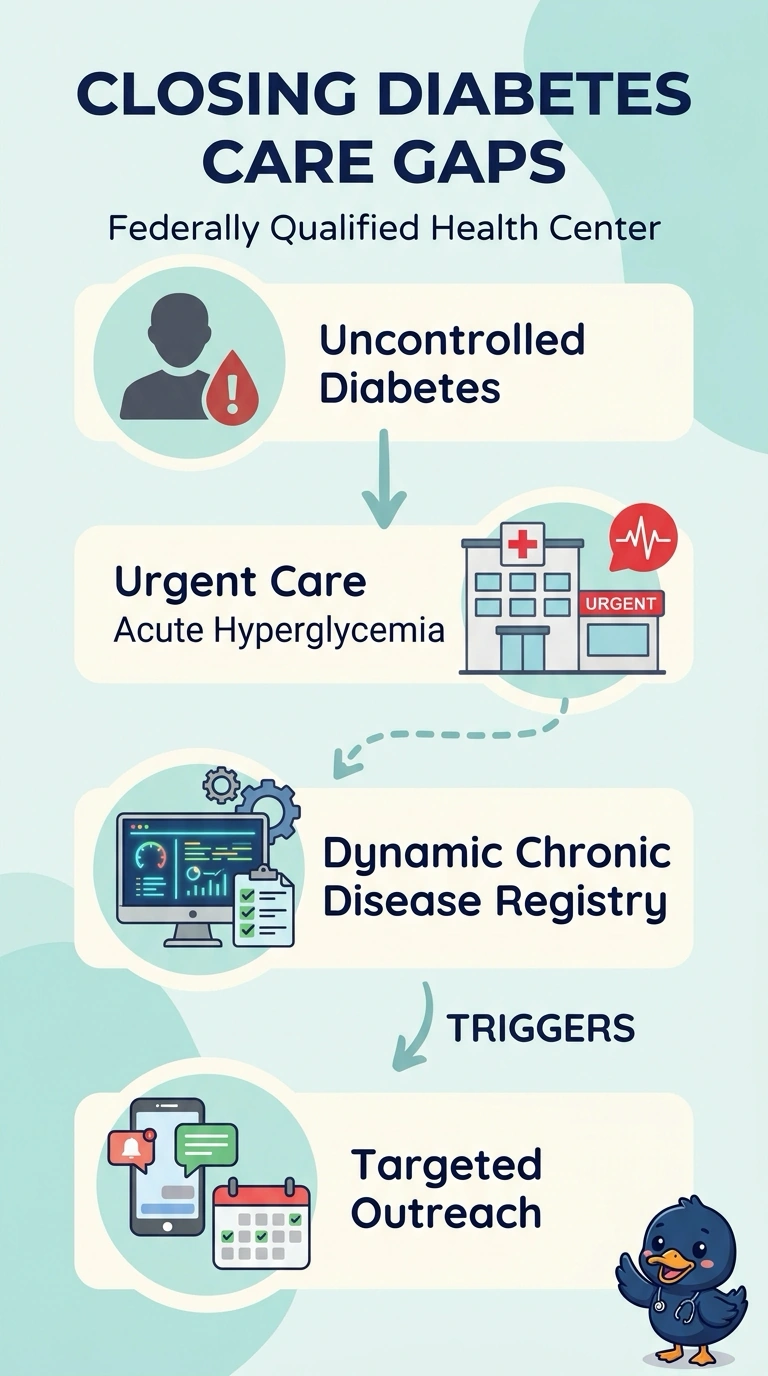
A federally qualified health center notices that many patients with uncontrolled diabetes miss routine follow-up visits and only appear in urgent care for acute hyperglycemia. Which population health strategy best enables proactive outreach to close these chronic care gaps?
Select an answer to reveal the explanation.
Short Explanation
Waiting for patients with chronic illness to show up in crisis is like waiting for a check-engine light to melt the motor. When your goal is closing preventive and chronic care gaps, you have to reach out before the acute visit happens. The trap is pouring more effort into reactive urgent care instead of proactive population tracking.
Full Explanation
Maintaining a dynamic chronic disease registry to trigger targeted outreach shifts care from reactive crisis management to proactive population health by identifying patients who are overdue for lab monitoring, medication titration, or primary care follow-up. Care teams can use the registry to schedule outreach calls, address barriers, and bring high-risk patients back into routine ambulatory care. Distributing printed diabetes self-management brochures at urgent care check-in relies on passive education during an acute visit and does not reach patients who never return for scheduled care. Requiring urgent care clinicians to complete full annual diabetes foot exams misaligns episodic acute workflows with longitudinal primary care responsibilities and creates visit bottlenecks. Increasing the number of walk-in urgent care appointment slots each afternoon expands reactive capacity without resolving why patients are falling out of preventive management. As a caveat, a registry only works if data feeds stay current and staff have dedicated time and culturally appropriate scripts to follow up on flagged gaps. For an operational check, audit the registry weekly for patients with overdue glycated hemoglobin tests or missed visits and track contact-to-appointment conversion rates.
Prefer to study offline? Printable PDF study book + test engine ($7.50, unofficial). These questions stay free here.