
During a Lean value-stream review of outpatient chemotherapy scheduling, a team identifies two steps: verifying patient identity against two identifiers, and re-typing insurance details from a faxed form into a second spreadsheet. How should the team classify and handle these two steps?
Select an answer to reveal the explanation.
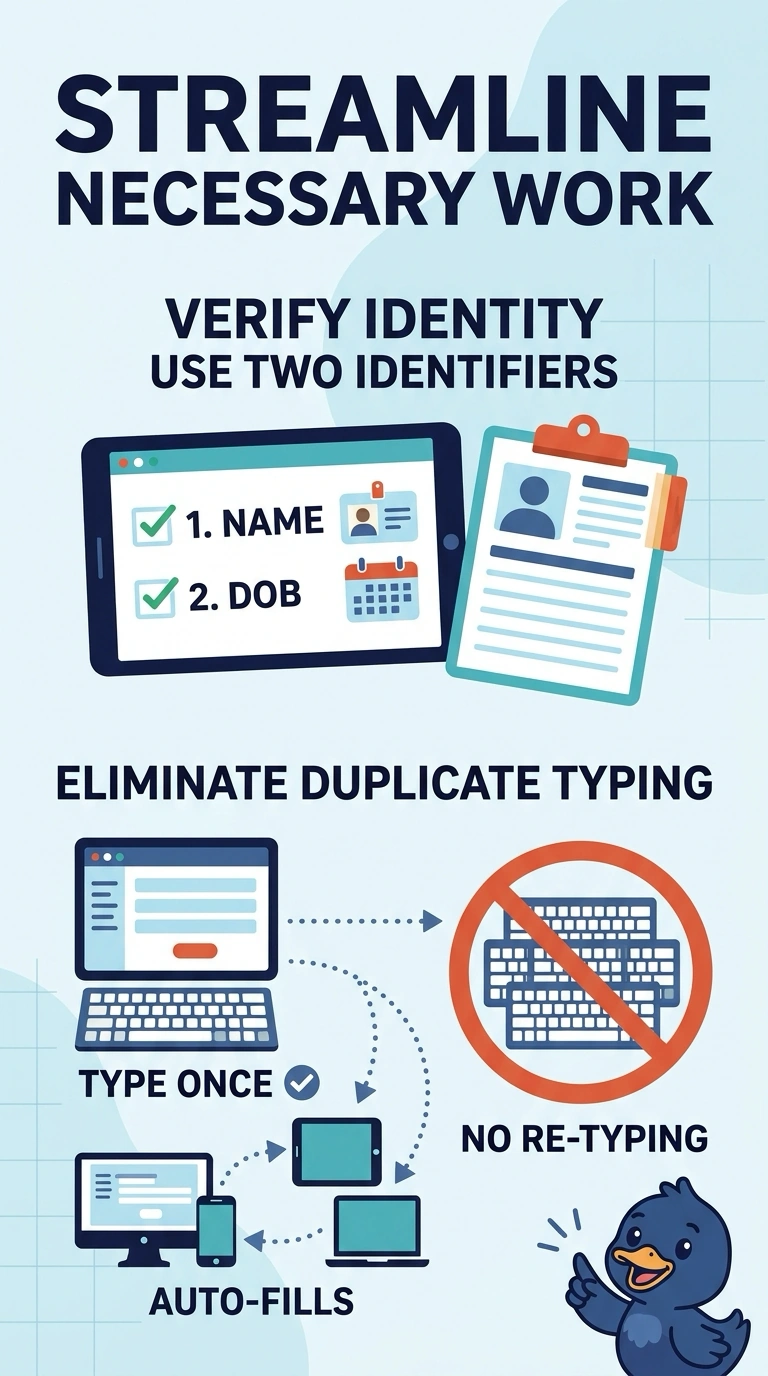
Short Explanation
In Lean, not every non-clinical step is garbage you can throw out—some steps, like safety checks, are guardrails you must keep. The trap is treating safety verification and duplicate data entry the same way. You streamline necessary safety or regulatory steps while eliminating pure rework waste.
Full Explanation
A disciplined Lean review knows to Streamline identity verification as necessary and eliminate duplicate typing because safety and regulatory checks are business-necessary non-value-added (not treatment, yet essential for patient protection), whereas re-keying faxed insurance data into a redundant spreadsheet is pure overprocessing waste. Removing waste frees staff capacity while making essential safety checks faster and more reliable. Trying to Eliminate both steps immediately because neither directly delivers clinical care would strip away two-identifier verification and create severe wrong-patient safety risk. Choosing to Automate both steps without evaluating whether the spreadsheet is still needed simply speeds up unnecessary work instead of removing it. Deciding to Keep both steps unchanged because staff are already familiar with them forfeits easy efficiency gains and leaves error-prone manual transcription intact. Caveat: before deleting any spreadsheet or handoff, confirm no downstream billing or compliance team relies on it as a sole record. Operational check: observe three consecutive scheduling cycles after removing the duplicate entry to verify clean data flow and intact identity checks.
Prefer to study offline? Printable PDF study book + test engine ($7.50, unofficial). These questions stay free here.