
A multi-hospital health system launches an 18-month initiative to standardize sepsis care, but six months in, frontline clinicians grow skeptical because they see extra charting work without any evidence that outcomes are improving. Which change-leadership action best sustains team momentum?
Select an answer to reveal the explanation.
Short Explanation
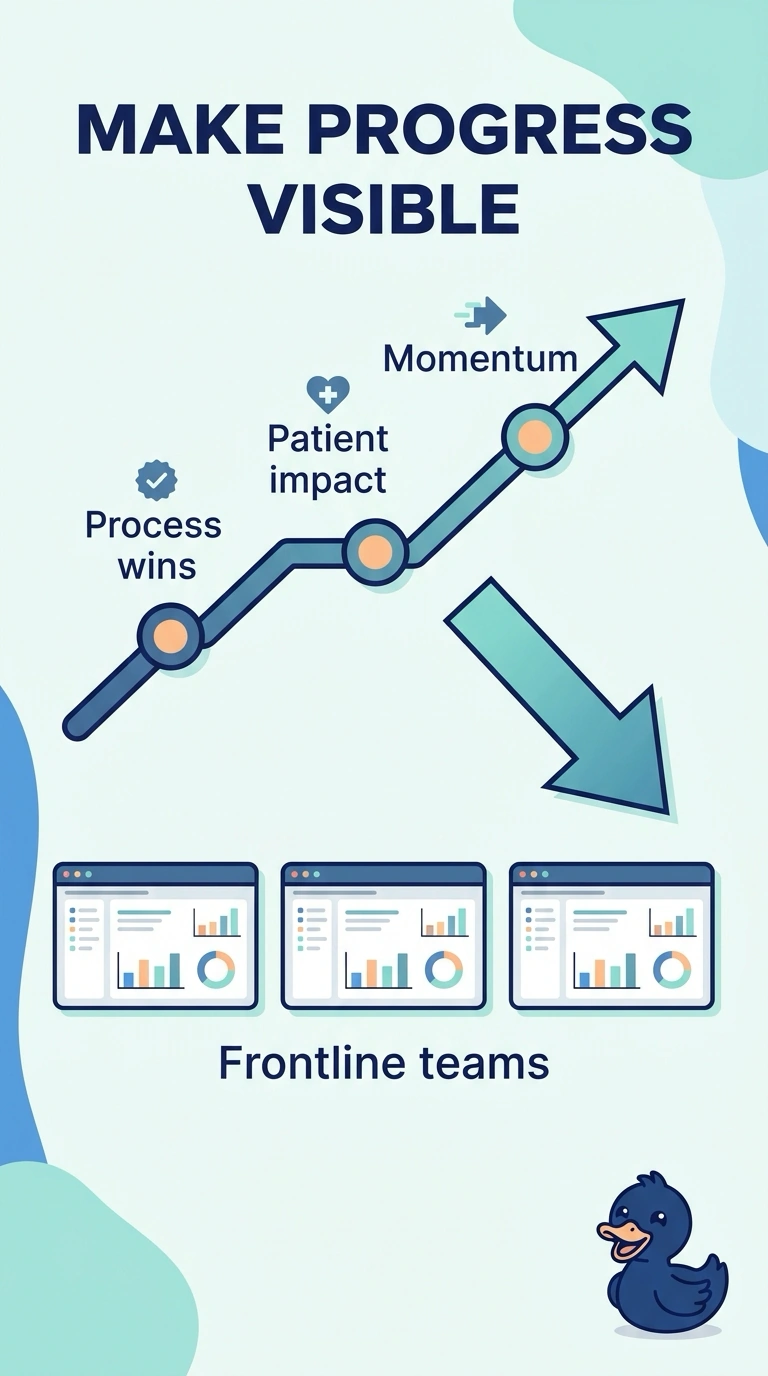
Asking clinicians to push through an 18-month change without ever showing them it is working is like running a marathon with no mile markers. The trap is holding back all results until the final report. You keep frontline teams engaged by sharing verified short-term wins and early patient impact.
Full Explanation
To counter skepticism during a long transformation, leaders should Share verified short-term process wins and early patient impact with frontline teams, such as faster antibiotic administration times or specific lives saved through early recognition. Visible, credible milestones validate frontline effort, build coalition support, and maintain energy across multi-quarter rollouts. Choosing to Share results only at the twelve-month review with the executive steering committee starves staff of feedback and allows cynicism to harden. Trying to Mandate compliance through disciplinary warnings for missed documentation breeds resentment and workaround behaviors without addressing why clinicians doubt the workflow's value. Deciding to Shorten the project to a documentation audit and drop the antibiotic-timing and mortality measures narrows the work to paperwork while abandoning the outcome measures that justify the effort. Caveat: short-term wins must be genuine, data-verified improvements rather than cherry-picked anecdotes, or staff trust will erode. Operational check: post monthly unit-level sepsis bundle trends and brief clinical success stories during shift huddles throughout the rollout.
Prefer to study offline? Printable PDF study book + test engine ($7.50, unofficial). These questions stay free here.