
A community hospital rolls out a standardized sepsis screening workflow, but experienced emergency nurses bypass the new steps because they feel excluded from the design. Which change-management action best builds sustainable adoption?
Select an answer to reveal the explanation.
Short Explanation
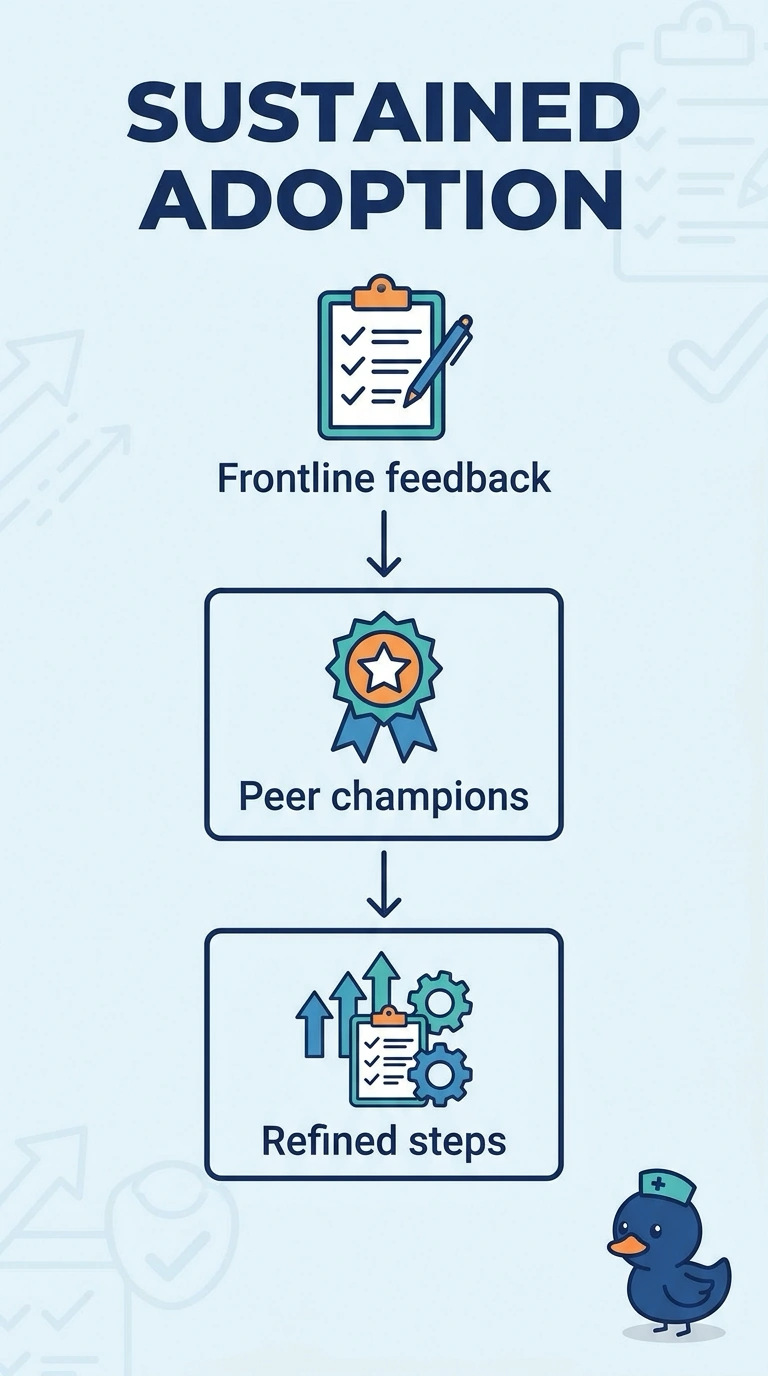
Think of workflow change like breaking in new boots—you cannot force a fit by marching faster without listening to where it pinches. The trap is assuming a top-down memo fixes frontline resistance, when Engaging peer clinical champions and refining steps from frontline feedback actually builds ownership.
Full Explanation
Sustainable clinical change depends on social influence and practical workflow fit. Engaging peer clinical champions and refining steps from frontline feedback works because respected clinicians model the new behavior while rapid iterations remove friction points that cause workarounds. Mandating immediate compliance through a formal nursing policy memo and disciplinary audits fails because punitive top-down enforcement drives compliance theater and resentment without fixing usability barriers. Adding a second mandatory sepsis screening form to the existing documentation workflow fails because duplicate paperwork increases burden and workarounds without addressing exclusion from design. Delaying the rollout for a year while a vendor reviews the screening criteria fails because stalling urgent sepsis care for outside review mistakes passive waiting for active behavioral adoption. One caveat is that champion feedback must stay anchored to core clinical evidence so local tweaks do not strip away essential screening steps. As an operational check, review weekly unit compliance alongside brief huddle feedback from champions to confirm workarounds are disappearing.
Prefer to study offline? Printable PDF study book + test engine ($7.50, unofficial). These questions stay free here.