
An outpatient surgery center receives recurring patient comments requesting faster, clearer discharge instructions, but the improvement team struggles to turn those broad wishes into concrete metrics. Which quality tool best translates general patient expectations into specific, measurable process requirements?
Select an answer to reveal the explanation.
Short Explanation
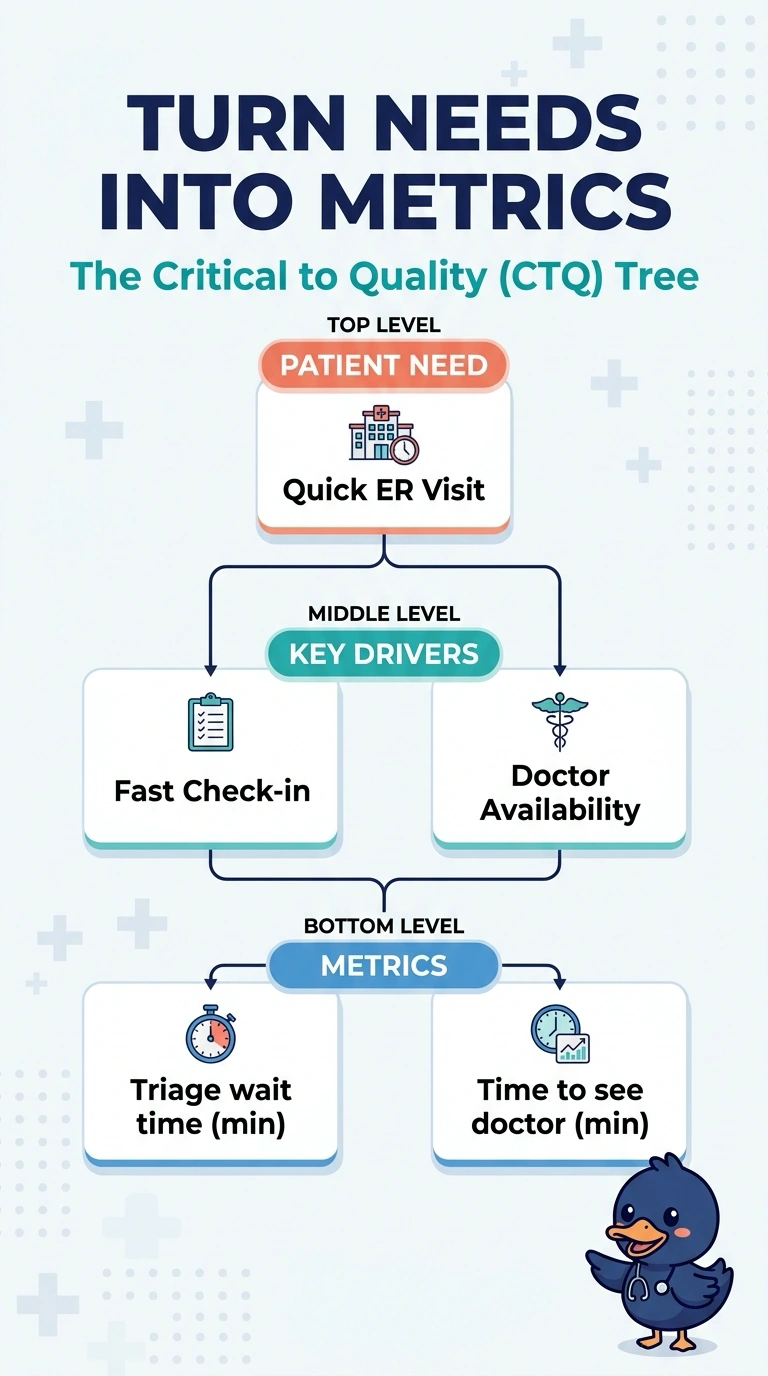
Broad patient wishes like faster discharge sound great on a whiteboard, yet you cannot improve what you have not defined. A Critical to Quality tree breaks a vague expectation into concrete drivers and measurable targets your team can actually track. Do not fall for jumping straight to a control chart before you know which specific metric matters.
Full Explanation
A Critical to Quality tree linking patient needs to drivers and metrics systematically converts broad qualitative feedback into specific, testable process requirements. Starting with the patient's core need, the team identifies key performance drivers such as written clarity and wait-time predictability, then defines exact operational measures like teach-back completion or discharge turnaround minutes. A control chart tracking monthly surgical volume and overtime nursing hours monitors stability over time, but it cannot define which discharge communication elements patients value. A failure modes and effects analysis scoring potential medication errors proactively evaluates high-risk failure points rather than translating customer voice into service specifications. A spaghetti diagram mapping nurse walking paths inside the recovery room exposes physical motion waste, which addresses layout rather than instructional clarity. As a caveat, teams should validate their selected drivers with actual patient feedback so internal assumptions do not replace real patient priorities. For an operational check, confirm every metric on the tree has an operational definition, data source, and baseline target before launching pilot tests.
Prefer to study offline? Printable PDF study book + test engine ($7.50, unofficial). These questions stay free here.