
A health system plans to transition four outpatient clinics from paper intake forms to tablet-based patient self-registration. Before launching the rollout, the quality facilitator wants the implementation team to identify cultural, technical, and workflow factors that will either accelerate or block adoption. Which approach should the team use?
Select an answer to reveal the explanation.
Short Explanation
Launching a clinic workflow change without mapping resistance is like sailing without checking the wind and currents. The trap is relying on a top-down memo when your team needs to surface and weaken the practical barriers ahead of time.
Full Explanation
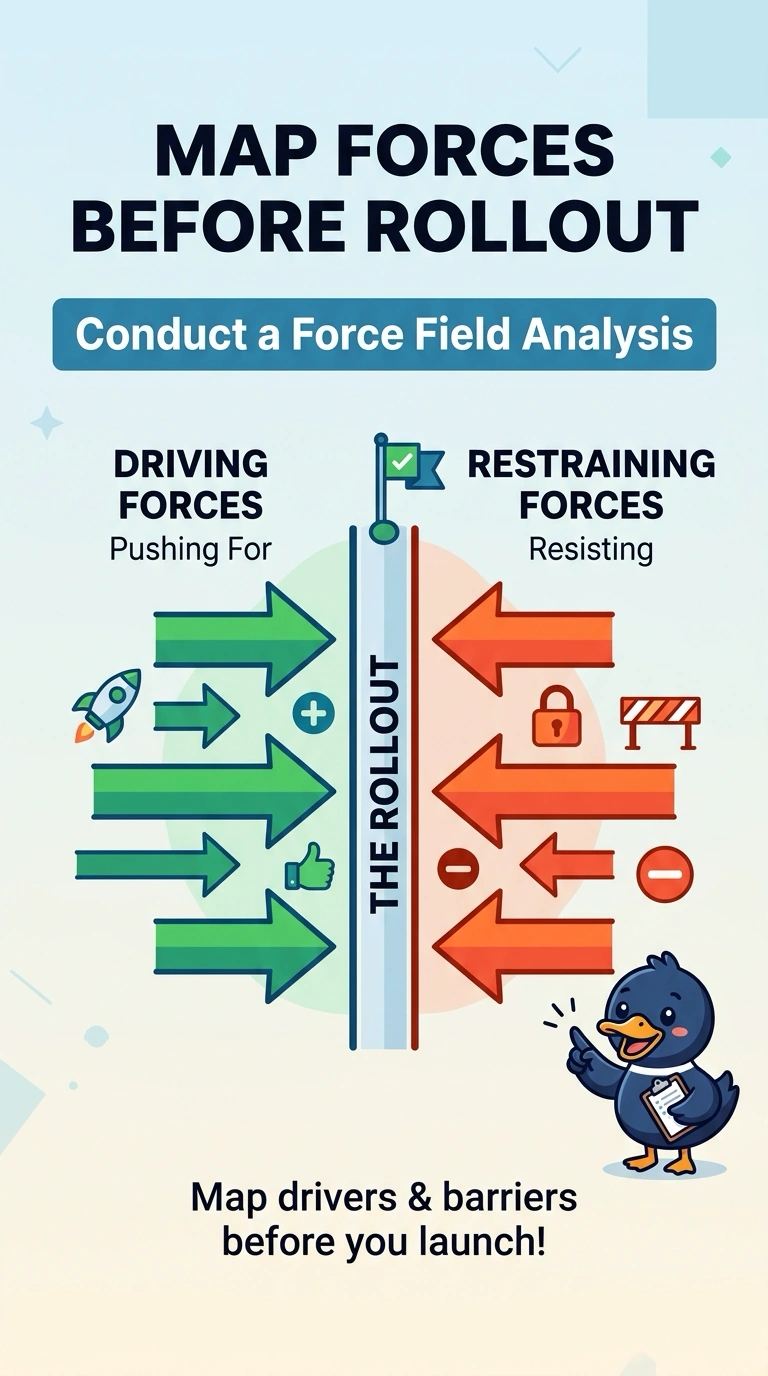
Successful change leadership requires diagnosing why stakeholders support or resist a transition before full-scale deployment. The team should Conduct a force field analysis to map driving and restraining forces before rollout, allowing leaders to strengthen motivators—such as faster check-in—while proactively mitigating barriers like Wi-Fi dead zones, patient literacy needs, or front-desk anxiety. Choosing to Issue a mandatory policy memo requiring all departments to adopt the change relies on authority alone and often triggers workarounds or covert resistance. Choosing to Rank the four clinics by last year's satisfaction scores confuses past performance ranking with readiness diagnosis and does not surface the cultural, technical, and workflow forces that will shape adoption. Choosing to Limit the initial communication plan to senior executives excludes the frontline clerical and clinical staff whose buy-in determines daily adoption. Caveat: force field analysis works best when frontline staff from each clinic contribute directly to the list of restraining forces rather than leaders guessing from afar. As an operational check, pair each high-impact restraining force with an assigned owner and mitigation action before scheduling go-live.
Prefer to study offline? Printable PDF study book + test engine ($7.50, unofficial). These questions stay free here.