
Nurses on an inpatient surgical unit spend several minutes each shift hunting through crowded supply closets for wound-care kits and frequently discover expired dressings hidden behind newer boxes. Which improvement approach best addresses this workflow waste?
Select an answer to reveal the explanation.
Short Explanation
When nurses have to play hide-and-seek for basic supplies, the closet is creating motion waste and expiration risk every shift. The trap is moving everything off the unit or lecturing staff instead of using visual workplace organization you can sustain at a glance.
Full Explanation
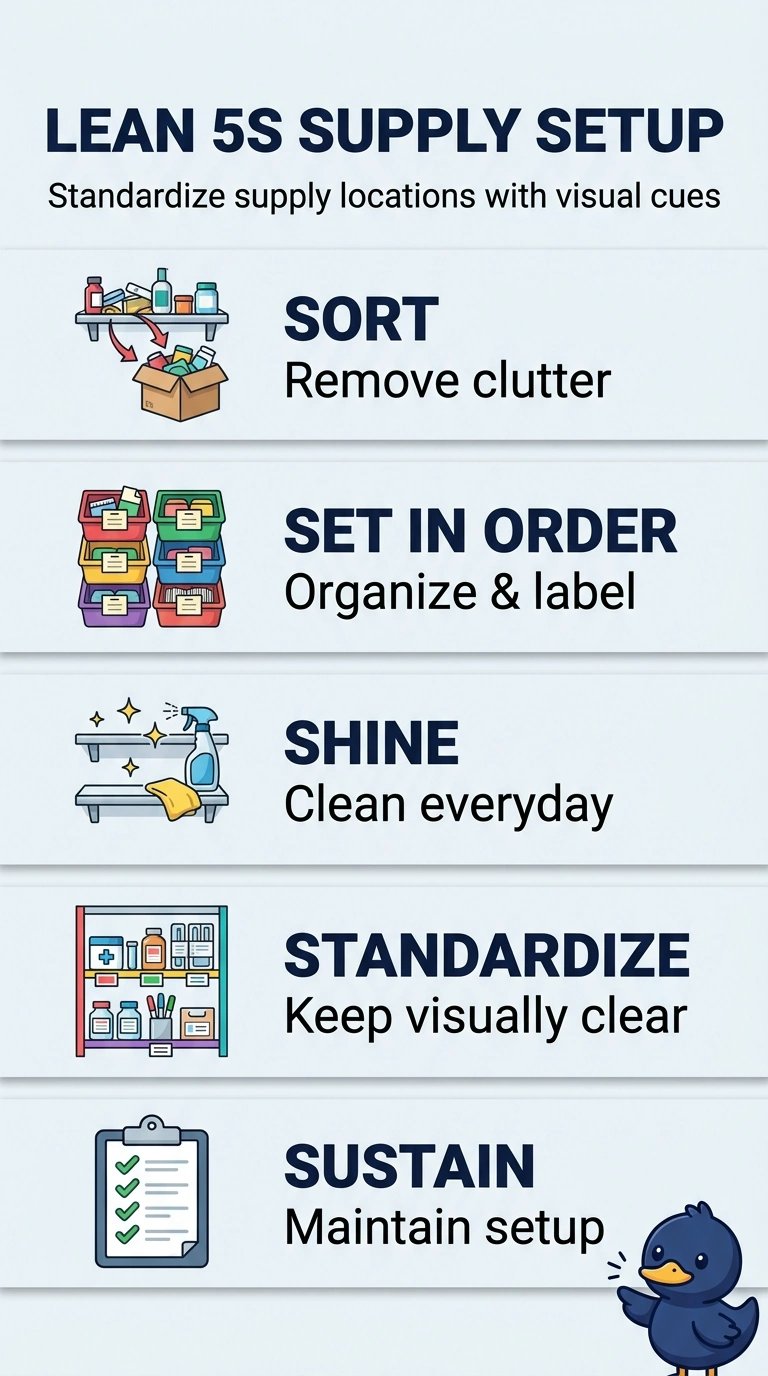
Searching for supplies and managing expired stock are classic forms of Lean waste—motion, inventory, and defects—caused by disorganized storage. The team should Apply Lean 5S methods to sort, label, and standardize supply locations with visual cues, including clear bin labels, minimum-maximum par markers, and first-in, first-out rotation so needed items are easy to find and restock. Choosing to Move all wound-care supplies to a central storeroom on another floor and request them as needed adds transportation and waiting waste by forcing extra trips and delays for urgently needed items. Choosing to Conduct a Six Sigma capability study on supplier manufacturing tolerances for sterile dressings investigates vendor production variation rather than the unit's internal storage and retrieval problem. Choosing to Schedule weekly all-staff meetings to remind nurses to return unused supplies promptly relies on memory and exhortation instead of redesigning the physical workspace. Caveat: involve frontline nurses and materials management together when setting par levels so the layout matches actual shift demand. As an operational check, conduct brief weekly 5S visual audits of bin labels and expiration dates during the first month after reorganization.
Prefer to study offline? Printable PDF study book + test engine ($7.50, unofficial). These questions stay free here.